Physical Characteristics
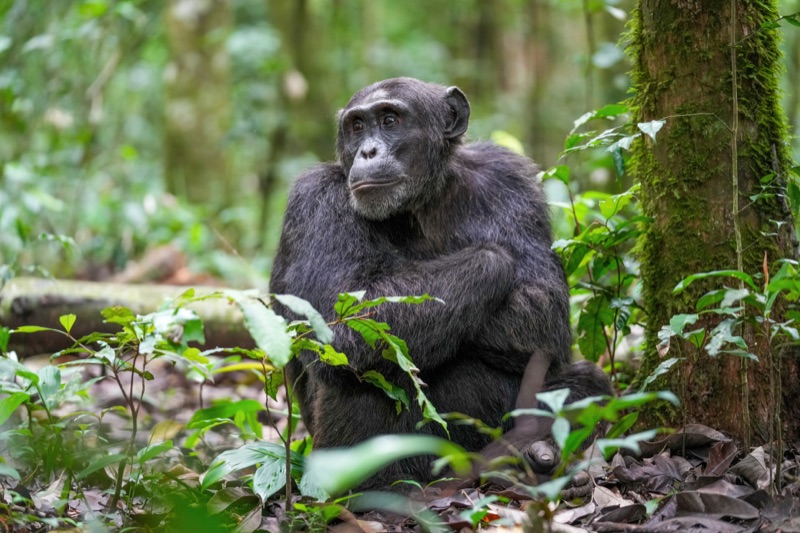
Adult male chimpanzees weigh between 40 and 70 kilograms (about 88 to 154 pounds), while females are smaller, weighing between 27 and 50 kilograms (about 60 to 110 pounds). Their bodies are covered in coarse black hair, but their faces, fingers, toes, and the palms of their hands are bare. Chimpanzees have long, powerful arms that are longer than their legs, which helps them swing through trees with ease. When they walk on the ground, they use a special style called knuckle-walking, where they place their weight on the knuckles of their hands rather than on flat palms.
Habitat
Chimpanzees can be found in a wide range of habitats across central and western Africa. They live in tropical rainforests, mountain forests, swamp forests, and even dry woodlands and savannas. Chimps are most at home in dense forests where tall trees give them places to climb, sleep, and find food. Every evening, they build a fresh nest out of leaves and branches high up in the trees, where they sleep safely above the ground.
Diet
Chimpanzees are omnivores, which means they eat both plants and animals. The largest part of their diet is made up of fruits, which they search for throughout the forest each day. They also eat leaves, seeds, bark, and flowers. Although it is a small part of what they eat, chimps also hunt for meat and catch insects like termites and ants. Their varied diet helps them survive in different habitats, since they can switch to other foods when their favorite fruits are not in season.
Chimpanzees are among the most intelligent animals on the planet. One of the most famous examples of their intelligence is their ability to use tools. They strip leaves off twigs and poke the bare sticks into termite mounds to fish out the insects inside. Some chimps have even been observed sharpening sticks to use as simple spears for hunting. Scientists have also watched chimpanzees use rocks to crack open hard-shelled nuts, and they use leaves as sponges to soak up drinking water. These behaviors are not just instinct – young chimps learn them by watching their mothers and other members of their group.
Social Life
Chimpanzees are highly social animals that live in communities of 20 to over 100 individuals. Within these large groups, chimps form close friendships and spend time grooming each other, which helps strengthen their bonds. They communicate using a wide range of sounds, facial expressions, and gestures, including loud calls that can be heard over a kilometer away. Chimps also show emotions that look a lot like human feelings – they hug and hold hands to comfort each other, and they have been observed caring for sick or injured group members.
Family Life
A mother chimpanzee carries her baby for about eight months before it is born. Newborn chimps are helpless and depend completely on their mothers, clinging to their bellies as they travel through the forest. As they grow older, young chimps ride on their mother’s back and begin exploring on their own. Young chimpanzees stay close to their mothers for about seven to ten years, learning essential skills like finding food, building nests, and using tools. This long childhood is one of the reasons chimps are so intelligent – they have many years to learn from the adults around them.
Conservation Status
Chimpanzees are listed as endangered on the IUCN Red List, meaning they face a serious risk of disappearing from the wild. Scientists estimate that between 170,000 and 300,000 chimpanzees remain in Africa, but their numbers are declining. The biggest threats they face are habitat loss from logging and farming, poaching, and diseases that spread from humans. Many organizations and researchers, including the famous primatologist Jane Goodall, are working hard to protect chimps and the forests they call home. National parks and wildlife reserves in countries like Tanzania, Uganda, and the Democratic Republic of the Congo help give chimpanzees safe places to live.
Chimpanzees and Humans
Because chimpanzees are so closely related to us, studying them helps scientists understand human evolution and behavior. Humans and chimps split from a common ancestor roughly six million years ago, and in the time since, we have developed in very different directions. Chimpanzees show that intelligence, tool use, and social bonds are not unique to humans. Studying chimps also highlights how important it is to protect the natural world, since every species plays a role in keeping ecosystems healthy.
 OtterKnow Kids Encyclopedia