Built for Speed
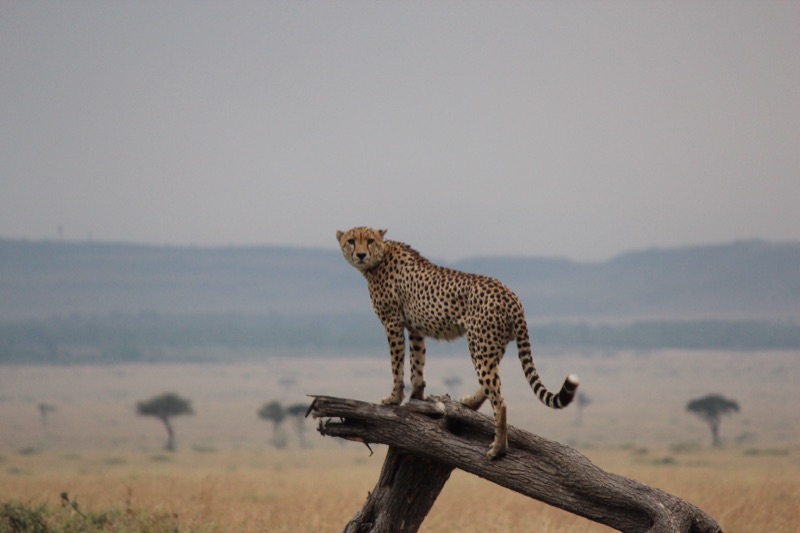
Everything about a cheetah’s body is designed for running fast. They can accelerate from zero to 96 kilometers per hour (about 60 miles per hour) in just three seconds, which is faster than most sports cars. During a sprint, a cheetah takes about three strides per second, and each stride can cover 7 to 8 meters (up to 26 feet). Their lightweight frame, deep chest, and long legs work together like a finely tuned machine. Large nasal passages allow them to take in extra oxygen while running, and their long, muscular tail acts as a rudder to help them make sharp turns at high speed.
What They Look Like
Cheetahs have a slender, streamlined body covered in golden-yellow fur with solid black spots. Each cheetah’s spot pattern is unique, much like a human fingerprint, which helps researchers identify individuals in the wild. One of their most recognizable features is the pair of dark “tear marks” that run from the inner corners of their eyes down to the sides of their mouth. Scientists believe these markings help reduce glare from the sun, similar to the black strips athletes sometimes wear under their eyes. Adult cheetahs typically weigh between 34 and 64 kilograms (75 to 140 pounds) and stand about 70 to 90 centimeters (28 to 35 inches) tall at the shoulder.
Where They Live
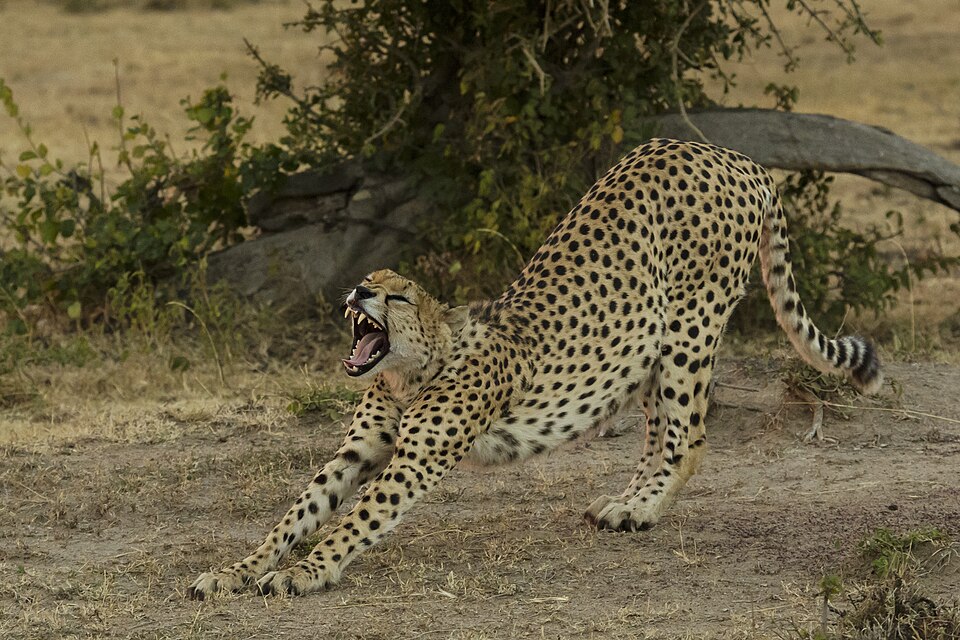
Cheetahs once roamed across most of Africa, the Middle East, and into central Asia, but today their range has shrunk dramatically. Most of the world’s cheetahs now live in sub-Saharan Africa, with small populations scattered across eastern and southern African countries like Kenya, Tanzania, Namibia, and Botswana. A tiny population of fewer than 50 Asiatic cheetahs survives in Iran, making it one of the rarest large cats on the planet. Cheetahs prefer open grasslands, savannas, and semi-arid areas where they can use their speed to full advantage, since thick forests and dense vegetation would slow them down.
Hunting
Cheetahs are daytime hunters that rely on their sharp eyesight to spot prey from a distance. They stalk their target quietly, creeping as close as possible before launching into an explosive sprint. A typical chase lasts only about 20 to 60 seconds because cheetahs overheat quickly and must stop to catch their breath. They trip their prey with a swift swipe of a front paw, then clamp down on the animal’s throat to suffocate it. Their main food includes gazelles, impalas, and small antelopes, though they will also catch hares and birds. After a kill, cheetahs must eat quickly because larger predators like lions and hyenas often steal their meals.
Cubs and Family Life
Female cheetahs usually give birth to a litter of three to five cubs after a pregnancy of about 90 to 95 days. Newborn cubs are tiny, weighing only about 250 to 300 grams (roughly half a pound), and they are born with a thick mantle of gray fur along their backs that may help camouflage them in tall grass. Mothers raise their cubs alone, moving them to a new hiding spot every few days to keep predators from finding them. Cubs stay with their mother for about 18 months, learning to hunt by watching her and practicing on small prey. After leaving their mother, siblings often stay together for several more months, with brothers sometimes forming lifelong groups called coalitions.
Threats and Conservation
The cheetah is classified as Vulnerable by the International Union for Conservation of Nature (IUCN), and the global population is estimated at roughly 7,000 individuals in the wild. Habitat loss is the biggest threat they face, as grasslands are converted into farmland and human settlements expand into cheetah territory. Farmers sometimes kill cheetahs to protect their livestock, and cubs are also taken from the wild to be sold illegally as exotic pets. Because cheetahs went through a population bottleneck thousands of years ago, they have very low genetic diversity, which makes them more vulnerable to disease. Conservation organizations are working to protect cheetah habitats, reduce conflict between cheetahs and farmers, and breed healthy populations in captivity.
Cheetahs and Other Predators
Despite being the fastest animal on land, cheetahs sit below lions, leopards, and hyenas in the predator hierarchy of the African savanna. Cheetahs avoid confrontation whenever possible because their lightweight build means they can be seriously injured in a fight. Lions and hyenas frequently steal cheetah kills, and these larger predators also pose a deadly threat to cheetah cubs. To survive, cheetahs have adapted by hunting during the day when lions are usually resting and by scanning the landscape carefully before settling down to eat. This cautious lifestyle is one reason cheetahs have survived for millions of years despite sharing their home with much larger and more powerful competitors.
 OtterKnow Kids Encyclopedia