What They Look Like
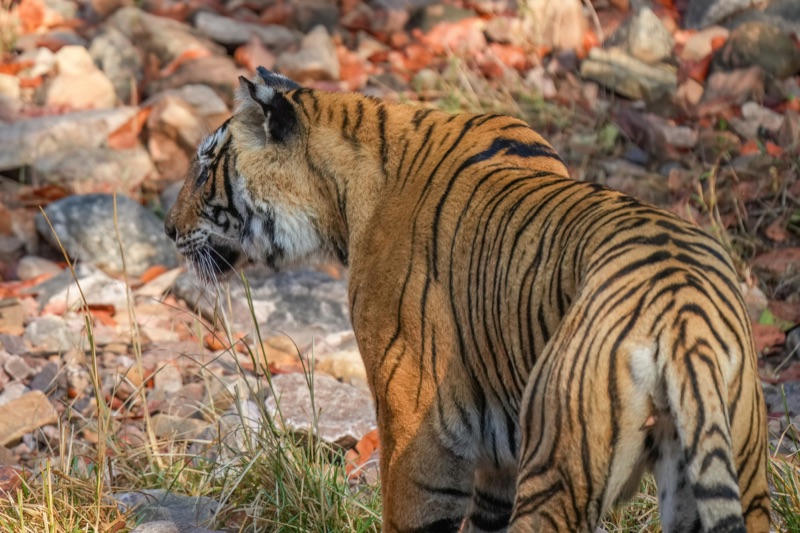
Tigers are built for power. An adult male Bengal tiger can weigh between 180 and 260 kilograms (400 to 570 pounds) and stretch over 3 meters (about 10 feet) from nose to tail tip. Females are noticeably smaller, usually weighing between 100 and 160 kilograms (220 to 350 pounds), but they are just as muscular and athletic. The Amur tiger, which lives in the cold forests of Russia, is the largest subspecies and can occasionally exceed 300 kilograms (660 pounds). All tigers share the same general body plan: a massive head with powerful jaws, thick forelimbs packed with muscle, and large padded paws that allow them to move almost silently through the forest.
Stripes
A tiger’s stripes are much more than decoration. Each tiger has a completely unique pattern of stripes, much like a human fingerprint, and researchers use these patterns to identify individual tigers in the wild using camera traps. The stripes break up the outline of the tiger’s body among tall grasses, bamboo, and dappled forest shadows, making it surprisingly difficult to spot even at close range. Interestingly, the stripes are not just on the fur but are actually part of the skin itself, so a shaved tiger would still show its stripe pattern. Most tigers have the familiar orange-and-black combination, but rare color variations exist, including white tigers with dark stripes and extremely rare golden tabby tigers with pale gold fur and faint reddish stripes.
Where They Live
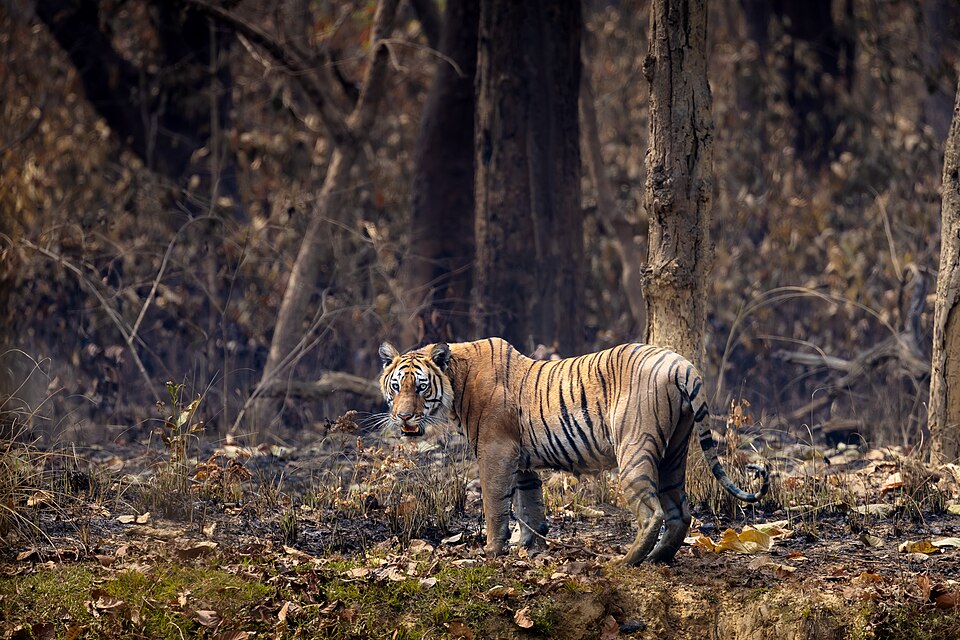
Tigers are found across a wide range of Asian habitats, from the steamy tropical rainforests of Sumatra and Malaysia to the snowy birch forests of Russia’s Far East. The largest population of wild tigers lives in India, where roughly 3,600 tigers roam across dozens of national parks, tiger reserves, and forest corridors. Smaller populations exist in Nepal, Bhutan, Bangladesh, Myanmar, Thailand, Indonesia, China, and Russia. Tigers need large territories with dense cover, plentiful prey, and access to water, because they are among the few cats that genuinely enjoy swimming. A single male tiger’s territory can span anywhere from 60 to 1,000 square kilometers, depending on how much food is available in the area.
Hunting
Tigers are ambush predators that rely on stealth and explosive power rather than long chases. They hunt mainly at dusk, at night, and in the early morning, using their superb hearing and night vision to locate prey in low light. A hunting tiger will creep through thick cover, placing each paw carefully to avoid snapping twigs, until it is close enough to rush its prey in a few bounding leaps. They kill with a powerful bite to the throat or the back of the neck, and their jaw strength is strong enough to bring down animals several times their own weight. Common prey includes deer, wild boar, and wild cattle, and a large tiger can eat up to 40 kilograms (88 pounds) of meat in a single sitting before hiding the leftovers under leaves to return to later.
Solitary Life
Unlike lions, which live in social groups called prides, tigers are solitary animals that prefer to live and hunt alone. Each tiger maintains its own territory and marks the boundaries with scent, scratch marks on trees, and sprays of urine to warn other tigers to keep out. Males have larger territories that often overlap with the smaller ranges of several females, and a male will tolerate females passing through his area. Tigers do communicate with each other using a variety of sounds, including roars that can carry over 3 kilometers (about 2 miles) through dense forest, as well as grunts, moans, and a friendly chuffing noise they make through their nostrils when greeting a familiar tiger. Despite their solitary nature, tigers have occasionally been observed sharing a kill with other tigers, especially when a male and female are courting.
Cubs and Family Life
A tigress gives birth to a litter of two to four cubs after a pregnancy of about 100 to 110 days. The cubs are born blind and helpless, weighing only about 1 kilogram (roughly 2 pounds), and they depend entirely on their mother for food and protection. The father plays no role in raising the young, so the mother must hunt, guard, and teach her cubs all on her own. By about six months, the cubs begin following their mother on hunts, watching and learning the skills they will need to survive independently. Young tigers stay with their mother for two to three years before setting off to find territories of their own, making the bond between a tigress and her cubs one of the longest-lasting relationships among big cats.
Tigers and Water
One of the most surprising things about tigers is how much they love water. While most cats avoid getting wet, tigers are powerful swimmers that regularly cool off in rivers, lakes, and pools during the heat of the day. They have been known to swim across rivers several kilometers wide, and mothers sometimes lead their cubs into shallow water to help them get comfortable with swimming from a young age. This comfort in water gives tigers an advantage when hunting, because they can pursue prey into rivers and swamps where other predators cannot follow. In the Sundarbans mangrove forest of India and Bangladesh, tigers are famous for swimming between islands and hunting in the watery, maze-like landscape.
Conservation
Tigers are classified as Endangered by the International Union for Conservation of Nature (IUCN), and saving them from extinction is one of the world’s most urgent wildlife challenges. As recently as 1900, roughly 100,000 tigers lived in the wild, but by 2010 that number had plummeted to as few as 3,200 due to poaching, habitat destruction, and the illegal trade in tiger parts. Intense conservation efforts have since helped the global population recover to an estimated 4,500 wild tigers, with India leading the recovery through a network of protected reserves and anti-poaching patrols. Three of the nine original tiger subspecies, the Bali, Javan, and Caspian tigers, have already gone extinct in the past century. Protecting the remaining tigers requires preserving large stretches of connected forest, cracking down on poaching, and helping communities that live near tiger habitat find ways to coexist safely with these magnificent predators.
 OtterKnow Kids Encyclopedia