What They Look Like
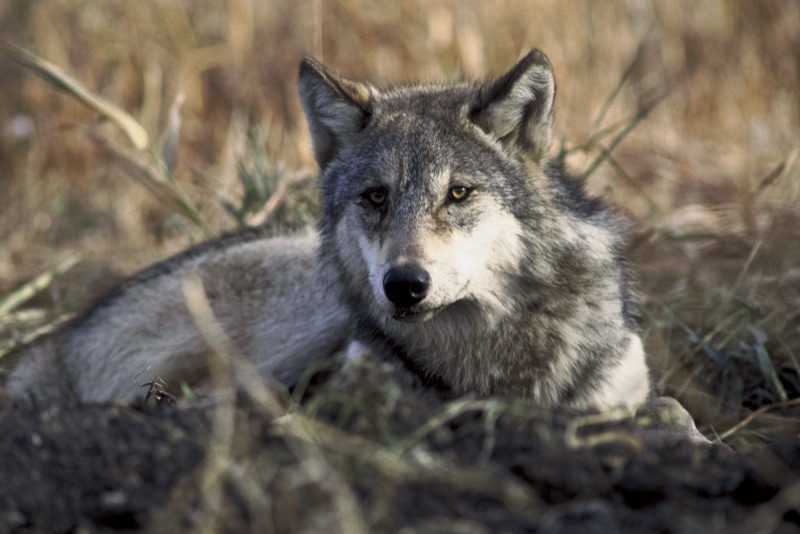
Gray wolves are powerful, athletic animals built for long-distance travel. An adult wolf typically weighs between 30 and 80 kilograms (66 to 175 pounds), with males being larger than females, and they stand about 66 to 81 centimeters (26 to 32 inches) tall at the shoulder. Despite their name, gray wolves are not always gray; their thick fur can range from pure white to black, with shades of brown, tan, and silver in between. Their large paws act like snowshoes, spreading wide to help them walk on top of snow, and each paw has non-retractable claws that provide traction on rough terrain. Wolves have powerful jaws with 42 teeth, including long canine teeth that can be over 5 centimeters (2 inches) long, giving them one of the strongest bites of any living canid.
Packs and Social Structure
Wolves are highly social animals that live in groups called packs, which usually consist of 5 to 10 members. A typical pack is actually a family unit led by a breeding pair, often called the alpha male and alpha female, along with their offspring from the current and sometimes previous years. Every member of the pack has a role, whether it is hunting, guarding the den, or babysitting the pups while the parents are away. Wolves maintain order within the pack through body language, facial expressions, and vocalizations rather than constant fighting. This strong social structure is one of the reasons wolves are such successful predators, because working together allows them to take down prey much larger than any single wolf could handle alone.
Where They Live
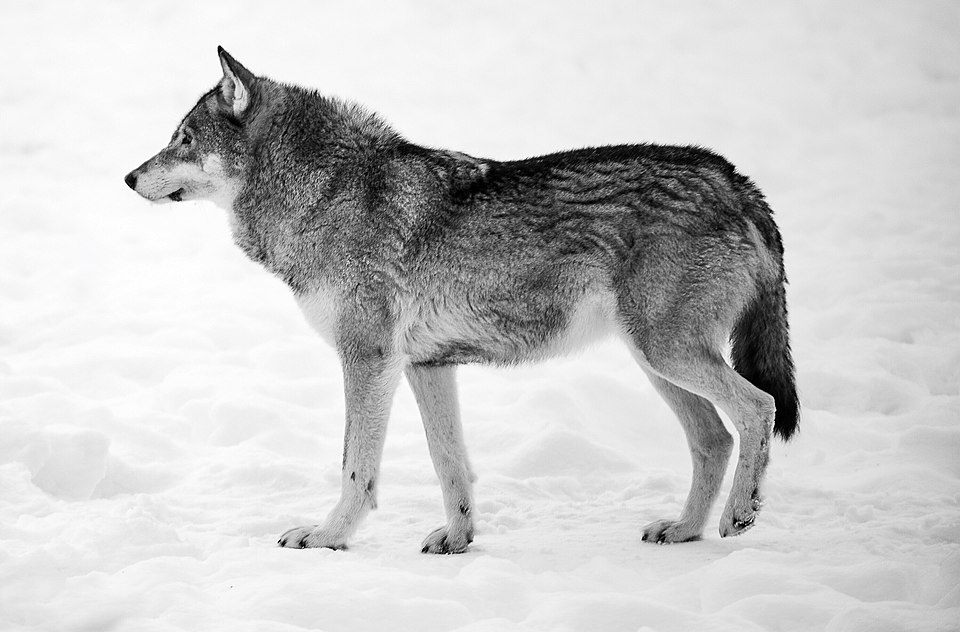
Gray wolves are found across a wide range of habitats in the Northern Hemisphere, from the frozen tundra of the Arctic to the forests of North America, Europe, and Asia. In the United States, wolf populations are concentrated in Alaska, the northern Rocky Mountains (including Yellowstone National Park), Minnesota, Wisconsin, and Michigan. Wolves are highly adaptable and can survive in forests, grasslands, mountains, and even deserts, as long as there is enough prey and space to roam. A single wolf pack’s territory can cover anywhere from 80 to over 2,600 square kilometers (30 to 1,000 square miles), depending on how much food is available. They mark the boundaries of their territory with scent markings and howling to warn rival packs to stay away.
Hunting
Wolves are carnivores that hunt cooperatively, chasing prey in coordinated groups that can run down animals much larger and faster than themselves. Their main prey includes large hoofed animals like elk, deer, moose, and caribou, though they also eat smaller animals such as beavers and rabbits when larger prey is scarce. A wolf pack typically hunts by selecting a target, often an animal that is old, young, or injured, and then pursuing it in a long chase that can cover several kilometers. Wolves can run at speeds up to 60 kilometers per hour (37 miles per hour) in short bursts, but their real advantage is endurance, allowing them to trot at a steady pace for hours. Unlike their relatives the coyote and the fox, wolves regularly take on prey that outweighs them by five to ten times.
Howling and Communication
Wolves are famous for their howling, which can be heard from up to 16 kilometers (10 miles) away in open terrain. A howl serves many purposes: it helps pack members find each other across great distances, strengthens social bonds, and warns neighboring packs to stay out of their territory. Each wolf has a unique voice, and when a pack howls together, they deliberately choose different pitches, creating a chorus that makes the pack sound larger than it actually is. Beyond howling, wolves communicate using an impressive range of barks, growls, whimpers, and yips, each carrying a different meaning. They also “talk” with their bodies, using tail position, ear angle, and facial expressions to show everything from dominance and submission to playfulness and affection.
Pups and Family Life
Wolf pups are born in the spring, usually in litters of four to six, inside a sheltered den that the mother digs into a hillside or finds among rocks. Newborn pups weigh only about 450 grams (one pound), are blind and deaf, and depend entirely on their mother for warmth and milk during their first few weeks. The entire pack helps raise the pups, with older siblings and other pack members bringing food back to the den and taking turns watching over the little ones. By about ten weeks old, the pups leave the den and begin exploring a nearby gathering area called a rendezvous site, where they play, wrestle, and start learning the social skills they will need as adults. Young wolves usually stay with their birth pack until they are one to three years old, when they may leave to find a mate and start a pack of their own.
Wolf Species Around the World
While the gray wolf is the most widespread species, it is not the only wolf in the world. The red wolf, once common across the southeastern United States, is now critically endangered, with only a small wild population surviving in North Carolina. The Ethiopian wolf, found high in the mountains of Ethiopia, is the rarest canid on Earth, with fewer than 500 individuals left in the wild. The African wild dog, though not a true wolf, is a close relative that hunts in packs across the savannas of sub-Saharan Africa. Arctic wolves, a subspecies of the gray wolf, have adapted to life in the far north with thick white fur and smaller ears that reduce heat loss in freezing temperatures.
Wolves and People
The relationship between wolves and humans has been complicated for thousands of years. In many Native American and Indigenous cultures, wolves are respected as symbols of strength, loyalty, and family, and they appear in countless myths and legends around the world. However, European settlers in North America viewed wolves as dangerous pests and hunted them relentlessly, nearly wiping them out by the mid-1900s. The reintroduction of wolves to Yellowstone National Park in 1995 became one of the most famous conservation success stories, as the returning wolves triggered a cascade of positive changes throughout the entire ecosystem. Today, debates continue between ranchers who worry about wolves attacking livestock and conservationists who argue that wolves play a vital role in keeping ecosystems healthy and balanced.
 OtterKnow Kids Encyclopedia