What They Look Like
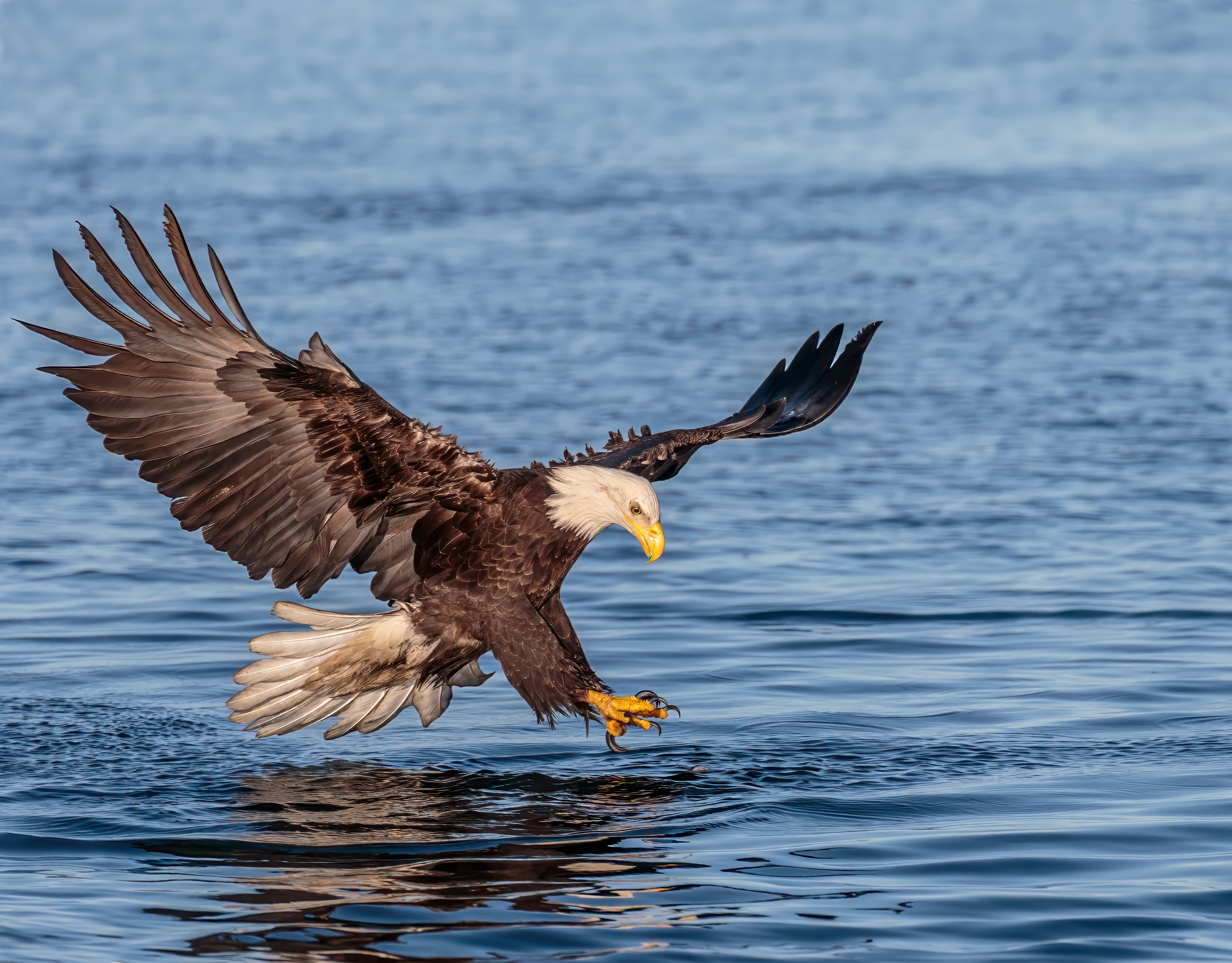
Adult bald eagles are easy to spot thanks to their striking dark brown bodies and brilliant white heads and tails. Their hooked yellow beaks are large and strong, perfectly shaped for tearing apart fish and other prey. A fully grown bald eagle stands about 30 inches tall and weighs between 6 and 14 pounds, with females being larger than males. Young bald eagles, however, look quite different from their parents — they are mostly dark brown all over and do not develop their famous white head and tail feathers until they are about four or five years old. Their legs and feet are a vivid yellow, equipped with powerful talons that can grip with crushing force.
Flight and Vision
Bald eagles are built for soaring, with wingspans that stretch between 6 and 8 feet from tip to tip. Rather than flapping constantly, they use rising columns of warm air called thermals to glide effortlessly across the sky, sometimes reaching speeds of 30 to 35 miles per hour in level flight. When diving for prey, they can plunge at speeds of up to 100 miles per hour. Their eyesight is among the sharpest in the animal kingdom — roughly four to eight times stronger than a human’s — allowing them to spot a fish swimming near the surface from over a mile away. Special transparent eyelids called nictitating membranes protect their eyes while flying and hunting.
Where They Live
Bald eagles live across North America, from the frozen wilderness of Alaska and northern Canada all the way down to the northern parts of Mexico. They strongly prefer habitats near large bodies of water, including coastlines, rivers, lakes, and reservoirs, because these areas provide their main food source: fish. Alaska has the largest bald eagle population of any state, with an estimated 30,000 birds. During winter, bald eagles sometimes migrate south to find open water where fish are easier to catch, and they may gather in large groups near rivers with plentiful food. Old-growth forests near water are especially important because they provide the tall, sturdy trees that eagles need for nesting.
Fishing and Hunting
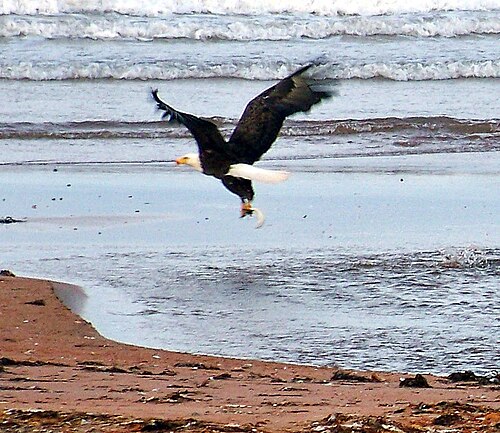
Fish make up about 60 to 90 percent of a bald eagle’s diet, and watching one hunt is a thrilling sight. An eagle will soar high above the water, scanning with its sharp eyesight, then swoop down and extend its feet forward at the last moment to snatch a fish right out of the water with its sharp talons. The rough, bumpy pads on the bottoms of their feet help them grip slippery fish. Bald eagles also eat birds, small mammals like rabbits, and even carrion — animals that are already dead. They are also known to steal food from other birds, especially ospreys, chasing them through the air until the smaller bird drops its catch.
Nests
Bald eagles build the largest nests of any bird in North America, and some of the biggest nests ever recorded in the entire world. A typical eagle nest, called an aerie, is about 5 to 6 feet across and 2 to 4 feet deep, but eagles add new sticks and materials to the same nest year after year, so old nests can grow enormous. One famous nest in St. Petersburg, Florida, measured nearly 10 feet wide and 20 feet deep and weighed close to 4,400 pounds. Eagles build their nests high up in the tallest trees near water, using large sticks for the structure and lining the inside with soft materials like grass, moss, and feathers. Both the male and female eagle work together to build and maintain their nest.
Eaglets and Family Life
Bald eagles typically mate for life, returning to the same nesting territory and often the same nest each breeding season. The female usually lays one to three eggs, and both parents take turns keeping the eggs warm for about 35 days until they hatch. Eaglets are born covered in fluffy gray down and are completely dependent on their parents for food and warmth. The parents tear small pieces of fish and meat to feed their young, and eaglets grow quickly — they can gain a pound every four or five days during their first few weeks of life. By about 10 to 12 weeks old, young eagles take their first flight, called fledging, though they may stay near the nest for several more weeks while they practice hunting on their own.
National Symbol and Conservation
The bald eagle was chosen as the national emblem of the United States in 1782 because it represented strength, courage, and freedom. However, by the mid-1900s, bald eagles were in serious trouble. A chemical pesticide called DDT was causing their eggshells to become so thin that they cracked before the chicks could develop, and the total number of nesting pairs in the lower 48 states dropped to just 417 by 1963. The government banned DDT in 1972 and placed bald eagles under the protection of the Endangered Species Act, which made it illegal to harm them or disturb their nests. Thanks to these protections and dedicated conservation efforts, the bald eagle population recovered dramatically — by 2021, there were an estimated 316,700 individual bald eagles in the lower 48 states. The bald eagle was officially removed from the endangered species list in 2007, standing as a powerful reminder of what can happen when people work together to protect wildlife.
 OtterKnow Kids Encyclopedia