What They Look Like
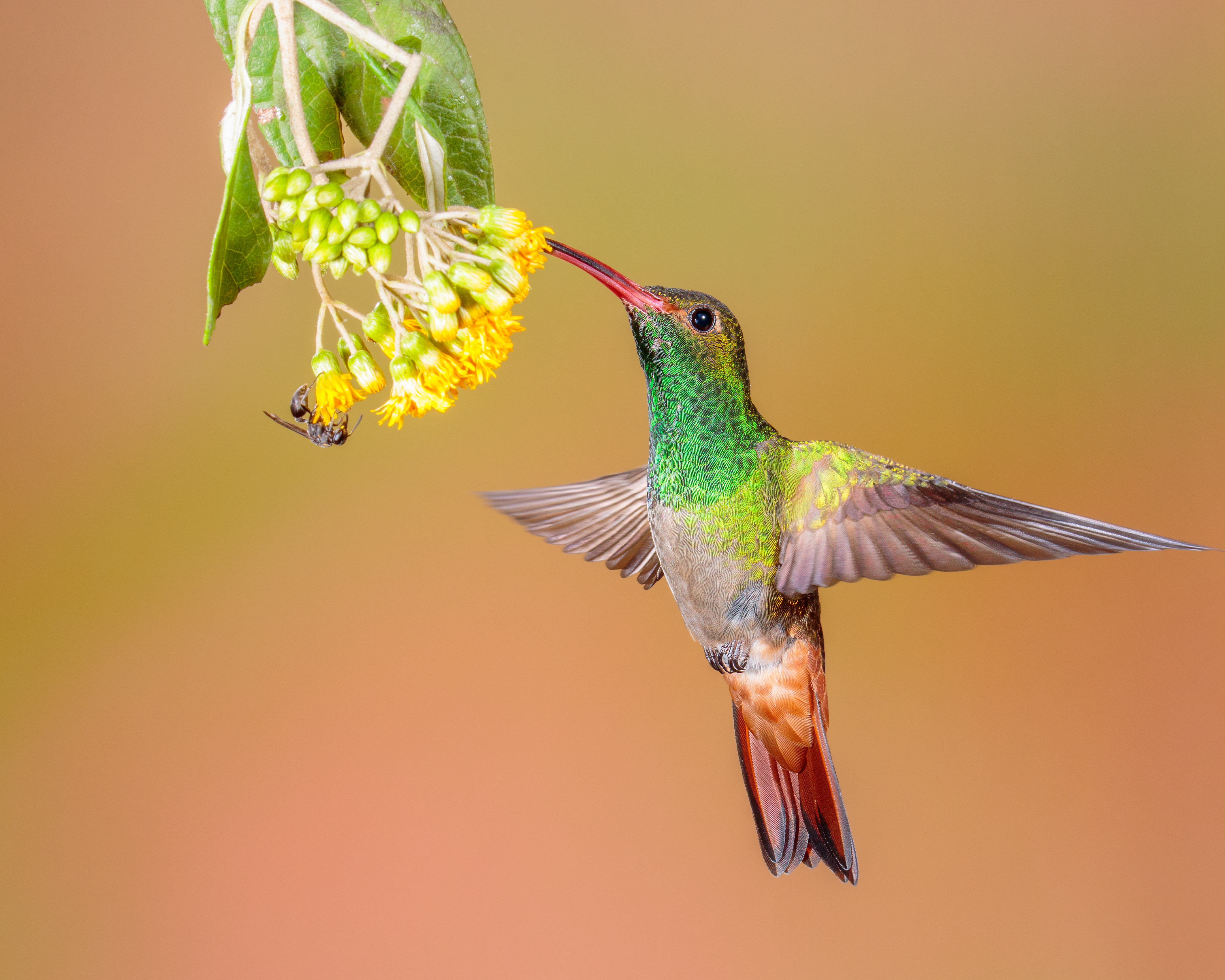
Most hummingbirds are tiny. The bee hummingbird of Cuba is the smallest bird in the world, measuring just 5 centimeters (about 2 inches) long and weighing less than a penny. Even the largest species, the giant hummingbird of South America, is only about 23 centimeters (9 inches) long. Hummingbirds are known for their iridescent feathers, which shimmer and change color depending on the angle of the light. Males are usually more colorful than females, with bright patches of red, violet, green, or blue on their throats called gorgets. Their long, slender bills come in different shapes depending on what flowers they feed from, and their tongues can extend far beyond the tip of the bill to reach deep into blossoms.
Flight
Hummingbirds are the only birds that can truly hover in place for extended periods and fly backward. They achieve this by rotating their wings in a figure-eight pattern, generating lift on both the forward and backward strokes. Their wings beat astonishingly fast, ranging from about 50 beats per second in larger species to more than 80 beats per second in smaller ones. This rapid wingbeat is what creates the humming sound that gives these birds their name. Hummingbirds can also fly upside down briefly and reach speeds of over 50 kilometers per hour (about 30 miles per hour) in regular flight. During courtship dives, some species plunge through the air at speeds exceeding 80 kilometers per hour.
Where They Live
Hummingbirds live exclusively in the Western Hemisphere, from Alaska all the way south to Tierra del Fuego at the tip of South America. The greatest variety of species is found in the tropical regions of Central and South America, especially in countries like Ecuador and Colombia, where more than 130 species have been recorded. In North America, the ruby-throated hummingbird is the most common species east of the Mississippi River, while several species, including Anna’s hummingbird and the rufous hummingbird, inhabit the western states. Hummingbirds occupy a wide range of habitats, from sea-level rainforests to mountain meadows high in the Andes, where some species live at elevations above 4,000 meters (13,000 feet).
Nectar and Feeding
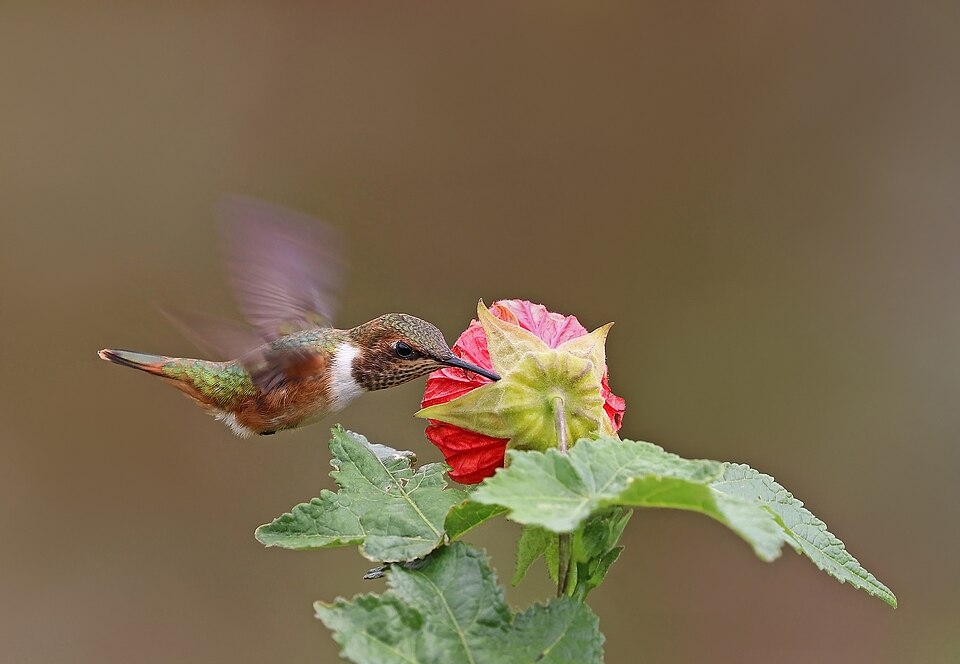
Nectar from flowers is the primary fuel for hummingbirds, providing the sugars they need to power their high-energy lifestyle. A hummingbird visits hundreds of flowers each day, using its long, forked tongue to lap up nectar at a rate of about 13 licks per second. But nectar alone does not provide everything a hummingbird needs. These birds also eat small insects and spiders, which supply essential protein, fat, and minerals for building muscle and growing feathers. Hummingbirds catch insects by hawking them out of the air, gleaning them from leaves, or plucking them from spider webs. Some species are highly territorial and will aggressively defend a patch of flowers from other hummingbirds, chasing away intruders with high-speed aerial battles.
Hummingbirds have one of the fastest metabolisms of any animal. Their hearts can beat more than 1,200 times per minute during flight, and they take around 250 breaths per minute. To sustain this pace, a hummingbird must eat frequently throughout the day, consuming roughly half its body weight in sugar daily. If a human had the same metabolic rate, they would need to eat over 150,000 calories every day. At night, when they cannot feed, many hummingbirds enter a state called torpor, a kind of deep sleep in which their body temperature drops dramatically and their heart rate slows to as few as 50 beats per minute. Torpor allows them to conserve energy and survive cool nights that would otherwise drain their reserves completely.
Nesting and Chicks
Female hummingbirds build their nests alone, constructing tiny cup-shaped structures from plant fibers, moss, and lichen, bound together with spider silk. Spider silk is an ideal building material because it is strong, flexible, and stretches as the chicks grow. Most hummingbird nests are about the size of a walnut and hold exactly two eggs, each roughly the size of a jellybean. The female incubates the eggs for about two to three weeks, and the chicks hatch blind and nearly featherless. She feeds them by inserting her bill into their mouths and regurgitating a mixture of nectar and tiny insects. The young birds fledge after about three weeks but may continue to receive food from their mother for another week or two before becoming fully independent.
Hummingbirds and Flowers
Hummingbirds and the flowers they pollinate have evolved together over millions of years in a relationship scientists call coevolution. Many flowers that depend on hummingbird pollination are tubular in shape, brightly colored in red or orange, and produce abundant nectar but little scent, since birds rely more on sight than smell. As a hummingbird pushes its bill into a flower to drink, pollen sticks to its head and bill and is carried to the next blossom, fertilizing it. Some flowers have evolved bill-shaped curves that match only certain hummingbird species, ensuring that their pollen reaches the right plants. This partnership benefits both sides: the bird gets a reliable food source, and the flower gets an efficient pollinator that travels long distances between plants.
Migration
Several hummingbird species undertake impressive migrations despite their tiny size. The rufous hummingbird travels up to 6,400 kilometers (nearly 4,000 miles) each way between its breeding grounds in Alaska and the Pacific Northwest and its wintering areas in Mexico, one of the longest migrations relative to body size of any bird. The ruby-throated hummingbird makes a nonstop flight of roughly 800 kilometers (500 miles) across the Gulf of Mexico each spring and fall, a journey that takes about 18 to 20 hours with no place to rest. To prepare for migration, hummingbirds enter a phase of intense feeding called hyperphagia, during which they may gain 25 to 40 percent of their body weight in fat reserves. Not all hummingbirds migrate, however. Many tropical species remain in the same area year-round, and Anna’s hummingbird stays along the Pacific coast of North America even through the winter months.
 OtterKnow Kids Encyclopedia