What They Look Like
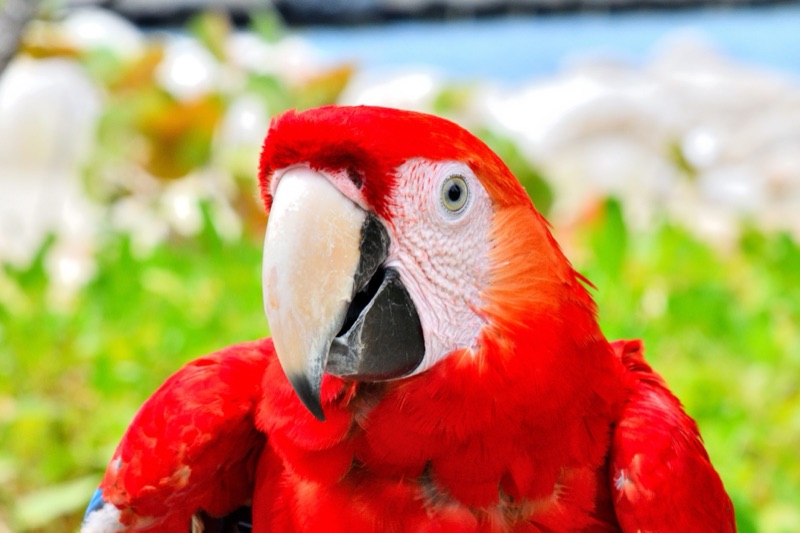
Most parrots are famous for their vivid plumage, which can include brilliant greens, reds, blues, and yellows. Their feathers get their color from both pigments and the way light bounces off tiny structures inside each feather, a trick called structural coloration. All parrots share a strong, curved upper beak that hooks downward over a shorter lower beak, giving them a powerful tool for cracking seeds and climbing branches. Their zygodactyl feet work almost like hands, letting them grip food, hang upside down, and scramble along tree limbs with surprising agility. Not every parrot is a rainbow, though — cockatoos are mostly white or pale pink, and the kakapo of New Zealand wears mossy green-brown feathers that help it blend into the forest floor.
Talking and Mimicry
Parrots are the champion mimics of the bird world. Unlike mammals, they do not have vocal cords; instead, they produce sound by controlling muscles in a special organ called the syrinx, located where the windpipe splits into the lungs. African grey parrots are considered the most talented talkers and can learn hundreds of words and phrases. In the wild, parrots use their mimicry skills to communicate within their flocks, copying calls that help them identify family members and warn of danger. Some species even develop regional “dialects,” meaning flocks living in different areas sound noticeably different from one another, much like human accents.
Intelligence
Parrots rank among the smartest animals on the planet. An African grey parrot named Alex, studied by scientist Irene Pepperberg for 30 years, learned to identify colors, shapes, and quantities and could even understand the concept of “zero.” In the wild, parrots solve problems every day — kea parrots in New Zealand have been filmed working together to open trash cans and puzzle boxes. Parrots also show strong social intelligence: they cooperate with flock mates, remember individual faces, and can hold grudges or form lasting friendships. Scientists believe their large brains relative to body size, combined with long lifespans that give them time to learn, explain why parrots rival primates in certain cognitive tests.
Where They Live
Parrots are found on every continent except Antarctica, though they are most diverse in the warm tropics of South America, Australia, and Southeast Asia. Rainforests are home to the greatest variety of species, but parrots also thrive in savannas, grasslands, alpine meadows, and even deserts. The kea lives high in the snowy mountains of New Zealand’s Southern Alps, while the monk parakeet has established wild colonies in cities across North America and Europe after escaping from the pet trade. Australia alone is home to more than 50 parrot species, including budgerigars, cockatoos, and lorikeets. Sadly, habitat loss from deforestation is the biggest threat to parrot populations worldwide, and about one-third of all parrot species are considered at risk.
What They Eat
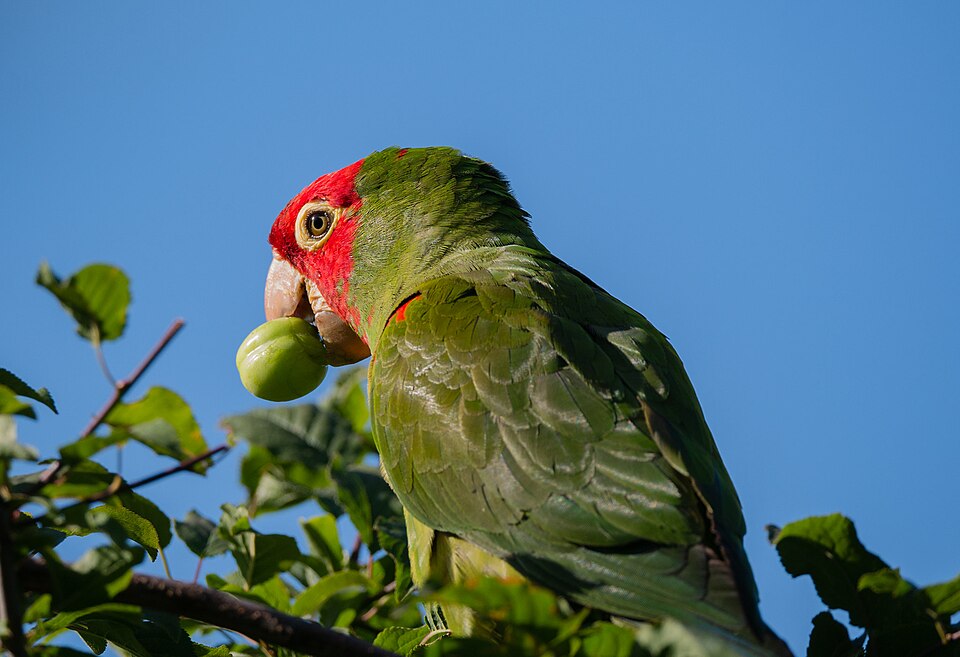
A parrot’s powerful beak is perfectly designed for its diet. Most species eat seeds, nuts, fruits, and flowers, using their strong jaws to crack open hard shells that other birds cannot manage — a hyacinth macaw can even split a Brazil nut. Lorikeets have a specialized brush-tipped tongue that lets them lap up nectar from blossoms, making them important pollinators in Australian forests. Some parrots eat clay from riverbanks, which scientists think helps neutralize toxins found in unripe seeds and fruits. Parrots often forage in large, noisy flocks, moving through the canopy together and calling out when they find a good food source.
Nesting and Family
Most parrots are cavity nesters, meaning they lay their eggs inside holes in trees, cliff faces, or even termite mounds. They do not build elaborate nests the way songbirds do; instead, the female often lays her eggs on bare wood chips at the bottom of the hollow. Clutch sizes range from one to eight eggs depending on the species, and both parents typically share incubation and feeding duties. Parrot chicks hatch blind and featherless and depend on their parents for weeks or even months before they can fly. Many parrot species form lifelong pair bonds, staying with the same mate year after year, and some large macaws and cockatoos can live 60 to 80 years in captivity.
Parrots and People
Humans have kept parrots as companions for at least 3,000 years, dating back to ancient civilizations in India and Egypt. Today, parrots are the most popular pet birds in the world, prized for their beauty, intelligence, and ability to bond with their owners. However, the pet trade has also been one of the greatest threats to wild parrot populations, with millions of birds captured illegally over the past century. Conservation programs are making a difference — the Spix’s macaw, once declared extinct in the wild, is being reintroduced to Brazilian forests through captive breeding efforts. Organizations around the world are also working to protect parrot habitats and crack down on illegal trapping, giving these extraordinary birds a better chance at a future in the wild.
Conservation Challenges
About one in three parrot species faces some level of threat, making parrots one of the most endangered groups of birds on Earth. Deforestation destroys the old-growth trees that many species depend on for nesting, while climate change shifts the timing of fruit and flower availability. Invasive predators like rats, cats, and stoats are especially devastating on islands — the kakapo, a flightless, nocturnal parrot from New Zealand, was driven to near extinction and now survives only because every remaining bird (around 250 as of recent counts) is tracked and protected on predator-free islands. Captive breeding, habitat restoration, and stronger wildlife trade laws are all critical tools in the fight to save parrots. By learning about these birds and supporting conservation efforts, young people can play a real part in keeping parrot populations healthy for the future.
 OtterKnow Kids Encyclopedia