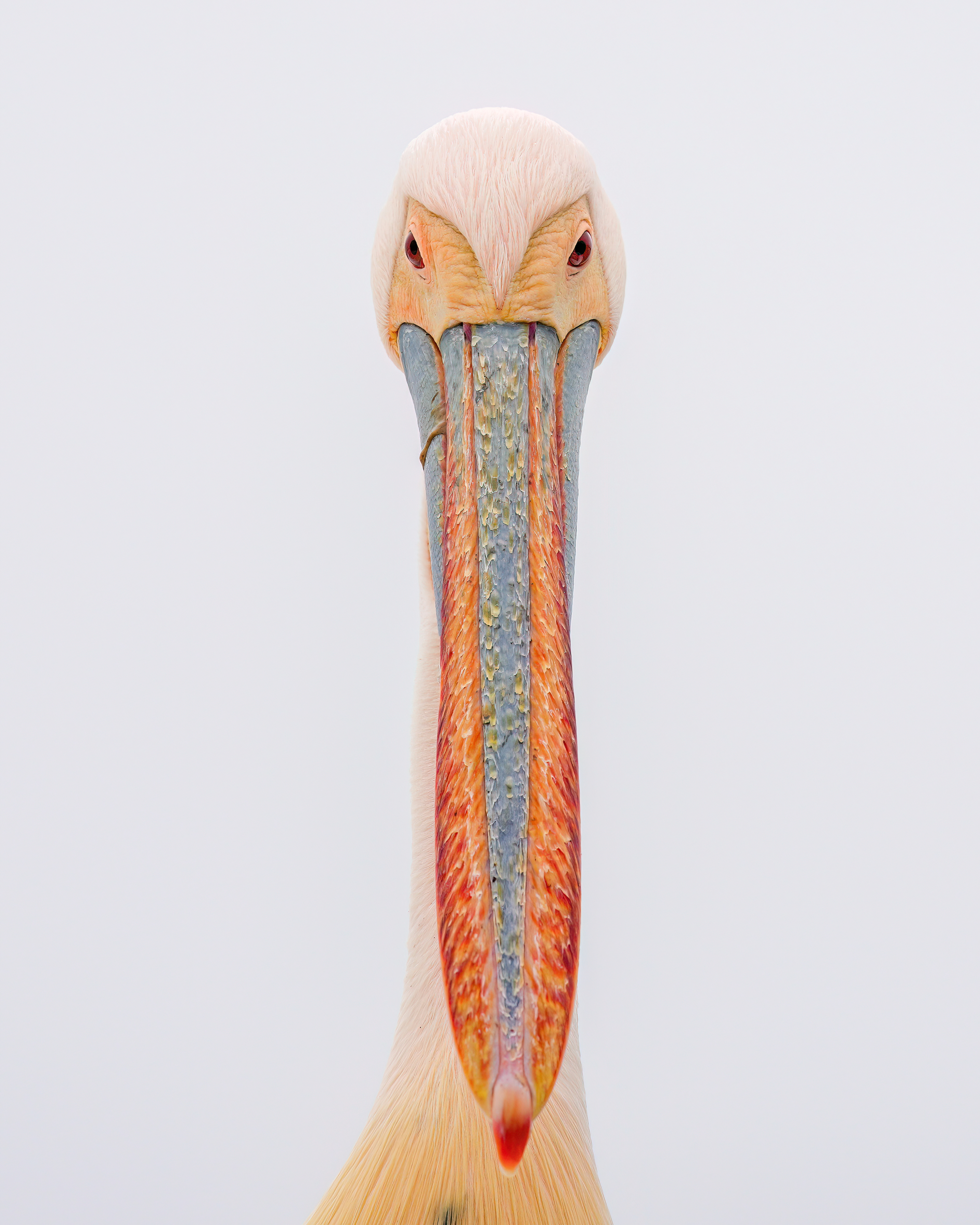
What They Look Like
Pelicans are big, heavy birds with barrel-shaped bodies, short legs, and enormous wingspans that can stretch over 3 meters (about 10 feet) in the largest species. Their most famous feature is the long, flat bill with a flexible pouch of skin hanging from the lower half. Most pelicans have white or light gray plumage, though the brown pelican sports darker feathers that help it blend in along rocky shorelines. Their webbed feet make them strong swimmers, and their lightweight, air-filled bones help them stay buoyant on the water. During breeding season, many species develop bright patches of color on their faces, pouches, or bills to attract mates.
The Pouch
A pelican’s throat pouch is one of the most unusual structures in the bird world. Made of stretchy skin, the pouch can hold up to 11 liters of water — roughly three times the capacity of the bird’s stomach. When a pelican scoops up a mouthful of water and fish, it tilts its head to drain the water out through the sides of the bill before swallowing its catch. The pouch is not used for storing food, despite what many people believe; it works more like a fishing net. In hot weather, pelicans flutter the pouch rapidly to cool themselves down, since the thin skin releases heat much the way a dog pants.
Where They Live
Pelicans are found on every continent except Antarctica, living near lakes, rivers, estuaries, and ocean coasts where fish are plentiful. The American white pelican breeds on inland lakes across the northern United States and Canada, then migrates south to the Gulf of Mexico for winter. Brown pelicans prefer warm saltwater coastlines from the southeastern United States down through Central and South America. The Dalmatian pelican, the largest of all pelican species, nests in wetlands stretching from southeastern Europe to central Asia. Wherever they live, pelicans need open water with healthy fish populations and undisturbed shorelines or islands for nesting.
Fishing
Different pelican species have developed their own clever fishing techniques. Brown pelicans are dramatic plunge-divers — they fly 10 to 20 meters above the ocean surface, spot a school of fish, and then fold their wings and dive headfirst into the water. The impact of hitting the water stuns nearby fish, making them easier to scoop up. Most other pelicans fish while swimming, dipping their bills below the surface to catch fish in their pouches. The Australian pelican has been observed eating fish weighing over 2 kilograms, proving that the stretchy pouch can handle impressively large prey.
Cooperative Hunting
One of the most interesting pelican behaviors is cooperative hunting, where groups of birds work together to catch more fish than any single bird could alone. A line of pelicans will swim in a horseshoe formation, beating their wings against the water to drive fish into shallow areas where they are easier to catch. This strategy is especially common among American white pelicans on lakes and rivers. By herding fish together, each bird in the group gets a bigger meal than it would fishing by itself. Scientists consider this an example of social intelligence, since the birds coordinate their movements without any obvious leader giving instructions.
Nesting and Chicks
Pelicans are colonial nesters, meaning they breed in large groups that can include hundreds or even thousands of pairs on a single island. Ground-nesting species, like the American white pelican, build low mounds of dirt and vegetation, while some species nest in trees or on cliff ledges. A female typically lays two or three eggs, and both parents take turns keeping them warm for about 30 days. Pelican chicks hatch blind and featherless, completely dependent on their parents for food, which the adults regurgitate directly into the chick’s open bill. The older, stronger chick often receives more food and grows faster, and sadly, the younger sibling does not always survive.
Pelicans and People
Pelicans have held a special place in human culture for thousands of years. In medieval Europe, the pelican became a symbol of self-sacrifice because people believed the mother bird fed her chicks with her own blood — a myth inspired by the reddish tinge some species develop on their chest feathers during breeding season. In the 1960s and 1970s, the brown pelican nearly went extinct in parts of North America because the pesticide DDT caused their eggshells to become so thin that they cracked under the weight of a nesting parent. After DDT was banned in 1972, brown pelican populations slowly recovered, and the species was removed from the U.S. Endangered Species List in 2009. Today, pelicans face threats from habitat loss, pollution, and climate change, but conservation efforts around the world are helping pelican populations recover.
Pelicans in the Ecosystem
As top predators in their aquatic habitats, pelicans play an important role in keeping fish populations balanced. Their large breeding colonies also create nutrient-rich deposits of guano (bird droppings) that fertilize the soil and support plant growth on nesting islands. Because pelicans need clean water and abundant fish, scientists often use them as indicator species — when pelican populations are healthy, it usually means the surrounding ecosystem is healthy too. Pelicans also share their nesting colonies with other waterbirds like cormorants, herons, and gulls, creating busy, noisy communities of wildlife. Protecting pelican habitats benefits not just the pelicans themselves but the entire web of life that depends on healthy waterways.
 OtterKnow Kids Encyclopedia