What They Look Like
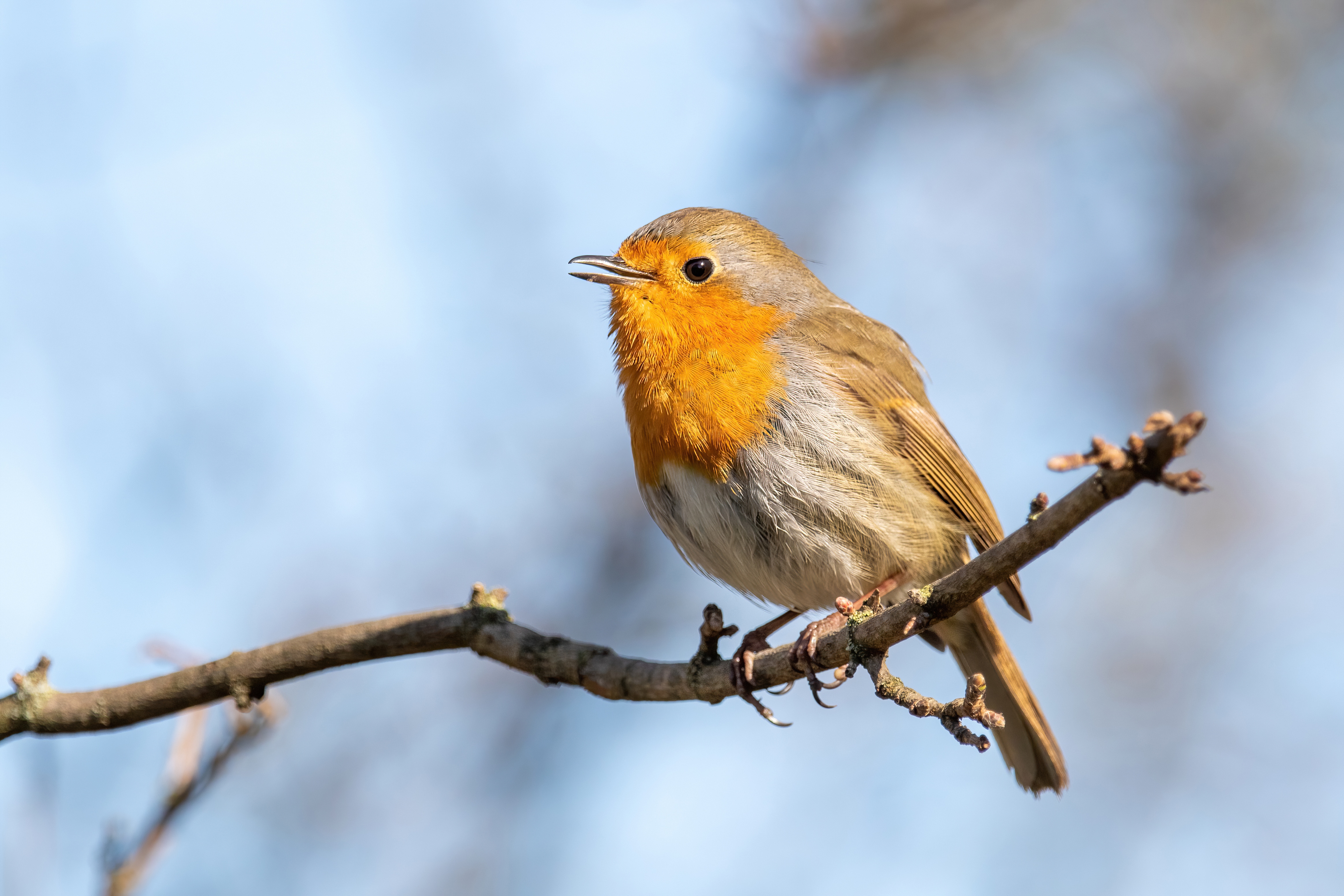
The American robin is a medium-sized songbird, measuring about 23 to 28 centimeters (9 to 11 inches) from beak to tail. Adults have a warm, brick-red or orange breast and belly, a dark gray to black head, and a grayish-brown back. A white ring around each eye gives the bird an alert, wide-awake expression. Males tend to have darker heads and richer breast color than females, though both sexes share the same basic pattern. Young robins look quite different from their parents — their breasts are spotted with dark marks, a trait that reveals their connection to other thrushes like the wood thrush and hermit thrush.
Song and Communication
Robins are among the earliest singers each morning, often beginning their songs before sunrise. Their melodious, rising-and-falling phrases are sometimes described as “cheerily, cheer-up, cheerio,” and they repeat these patterns over and over from a high perch. Males sing most actively during the breeding season to defend their territories and attract mates. In addition to their song, robins use a sharp “tut-tut-tut” alarm call to warn other birds when a predator such as a hawk or a cat is nearby. They also produce a high, thin “seeee” call that signals aerial danger, causing nearby robins to freeze in place.
Where They Live
American robins are found in an enormous range of habitats across North America. They thrive in suburban lawns, parks, gardens, forests, and even mountain meadows up to about 3,700 meters (12,000 feet) in elevation. Robins prefer areas with open ground for foraging and nearby trees or shrubs for nesting and roosting. In summer they breed across Canada and the northern and central United States, while in winter many move to the southern United States and Mexico. Some robins remain year-round in milder parts of their range, so people in those areas can spot them in every season.
What They Eat
Robins are omnivores, meaning they eat both plants and animals depending on the season. In spring and summer, earthworms make up a large part of their diet — you have probably seen a robin tilting its head on a lawn, using its keen eyesight to spot a worm just below the surface. They also eat beetles, caterpillars, grasshoppers, and other insects, especially when feeding their hungry nestlings. In fall and winter, robins switch mainly to fruit, feasting on berries from holly, juniper, dogwood, and many other plants. This seasonal shift in diet is one reason robins can survive in such a wide range of climates and habitats.
Migration
Although the American robin’s scientific name migratorius means “migratory,” not all robins migrate the same way. Northern populations that breed in Canada and Alaska travel south in autumn, sometimes flying hundreds or even thousands of kilometers to reach warmer wintering grounds. Southern and coastal populations, however, may barely move at all. During migration, robins often gather in enormous flocks that can number in the tens of thousands, roosting together in trees at night for warmth and safety. The arrival of robins in northern states and provinces is traditionally seen as one of the first signs of spring, even though some hardy individuals actually stay through the winter in sheltered areas.
Nesting and Eggs
Female robins build sturdy, cup-shaped nests from grass, twigs, and mud, often placing them on a horizontal branch or a ledge on a building. The inside of the nest is lined with fine, dry grass to cushion the eggs. A typical clutch contains three to five eggs, and each egg is a distinctive sky-blue color — so well known that the shade is called “robin’s-egg blue.” The female incubates the eggs for about 12 to 14 days, and both parents share the work of feeding the chicks after they hatch. Robins often raise two or even three broods in a single breeding season, which helps keep their populations strong despite threats from predators like crows, jays, squirrels, and cats.
Robins and Seasons
Throughout history, people in North America have connected the robin with the changing seasons. Its loud, cheerful song in February or March lifts spirits after a long winter, and poets and songwriters have celebrated the robin as a symbol of renewal and hope. In summer, robins are a constant presence on lawns and in gardens, providing natural pest control by eating large numbers of insects. As autumn arrives and berries ripen, flocks of robins descend on fruit-bearing trees in a noisy, energetic display. The robin’s close relationship with people and their landscapes has earned it the honor of being the state bird of Connecticut, Michigan, and Wisconsin.
Conservation
American robins are one of the most abundant land birds in North America, with an estimated population of around 370 million individuals. They are not considered threatened, and their numbers have remained stable or even increased over the past several decades. However, robins did suffer significant population declines in the mid-twentieth century due to the widespread use of the pesticide DDT, which poisoned the earthworms they ate. Rachel Carson’s landmark 1962 book Silent Spring drew attention to this problem and helped lead to the banning of DDT in the United States in 1972. Today, the biggest ongoing threats to robins include habitat loss, window collisions, and predation by outdoor cats, but their adaptability to human-altered landscapes continues to serve them well.
 OtterKnow Kids Encyclopedia