What They Look Like
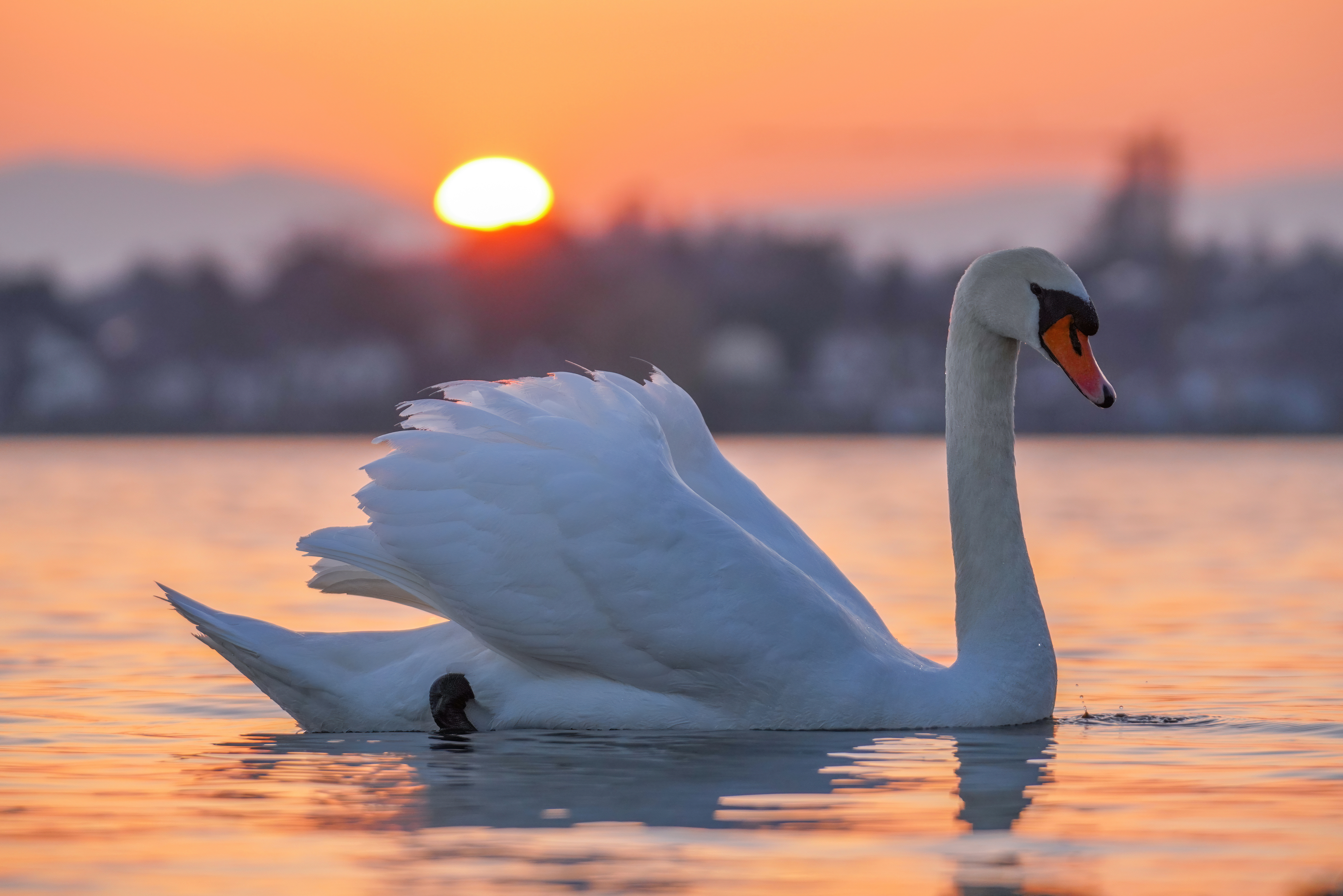
Most swan species have brilliant white feathers, though the black swan of Australia is almost entirely black and the black-necked swan of South America has a striking white body with a jet-black neck. Swans are the largest members of the waterfowl family, with some trumpeter swans weighing over 12 kilograms and stretching nearly 1.8 meters from bill to tail. Their long, flexible necks contain around 24 vertebrae, more than almost any other bird, which allows them to reach underwater plants while swimming on the surface. Males, called cobs, are usually slightly larger than females, called pens, though the two can be difficult to tell apart. Young swans have brownish or grayish feathers that gradually turn white as they mature over their first year or two of life.
Flight
Despite their large size, swans are strong fliers that can cover impressive distances during migration. Tundra swans travel up to 6,000 kilometers between their Arctic breeding grounds and their wintering areas in milder climates. To get airborne, swans need a long runway of open water, running across the surface while beating their massive wings until they build enough speed to lift off. Once in the air, they can reach speeds of around 95 kilometers per hour, and their wingbeats produce a distinctive rhythmic whistling sound that can be heard from far away. Mute swans, despite their name, are not truly silent in flight; the thrumming of their wings creates a unique musical hum that carries across lakes and rivers.
Where They Live
Swans are found on every continent except Africa and Antarctica. They prefer freshwater habitats such as lakes, ponds, rivers, and marshes, though some species also use sheltered coastal areas and estuaries during winter. Mute swans originally lived across Europe and central Asia but have been introduced to North America, Australia, and other regions. Trumpeter swans and tundra swans are native to North America, while whooper swans breed across northern Europe and Asia. The black swan is found throughout Australia and has been introduced to New Zealand, and the black-necked swan lives in wetlands across southern South America.
What They Eat
Swans are primarily herbivores, feeding on a variety of aquatic plants, roots, and tubers. They use their long necks to reach vegetation growing beneath the water’s surface, a feeding behavior called “upending” where they tip forward with their tails pointing straight up in the air. On land, swans graze on grasses, clover, and crops in farm fields near their wetland habitats. Cygnets eat a higher proportion of insects, larvae, and small invertebrates during their first few weeks of life because they need extra protein to fuel their rapid growth. Adult swans can eat several kilograms of plant material each day to maintain their large body size.
Pairs and Territory
Swans are famous for forming strong pair bonds that often last for life, though they occasionally choose new partners if one mate dies or if a breeding attempt fails. Courtship displays are elaborate and beautiful, with pairs facing each other, raising and lowering their necks, and sometimes forming the classic heart shape with their curved necks touching. Once paired, swans become fiercely territorial during the breeding season, defending their nesting area against other swans, geese, and even humans who come too close. A cob protecting its nest may hiss loudly, spread its wings wide in a threat display, and charge at intruders with surprising speed. This aggressive behavior has given rise to the common warning that a swan can break a person’s arm, though this is actually a myth; their wings are strong but not that powerful.
Cygnets and Family
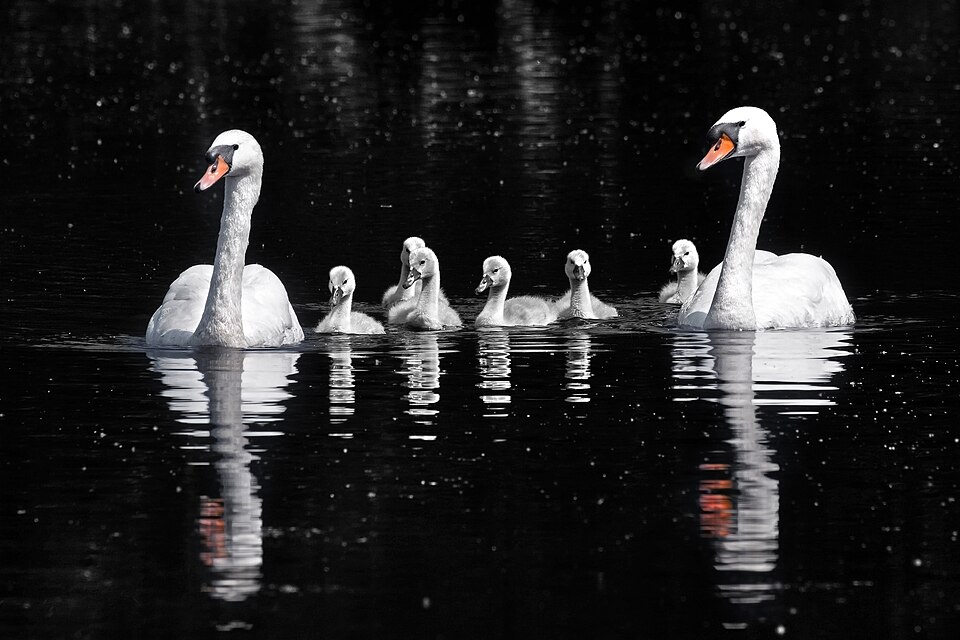
Female swans typically lay between four and eight eggs in a large nest made of reeds, grasses, and other plant material piled near the water’s edge. Both parents help build the nest, though the pen does most of the incubating over a period of about 35 to 41 days depending on the species. When the cygnets hatch, they are covered in soft downy feathers and can swim within a day or two. Young cygnets often ride on their parents’ backs for warmth and protection, tucked safely among the adult’s wing feathers. The family stays together through the cygnets’ first autumn and winter, and the young swans usually become independent the following spring when their parents begin nesting again.
Swans in Culture
Few birds have played a larger role in human art, mythology, and storytelling than the swan. In Greek mythology, the god Zeus once disguised himself as a swan, and the constellation Cygnus in the night sky is shaped like a swan in flight. The ballet Swan Lake, composed by Tchaikovsky in 1877, remains one of the most performed ballets in the world and tells the story of a princess transformed into a swan. The phrase “swan song” comes from an ancient belief that mute swans sing one beautiful melody just before they die, even though this is not actually true. In many cultures around the world, swans symbolize love, loyalty, and beauty, and in England, the reigning monarch has claimed ownership of unmarked mute swans on open waters since the twelfth century.
Conservation
Several swan species faced serious population declines in the past due to hunting, habitat loss, and lead poisoning from swallowing fishing weights. Trumpeter swans were hunted nearly to extinction by the early 1900s, with fewer than 70 birds remaining in the lower 48 United States, but dedicated conservation efforts have helped their numbers recover to over 60,000 today. Lead poisoning remains a threat because swans accidentally swallow small lead fishing sinkers while feeding on the bottom of lakes and rivers. Many countries have now banned lead sinkers in waterways frequented by swans to help protect them. Habitat conservation and wetland restoration continue to be important for ensuring that all seven swan species remain healthy.
 OtterKnow Kids Encyclopedia