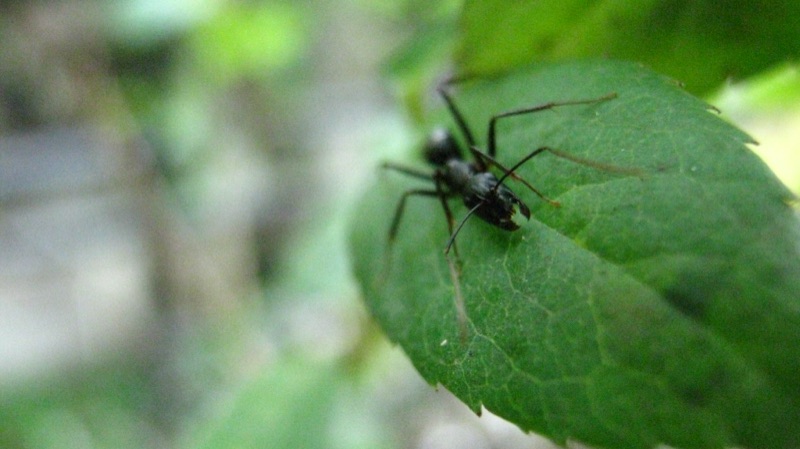
What They Look Like
Like all insects, ants have three main body parts: the head, the thorax (middle section), and the abdomen (back section). They have six legs attached to their thorax, two bent antennae on their head, and a thin waist that connects their thorax to their abdomen. Most ants are black, brown, or reddish, though some tropical species can be bright green or even metallic gold. Depending on the species, an ant can be as tiny as a grain of sand or as long as two inches. Worker ants do not have wings, but queens and males grow wings for a brief mating flight before the queen starts a new colony.
Colonies and Castes
An ant colony is like a well-organized city. At the center is the queen, whose main job is to lay eggs — sometimes thousands per day. Worker ants, which are all female, handle everything else: gathering food, caring for young larvae, building tunnels, and defending the nest. In some species there are also soldiers, which are larger workers with powerful jaws built for protecting the colony from invaders. Male ants have only one role — to mate with a queen — and they typically die shortly afterward. A single colony can contain anywhere from a few dozen ants to millions, depending on the species.
Communication
Ants cannot see very well, and they do not have ears, so they rely on chemical signals called pheromones to communicate. When a worker ant finds food, it leaves a pheromone trail on the ground as it walks back to the nest, and other ants follow that invisible path straight to the meal. Different pheromones send different messages: one chemical might mean “food this way,” while another could signal “danger — attack!” Ants also communicate by touching each other with their antennae, which lets them recognize nestmates and share information about what they have been doing. This chemical language allows thousands of ants to coordinate their actions without a single spoken word.
What They Eat
Ants are omnivores, which means they eat both plants and animals. Many species love sugary foods like nectar, fruit, and the sweet liquid called honeydew that aphids produce. Other ants are predators that hunt small insects, worms, or even other ants. Leafcutter ants take a completely different approach — they slice pieces of leaves and carry them underground, but they do not eat the leaves themselves. Instead, they use the leaf fragments to grow a special fungus inside their nest, and that fungus is what they actually eat.
Strength and Teamwork
Pound for pound, ants are some of the strongest animals alive. A single ant can lift objects that weigh 10 to 50 times its own body weight, which would be like a human picking up a car. This strength comes from their small size — their muscles do not have to support a heavy body, so more of their power goes toward lifting. When one ant is not strong enough, a group will work together to carry large prey or pieces of food back to the nest. Army ants take teamwork even further by linking their bodies together to form living bridges and rafts that allow the entire colony to cross gaps and float across rivers.
Farming and Herding
Humans are not the only species that farms — ants have been doing it for millions of years. Leafcutter ants tend underground fungus gardens the way a farmer tends crops, weeding out mold and feeding their fungus fresh leaves. Some ant species also act like ranchers by herding tiny insects called aphids. The ants protect the aphids from predators like ladybugs and carry them to the best plants to feed on. In return, the aphids produce drops of sweet honeydew that the ants drink, making it one of the oldest partnerships in the animal kingdom.
Ants Around the World
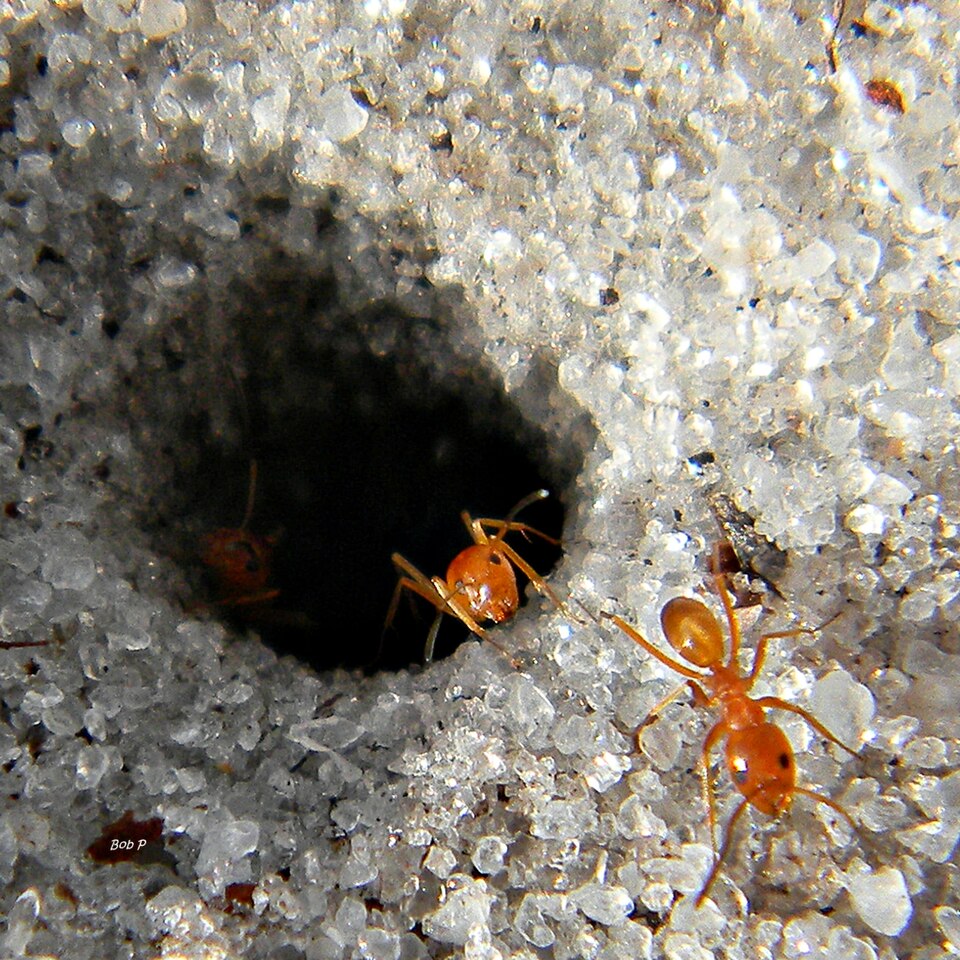
Ants have adapted to nearly every habitat on Earth, from steamy rainforests to scorching deserts. Fire ants, originally from South America, have spread across the southern United States, where their painful stings and large mound-shaped nests make them hard to ignore. In the forests of Southeast Asia, weaver ants build nests high in the trees by pulling leaves together and gluing them with silk produced by their own larvae. The Saharan silver ant holds the record for the fastest ant in the world, sprinting across the blazing desert sand at speeds that cover 100 times its body length every second. Wherever you live, there are almost certainly ants nearby — quietly building, foraging, and cooperating in ways that scientists are still working to understand.
 OtterKnow Kids Encyclopedia