What They Look Like
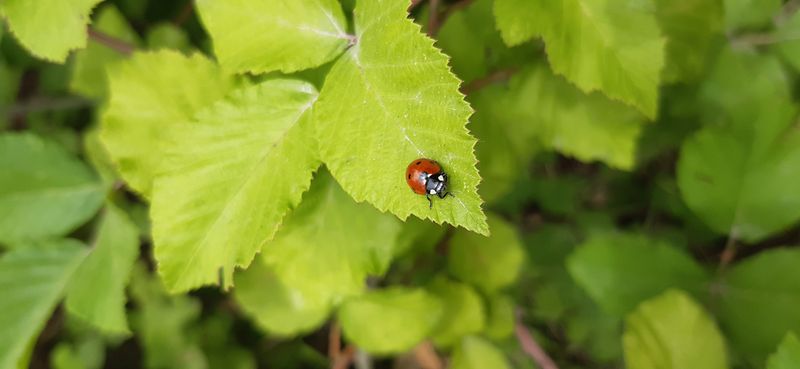
A ladybug’s body has three main parts: a head, a thorax, and an abdomen. Its most recognizable feature is a pair of hard, dome-shaped wing covers called elytra that protect the delicate flying wings folded beneath them. Most ladybugs are only about five to eight millimeters long, roughly the size of a pencil eraser. They have six short legs, two antennae that help them smell and feel their surroundings, and compound eyes that can detect light and movement. When a ladybug takes flight, the colorful elytra swing open to the sides while the transparent hind wings unfold and beat rapidly.
Warning Colors and Spots
The bright red or orange color of a ladybug is not just for decoration — it is a survival strategy called aposematism. In nature, bold colors often signal to predators that an animal tastes bad or could be dangerous to eat. When a bird or lizard sees those vivid colors, it often decides to look for a different meal. The number of spots on a ladybug’s elytra depends on its species, not its age, as some people mistakenly believe. Some species have no spots at all, while others can have as many as twenty-two, and a few are covered in stripes or checkered patterns instead.
Where They Live
Ladybugs live on every continent except Antarctica, thriving in habitats that range from meadows and gardens to forests and farmland. They are most commonly found wherever there are plants, because plants attract the tiny insects that ladybugs like to eat. During warm months, ladybugs are active hunters, crawling along stems and leaves in search of food. When cold weather arrives, many species gather in large groups to hibernate, sometimes clustering together by the thousands under logs, rocks, or inside buildings. These hibernation gatherings help ladybugs conserve warmth and moisture through the winter months.
What They Eat
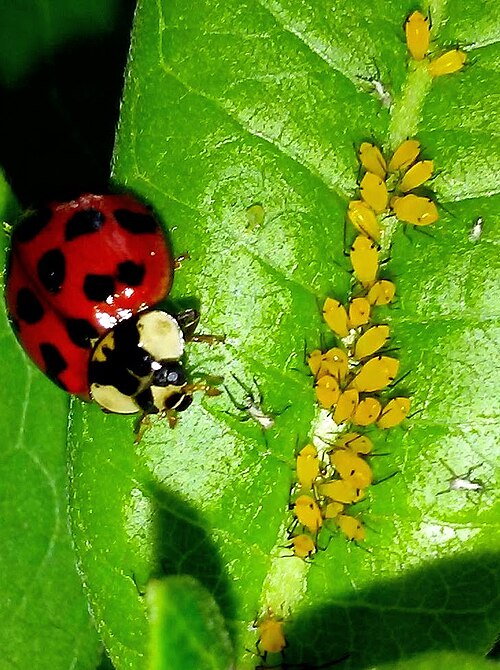
Ladybugs are voracious predators with a diet that makes them heroes of the garden. A single ladybug can eat as many as 5,000 aphids during its lifetime, gobbling up dozens of the tiny plant-sucking insects every day. In addition to aphids, ladybugs feed on scale insects, mites, and the eggs and larvae of other small bugs. Some species also nibble on pollen and nectar when prey is scarce. Ladybug larvae are even hungrier than the adults — a larva may consume hundreds of aphids before it is ready to transform into its adult form.
Natural Pest Control
Because of their enormous appetite for aphids and other crop-damaging insects, ladybugs have been used as a form of natural pest control for more than a century. In the late 1800s, California citrus farmers imported Australian vedalia ladybugs to combat cottony cushion scale insects that were devastating orange groves, and the strategy worked remarkably well. Today, farmers and gardeners around the world still release ladybugs into fields and greenhouses to protect crops without using chemical pesticides. This approach is called biological control, and it helps keep food production safer for both people and the environment. However, introducing non-native ladybug species can sometimes cause problems by outcompeting local species for food and habitat.
Defenses and Survival
Beyond their warning colors, ladybugs have several clever tricks to avoid becoming someone else’s lunch. When threatened, a ladybug can release drops of foul-smelling, yellowish fluid from its leg joints in a process called reflex bleeding. This fluid contains toxic alkaloids that taste terrible and can irritate a predator’s mouth. Ladybugs can also play dead by tucking their legs in and staying perfectly still, hoping the predator will lose interest. Their hard, rounded elytra also serve as armor, making it difficult for ants and other small attackers to get a grip on them.
Life Cycle
Like all beetles, ladybugs go through a process called complete metamorphosis, which has four distinct stages: egg, larva, pupa, and adult. A female ladybug lays clusters of tiny yellow eggs on the underside of leaves, often near a colony of aphids so her offspring will have food right away. The eggs hatch into larvae that look nothing like adult ladybugs — they are long, dark, and spiny, somewhat resembling tiny alligators. After feeding and growing for several weeks, a larva attaches itself to a leaf and forms a pupa, where its body completely reorganizes. About a week later, a fully formed adult ladybug emerges, though its colors may take a few hours to develop their full brightness.
Ladybugs Around the World
Different cultures have admired ladybugs for centuries, and many consider them symbols of good luck. In German, the ladybug is called “Marienkäfer,” meaning “Mary’s beetle,” connecting it to the Virgin Mary. Farmers in many European countries historically believed that ladybugs arriving in their fields was a sign of a good harvest to come. In North America, the most familiar species is the convergent ladybug, named for the two white lines that converge behind its head. Meanwhile, the seven-spotted ladybug, originally from Europe, has been introduced to many parts of the world and is now one of the most widespread ladybug species on Earth.
 OtterKnow Kids Encyclopedia