What They Look Like
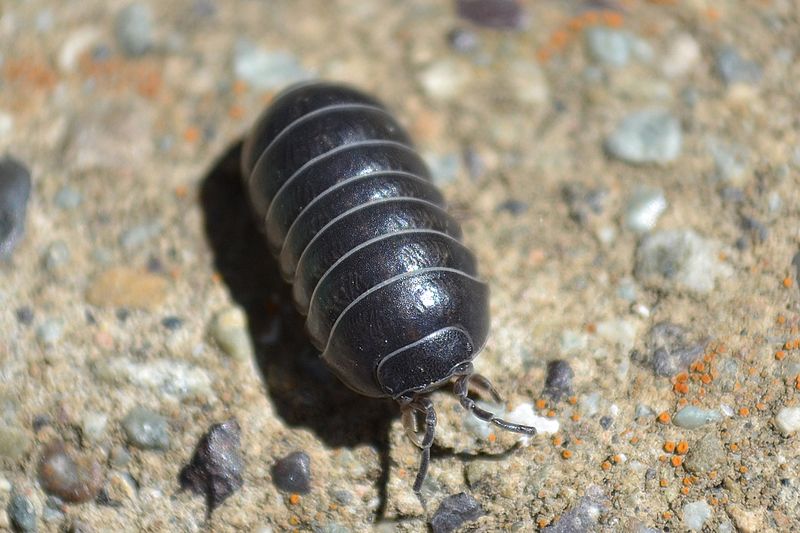
Pill bugs have oval-shaped bodies that are usually dark gray or brown, though some can appear slightly bluish. Their bodies are divided into segments covered by hard, overlapping plates that work like a suit of armor. These plates are made of a material called chitin, and they give pill bugs their crunchy, shell-like feel. A pill bug has seven pairs of legs, for a total of fourteen, and two small antennae on its head that help it sense the world around it. Most pill bugs are only about the size of a pea when curled up, typically growing to around 1 centimeter long.
Rolling Into a Ball
The pill bug’s most famous behavior is its ability to roll into a nearly perfect ball, a defense called conglobation. When a pill bug senses danger, it tucks its head and legs inward and lets its armored plates lock together, forming a hard sphere that is difficult for predators to crack open. This trick sets pill bugs apart from their close relatives, the sowbugs, which look very similar but have flatter bodies and cannot roll up at all. Rolling into a ball also helps pill bugs hold in moisture, which is important because their bodies dry out quickly in open air. Scientists believe this defensive strategy has helped pill bugs survive for millions of years.
A Crustacean on Land
Most crustaceans, like shrimp and crabs, live in water, but pill bugs have made a successful leap to life on dry ground. Despite living on land, they still breathe through gill-like structures located on their underside, near their back legs. These gills need to stay moist in order to absorb oxygen from the air, which is why pill bugs are almost always found in damp, shady places. If a pill bug dries out too much, it cannot breathe and will eventually die. This connection to water is a lasting reminder of their ocean-dwelling ancestors, and it is one of the main reasons you will rarely see pill bugs out in bright sunlight.
Where They Live
Pill bugs are found on every continent except Antarctica, and they thrive in gardens, forests, parks, and even basements. They prefer dark, moist habitats and are most active at night when the air is cooler and more humid. During the day, you can find them hiding under rocks, logs, fallen leaves, flowerpots, and mulch. Pill bugs originally came from the coastal regions of Europe, but they have spread around the world over the past several centuries, often traveling in soil carried by ships and traders. They do especially well in temperate climates where there is plenty of leaf litter and decaying plant material on the ground.
What They Eat
Pill bugs are detritivores, which means they feed mainly on dead and decaying organic matter. They munch on fallen leaves, rotting wood, and other plant debris that they find on the forest floor or in your garden. By breaking down this material, pill bugs help return important nutrients like nitrogen and carbon back into the soil. They will also nibble on soft fruits, seedlings, and fungi if those foods are available. Pill bugs have a surprising habit of eating their own droppings, which allows them to reclaim copper and other minerals that their bodies need to stay healthy.
Life Cycle
Female pill bugs carry their eggs in a special pouch on their underside called a marsupium, much like a kangaroo carries its baby in a pouch. A single mother can carry between 20 and 200 tiny eggs at a time, and the young hatch inside the pouch after about three to four weeks. The babies, sometimes called mancae, emerge looking like miniature versions of the adults but with only six pairs of legs instead of seven. They gain their seventh pair of legs after their first molt, and they continue to molt many times as they grow, shedding their exoskeleton in two stages rather than all at once. Pill bugs can live for two to three years, which is a surprisingly long life for such a small creature.
Pill Bugs and Soil Health
Gardeners sometimes worry when they see pill bugs near their plants, but these small crustaceans are actually great helpers for healthy soil. As pill bugs chew through dead leaves and decaying wood, they break the material into much smaller pieces, which makes it easier for bacteria and fungi to finish the decomposition process. This teamwork between pill bugs and microorganisms creates rich, fertile soil that helps plants grow strong. Pill bugs also help mix and aerate the top layers of soil as they burrow and move around. In many ecosystems, pill bugs are considered important recyclers, turning nature’s waste into valuable nutrients that cycle back through the food web.
 OtterKnow Kids Encyclopedia