The Real Velociraptor vs. the Movies
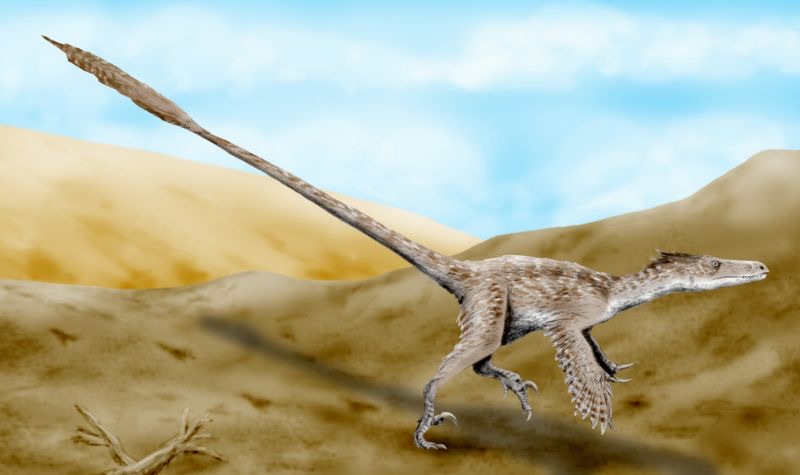
When most people picture a Velociraptor, they imagine the tall, scaly, human-sized creatures from the Jurassic Park films. In reality, those movie dinosaurs were based on a different species called Deinonychus, which was much larger and lived in North America. The filmmakers used the name Velociraptor because it sounded more dramatic, but the real animal was only about 1.8 meters (6 feet) long from nose to tail and weighed roughly 15 kilograms (33 pounds). That means a real Velociraptor could have looked you in the knee, not the eye. The movies also showed Velociraptors with smooth, reptile-like skin, but scientists now know they were covered in feathers, making them look more like unusual birds than giant lizards.
What It Looked Like
Velociraptor had a long, narrow skull with a flat snout and a mouth full of roughly 28 widely spaced, serrated teeth that curved backward. Its body was lightly built and streamlined, with long legs designed for running and a stiff tail that helped it balance while making quick turns. The tail was stiffened by bony rods called ossified tendons, which locked the vertebrae in place and acted like a balancing pole. Velociraptor’s arms were relatively long for a dinosaur its size and ended in three sharp, curved claws that could grip and slash. Its large eye sockets suggest it had excellent vision, which would have been useful for spotting prey in the arid desert landscape where it lived.
The Sickle Claw
Perhaps the most fearsome feature of Velociraptor was the large, curved claw on the second toe of each foot. This sickle-shaped claw measured about 6.5 centimeters (2.5 inches) along its outer edge and could be raised off the ground while the dinosaur walked or ran. Scientists believe Velociraptor held this claw up to keep it sharp, then swung it downward like a blade when attacking prey. There has been debate about exactly how the claw was used, with some researchers suggesting it was for slashing and others arguing it was better suited for pinning down struggling prey. One famous fossil, known as the “Fighting Dinosaurs,” shows a Velociraptor locked in combat with a Protoceratops, with its sickle claw driven into the larger dinosaur’s throat, giving us a rare snapshot of this weapon in action.
Feathers
For decades, scientists suspected that Velociraptor and its close relatives had feathers, but direct proof did not come until 2007. That year, paleontologists studying a Velociraptor forearm bone discovered a row of small bumps called quill knobs, which are the same structures that anchor flight feathers in modern birds. Velociraptor could not fly because its arms were far too short, but its feathers may have served other purposes such as keeping warm, attracting mates with colorful displays, or shielding eggs in a nest. Velociraptor belonged to a group of dinosaurs called dromaeosaurs, which are among the closest non-bird relatives of modern birds. The discovery of feathered Velociraptors helped scientists understand that birds did not just evolve from dinosaurs – in many ways, birds are living dinosaurs.
What It Ate
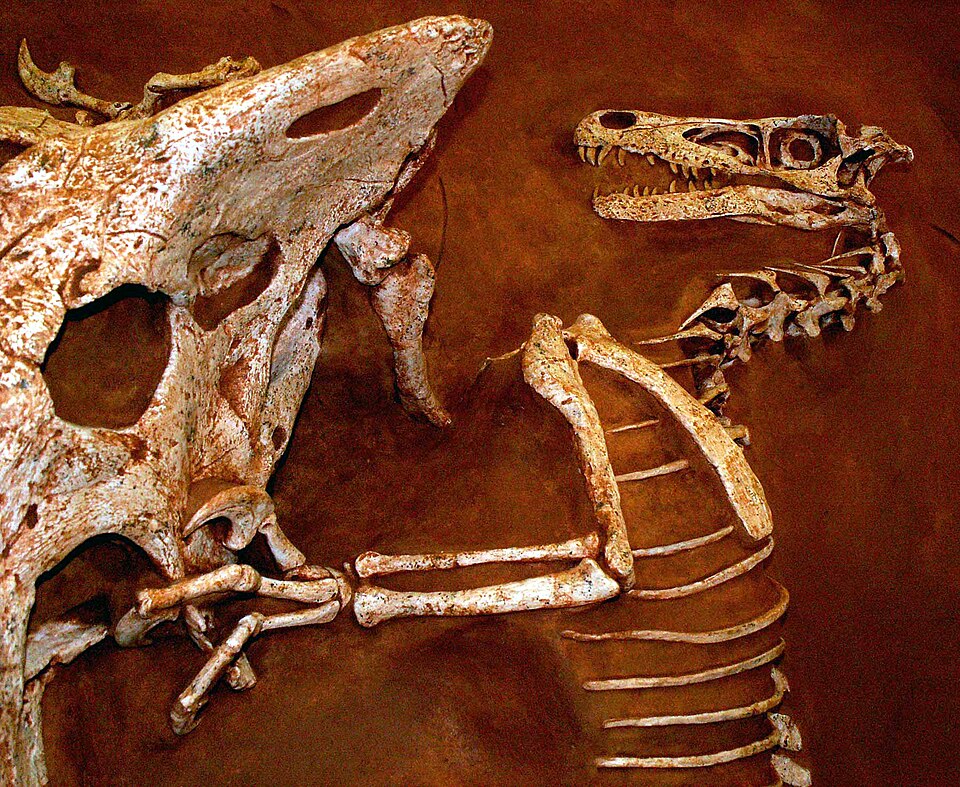
Velociraptor was a carnivore that likely hunted small animals such as lizards, mammals, and smaller dinosaurs. Its sharp teeth and grasping claws made it well suited for catching fast-moving prey in the dry, sandy environment where it lived. The famous “Fighting Dinosaurs” fossil shows that Velociraptor sometimes attacked animals much larger than itself, though that particular battle ended in both animals dying, probably buried by a sudden sandstorm or collapsing dune. Scientists have also found Protoceratops bones inside the gut region of a Velociraptor fossil, confirming that it ate these sheep-sized herbivores. Like many small predators today, Velociraptor was probably an opportunist that would scavenge dead animals when the chance arose, rather than turning down an easy meal.
Where It Lived
Velociraptor fossils have been found in the Gobi Desert region of Mongolia and northern China, in rock formations called the Djadochta and Barun Goyot. During the Late Cretaceous, this area was not the frozen steppe it is today but rather a hot, dry landscape of sand dunes, scrubby vegetation, and seasonal streams, somewhat like parts of the modern Sahara. The dry conditions were actually excellent for preserving fossils, which is why so many well-preserved Velociraptor specimens have been found there. Velociraptor shared its habitat with other dinosaurs like Protoceratops, the birdlike Oviraptor, and the giant tyrannosaur Tarbosaurus, a close relative of Tyrannosaurus rex. The harsh desert environment meant that food and water were not always easy to find, so Velociraptor had to be a skilled and adaptable hunter to survive.
How We Know About It
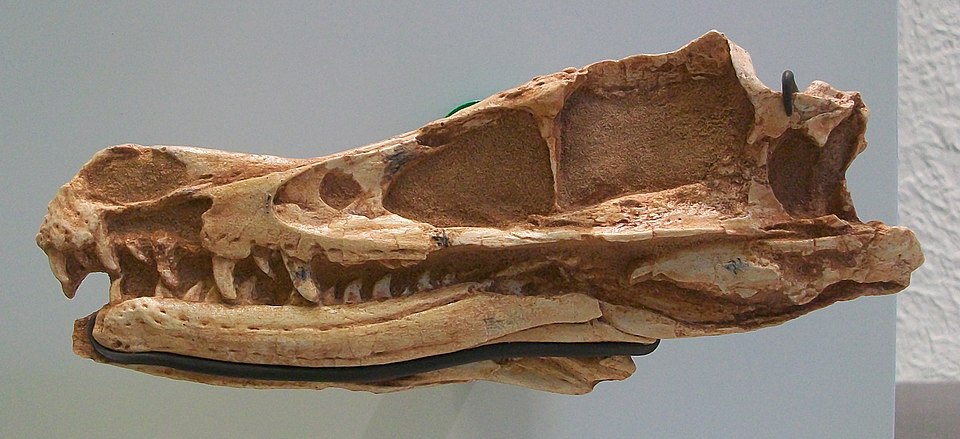
The first Velociraptor fossil was discovered in 1923 during an expedition to Mongolia led by the American Museum of Natural History. Paleontologist Henry Fairfield Osborn named the new dinosaur Velociraptor mongoliensis in 1924, recognizing its speed and its Mongolian origin. Since then, over a dozen Velociraptor specimens have been found, including several remarkably complete skeletons preserved by the Gobi Desert’s dry, sandy conditions. The “Fighting Dinosaurs” fossil, discovered in 1971, is one of the most famous dinosaur fossils in the world because it captures two animals in the middle of a life-and-death struggle. Modern tools like CT scanners allow scientists to study the insides of Velociraptor skulls without breaking them open, revealing details about its brain size and senses that earlier paleontologists could only guess at.
Velociraptor’s Legacy
Even though the real Velociraptor was much smaller than its movie version, its scientific importance is enormous. It belongs to the dromaeosaur family, a group that has helped scientists understand one of the most important transformations in the history of life: how small, feathered dinosaurs evolved into the birds we see today. Studying Velociraptor’s skeleton reveals features shared with modern birds, from the shape of its wishbone to the structure of its wrist, which allowed it to fold its arms the same way a bird folds its wings. The popularity of Velociraptor in movies and books has also inspired countless young people to become interested in paleontology and natural history. Whether you picture it as a feathered desert hunter or a movie star, Velociraptor remains one of the most interesting creatures ever to have lived on Earth.
 OtterKnow Kids Encyclopedia