The Spots
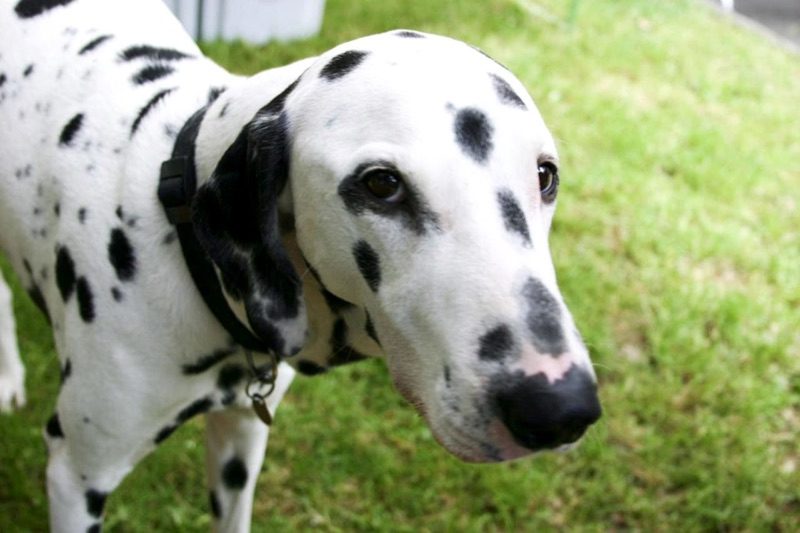
One of the most surprising facts about Dalmatians is that puppies are born completely white. Their iconic spots do not appear until the puppies are about three to four weeks old, and new spots can continue to develop throughout the first year of life. Most Dalmatians have black spots, but some have liver-colored (dark brown) spots instead. Each Dalmatian’s pattern of spots is unique, much like a human fingerprint, so no two Dalmatians look exactly alike. The spots are caused by a special pigmentation gene, and they can appear anywhere on the body, including inside the mouth.
Where They Come From
The Dalmatian’s exact origins are a bit of a mystery, but most historians believe the breed has roots in a region called Dalmatia, which is part of modern-day Croatia along the Adriatic Sea coast. Ancient paintings and writings from Egypt, Greece, and medieval Europe show spotted dogs that look very similar to today’s Dalmatians, suggesting the breed is one of the oldest known dog breeds. By the 1600s and 1700s, Dalmatians had become popular across Europe, especially in England, where they were prized for their beauty and endurance. The breed was officially recognized by the American Kennel Club in 1888.
Carriage Dogs and Firehouses
Dalmatians earned the nickname “coach dogs” because of their remarkable ability to run alongside horse-drawn carriages for long distances without tiring. Wealthy families in 18th-century England used Dalmatians to trot beside their coaches, both as a status symbol and to guard the horses and cargo when the carriage was parked. When horse-drawn fire engines became common in the 1800s, Dalmatians found a new job running ahead of the fire horses to clear the path through crowded streets. Even after fire trucks replaced horses, Dalmatians stayed on as firehouse mascots, and many fire stations across the United States still keep Dalmatians today as a nod to this tradition.
Personality and Energy
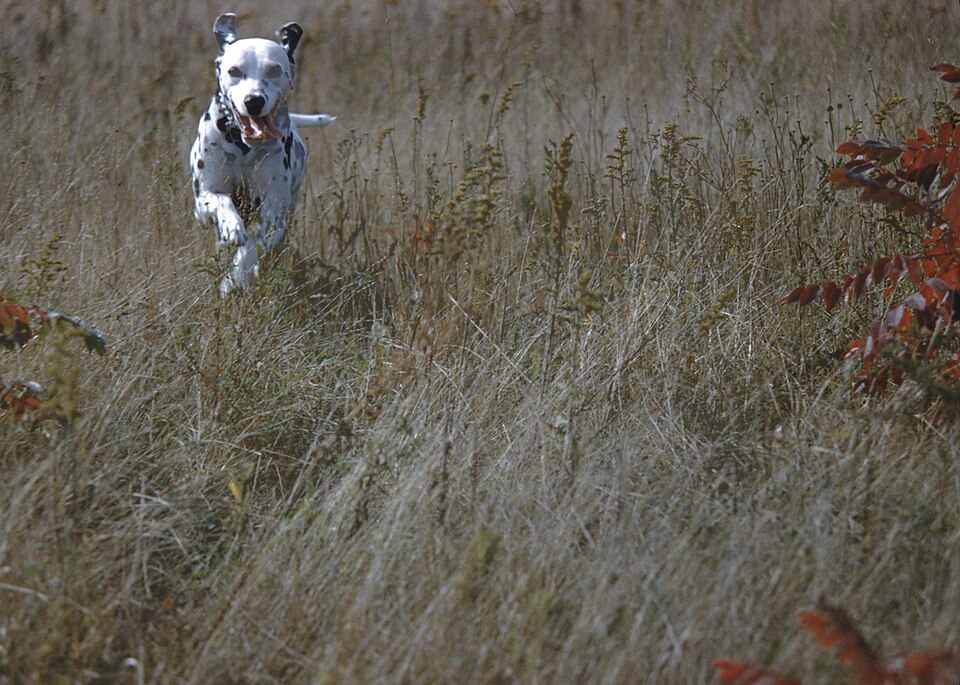
Dalmatians are known for being playful, loyal, and incredibly energetic dogs that need a lot of daily exercise. They were bred to run for hours alongside carriages, so a short walk around the block is usually not enough to satisfy them. A bored Dalmatian with too much pent-up energy can become destructive, chewing furniture or digging holes in the yard. These dogs are also highly intelligent and respond well to training when it is consistent and positive. Dalmatians tend to be friendly and outgoing with their families, though they can sometimes be reserved around strangers, which makes early socialization important.
Health Considerations
Like many purebred dogs, Dalmatians are prone to certain health conditions that owners should be aware of. The most well-known issue is deafness, which affects roughly 15 to 30 percent of Dalmatian puppies. This hearing loss is linked to the same pigmentation genes that give Dalmatians their white coats and spots, and dogs with blue eyes or large patches of white are more likely to be affected. Dalmatians also have a unique urinary system that makes them more likely to develop kidney stones, so they need plenty of fresh water and a carefully managed diet. Responsible breeders test their dogs for hearing problems and other genetic conditions before breeding them.
Dalmatians as Pets
Dalmatians can make wonderful family pets, but they are best suited for active households that can keep up with their high energy levels. They do well with older children who know how to interact gently and respectfully with dogs, and they often enjoy activities like hiking, jogging, and agility courses. Because of their short coat, grooming is relatively easy, though Dalmatians are known to shed quite a lot throughout the year. Prospective owners should be prepared to commit to regular exercise, mental stimulation, and training to keep their Dalmatian happy and well-behaved. With the right family, a Dalmatian can be a loyal, affectionate companion for 11 to 13 years or more.
Dalmatians in Popular Culture
Dalmatians became international superstars thanks to Dodie Smith’s 1956 novel The Hundred and One Dalmatians, which was later adapted into Disney’s beloved 1961 animated film. The story of Pongo and Perdita rescuing 99 puppies from the villainous Cruella de Vil captured the hearts of audiences around the world and sparked a huge surge in demand for Dalmatian puppies. Unfortunately, many families who bought Dalmatians after seeing the movie were unprepared for the breed’s high energy and exercise needs, leading to a rise in abandoned dogs. Animal welfare organizations now encourage potential owners to research any breed thoroughly before bringing a new dog home. Despite that cautionary tale, Dalmatians remain one of the most iconic and easily recognized dog breeds on the planet.
 OtterKnow Kids Encyclopedia