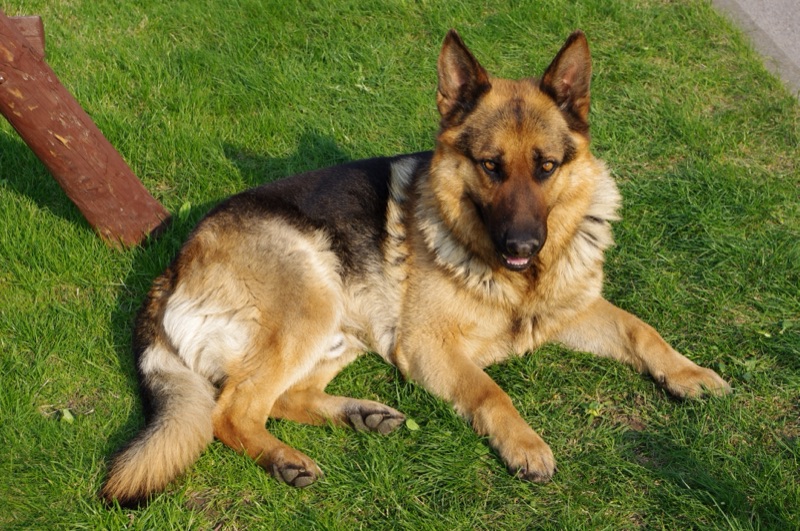
What They Look Like
German Shepherds are large, athletic dogs that stand about 22 to 26 inches tall at the shoulder and weigh between 50 and 90 pounds, with males typically being larger than females. They have a strong, muscular body with a slightly sloping back, a deep chest, and a long bushy tail that curves downward. Their ears are large and pointed, standing straight up on top of their head, which gives them an alert and attentive expression. Most German Shepherds have a thick double coat — a dense, soft undercoat beneath a coarser outer layer — that comes in classic black and tan, solid black, or sable patterns. This double coat keeps them warm in cold weather but also means they shed heavily, especially during spring and fall when they “blow” their undercoat and lose large clumps of fur.
Intelligence and Trainability
German Shepherds are considered the third most intelligent dog breed in the world, behind only the Border Collie and the Poodle. Canine intelligence researcher Stanley Coren found that German Shepherds can learn a new command after just five repetitions and obey a known command on the first try about 95 percent of the time. This ability to learn and follow instructions quickly is one of the main reasons the breed is trusted with so many different types of work. German Shepherds are not just good at memorizing commands — they can also solve problems, make decisions, and adapt to new situations, which is essential for dogs that need to think on their feet during emergencies. Their eagerness to please their handlers, combined with their natural focus and drive, makes training a German Shepherd a rewarding experience for both dog and owner.
History and Origins
The German Shepherd breed was created in 1899 by a German cavalry officer named Max von Stephanitz, who wanted to develop the perfect herding dog. After attending a dog show, von Stephanitz purchased a wolf-like herding dog that impressed him with its intelligence and physical ability, naming it Horand von Grafrath — the very first registered German Shepherd. Von Stephanitz founded the breed club and spent the next 35 years carefully guiding the breed’s development, insisting that German Shepherds should always be bred for working ability rather than just appearance. As Germany industrialized and the need for herding dogs declined, von Stephanitz promoted his breed to police and military organizations, where the dogs quickly proved their worth. German Shepherds gained international fame during World War I, when soldiers from many countries witnessed their bravery and skill on the battlefield and brought them home after the war.
Working Dogs
German Shepherds serve in more professional roles than almost any other dog breed. Police departments around the world rely on them to track suspects, detect drugs and explosives, and protect their human partners during dangerous situations. In the military, German Shepherds parachute out of helicopters, sniff out hidden bombs, and patrol bases alongside soldiers. Search and rescue teams use them to find people trapped under collapsed buildings after earthquakes or lost in wilderness areas, because the dogs can cover rough terrain quickly and follow faint human scent trails. German Shepherds also work at airports and border crossings, where their keen noses help customs agents find illegal items hidden in luggage and cargo. Their ability to stay calm under pressure and follow complex commands in chaotic environments makes them uniquely suited for high-stakes work.
Service and Therapy Dogs
Beyond police and military roles, German Shepherds serve as guide dogs for people who are blind or visually impaired, a tradition that began in Germany after World War I when the dogs were trained to assist veterans who had lost their sight. They also work as mobility assistance dogs, helping people in wheelchairs by opening doors, picking up dropped items, and even pulling the wheelchair up ramps. Some German Shepherds are trained as medical alert dogs that can detect changes in their owner’s body chemistry and warn them before a seizure or a dangerous drop in blood sugar. As therapy dogs, they visit hospitals, nursing homes, and schools, providing comfort and emotional support to people going through difficult times. The breed’s calm confidence and strong bond with humans makes them especially well-suited for these sensitive and important jobs.
German Shepherds as Pets
German Shepherds can make wonderful family companions, but they are an active and demanding breed that needs an owner willing to invest time and energy. They require at least one to two hours of vigorous exercise every day, such as long walks, runs, hikes, or games of fetch, and they also benefit from mental challenges like puzzle toys and obedience training. German Shepherds are deeply loyal to their families and tend to be protective, which means early socialization — introducing them to many different people, animals, and situations as puppies — is important so they learn to be confident rather than fearful or aggressive around strangers. They are known for forming especially strong bonds with one person in the household, often following that person from room to room and wanting to be involved in everything they do. With proper training, exercise, and attention, a German Shepherd is a devoted and trustworthy companion that will watch over its family with fierce dedication.
Health and Care
German Shepherds typically live 9 to 13 years, and like all purebred dogs, they are prone to certain health conditions that owners should be aware of. The most common concern is hip dysplasia, a condition where the hip joint does not fit together properly, which can cause pain and difficulty walking as the dog ages. Their thick double coat requires regular brushing — ideally several times a week — to manage shedding and keep the fur healthy and free of mats. German Shepherds should be fed a high-quality diet appropriate for their size and activity level, as they can gain weight quickly if they are overfed or do not get enough exercise. Regular veterinary checkups, daily exercise, and proper grooming will help a German Shepherd live a long, healthy, and happy life.
Famous German Shepherds
Some of the most well-known dogs in history have been German Shepherds. Rin Tin Tin, a puppy rescued from a World War I battlefield by an American soldier, went on to star in 27 Hollywood films during the 1920s and 1930s and is widely credited with popularizing the breed in the United States. Strongheart, another German Shepherd film star of the silent movie era, was one of the first dogs to leave paw prints in the concrete outside Grauman’s Chinese Theatre in Hollywood. In more recent history, German Shepherds have served alongside firefighters and police officers during major disasters, including the search and rescue operations at the World Trade Center after September 11, 2001, where dogs like Appollo and Trakr worked tirelessly to locate survivors. From the silver screen to the front lines of emergency response, German Shepherds have proven time and again why they are one of the most trusted and versatile dog breeds in the world.
 OtterKnow Kids Encyclopedia