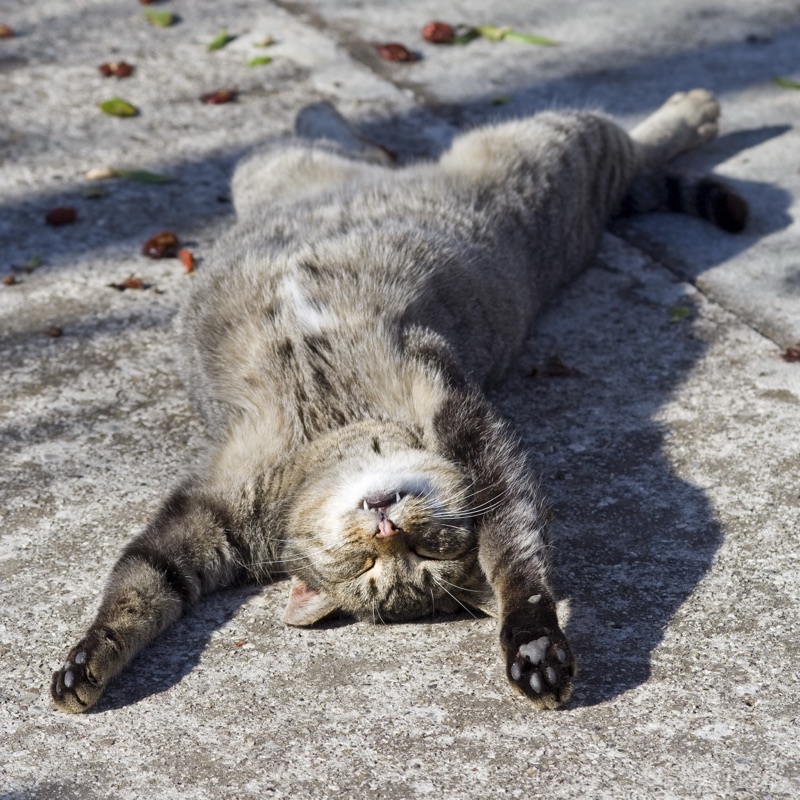
Tabby Is a Pattern, Not a Breed
Many people are surprised to learn that there is no such thing as a “tabby breed.” The word tabby describes a specific set of coat markings, not a type of cat. A tabby can be a mixed-breed cat from a shelter or an expensive purebred Persian with a pedigree. The tabby pattern is actually controlled by genes that every domestic cat carries, even cats that look solid black or pure white. In solid-colored cats, other genes simply mask the tabby markings so they are not visible. If you look closely at a black cat sitting in bright sunlight, you can sometimes see faint “ghost stripes” hidden in its fur, proof that the tabby genes are still there underneath.
The Four Tabby Patterns
Scientists and cat enthusiasts recognize four main tabby patterns, each with its own distinct look. The mackerel tabby is the most common and features narrow, parallel stripes running vertically down the cat’s sides, resembling a fish skeleton, which is how it got its name. The classic tabby, sometimes called a “blotched” tabby, has bold, swirling patterns on its sides that often look like a marble cake or a bullseye. Spotted tabbies have their stripes broken up into individual spots and rosettes, giving them a look that calls to mind wild cats like leopards and ocelots. The ticked tabby, also known as an “agouti” tabby, looks the most unusual because it has almost no visible stripes or spots on its body. Instead, each individual hair is banded with alternating light and dark colors, creating a warm, shimmering effect across the coat.
The M on the Forehead
One of the most charming features shared by nearly all tabby cats is the distinct M-shaped marking on their forehead. This bold letter appears regardless of whether the tabby is mackerel, classic, spotted, or ticked, and it has inspired legends in cultures around the world. One old tale says that a tabby cat kept the baby Jesus warm in the manger, and the Virgin Mary marked its forehead with her initial as a blessing. An Islamic legend credits the Prophet Muhammad, saying his favorite cat Muezza received the M after he lovingly stroked its head. In reality, the M marking is simply part of the tabby gene’s expression, the same set of instructions that creates stripes and swirls on the body also draws that distinctive shape above the eyes. Along with the M, tabbies typically have thin “eyeliner” lines around their eyes and delicate striping on their cheeks and legs.
History of Domestic Cats
The story of the tabby cat begins with the African wildcat, a small, sandy-colored feline with faint mackerel tabby stripes that still lives across Africa and the Middle East today. Around 10,000 years ago, when humans in the Fertile Crescent began farming grain, wildcats were drawn to the rodents that gathered near stored harvests. Farmers welcomed the cats because they kept mice and rats under control, and over many generations these wildcats gradually became tamer and more comfortable around people. This was the beginning of cat domestication, and the tabby pattern those early cats wore is the original coat of all domestic cats. The word “tabby” itself likely comes from Attabiyah, a neighborhood in Baghdad famous for producing a striped silk fabric. When people noticed that these cats had fur patterned like the famous cloth, the name stuck. The same wild ancestry connects your pet tabby to big cats like the tiger, which also wears bold stripes for camouflage in tall grass.
Personality
Because tabby cats come from every breed and background, there is no single “tabby personality,” but many owners insist that tabbies tend to be friendly, outgoing, and affectionate. Orange tabbies in particular have a reputation for being exceptionally social and laid-back, though scientists point out that coat color does not actually determine behavior. What does shape a cat’s personality is a combination of its breed, its early experiences with people, and its individual temperament. A tabby that is handled gently and often as a kitten will usually grow into a confident, people-loving adult. Tabbies are known for being curious explorers who enjoy investigating new objects, watching birds through windows, and following their owners from room to room.
Tabby Cats as Pets
Tabby cats make wonderful companions for families, individuals, and seniors alike. Because they are so common, tabbies are among the easiest cats to adopt from shelters and rescue organizations, and giving a shelter tabby a home is one of the most rewarding things a cat lover can do. Their grooming needs depend on their breed and coat length. Short-haired tabbies need only a weekly brushing, while long-haired tabbies may need daily attention to prevent tangles and mats. Like all cats, tabbies benefit from regular veterinary checkups, a nutritious diet, and plenty of play and mental stimulation. Interactive toys, scratching posts, and safe window perches will keep a tabby cat happy and healthy for years. Indoor tabbies typically live 12 to 18 years, and with good care, some reach their early twenties.
Cats Around the World
Cats hold a special place in cultures across the globe, and tabby cats have been part of human life for thousands of years. In ancient Egypt, cats were considered sacred animals, and harming one was a serious crime. The Japanese beckoning cat figurine, called a maneki-neko, is often depicted as a tabby and is believed to bring good luck and fortune to shops and homes. In the United Kingdom, the government has officially employed cats as “Chief Mousers” at 10 Downing Street since the 1500s, and several of these famous working cats have been tabbies. Today, there are an estimated 600 million domestic cats worldwide, and the tabby pattern appears in the majority of them. Whether they are catching mice on a farm, starring in internet videos, or simply purring on someone’s lap, tabby cats remain one of humanity’s oldest and most beloved animal companions.
 OtterKnow Kids Encyclopedia