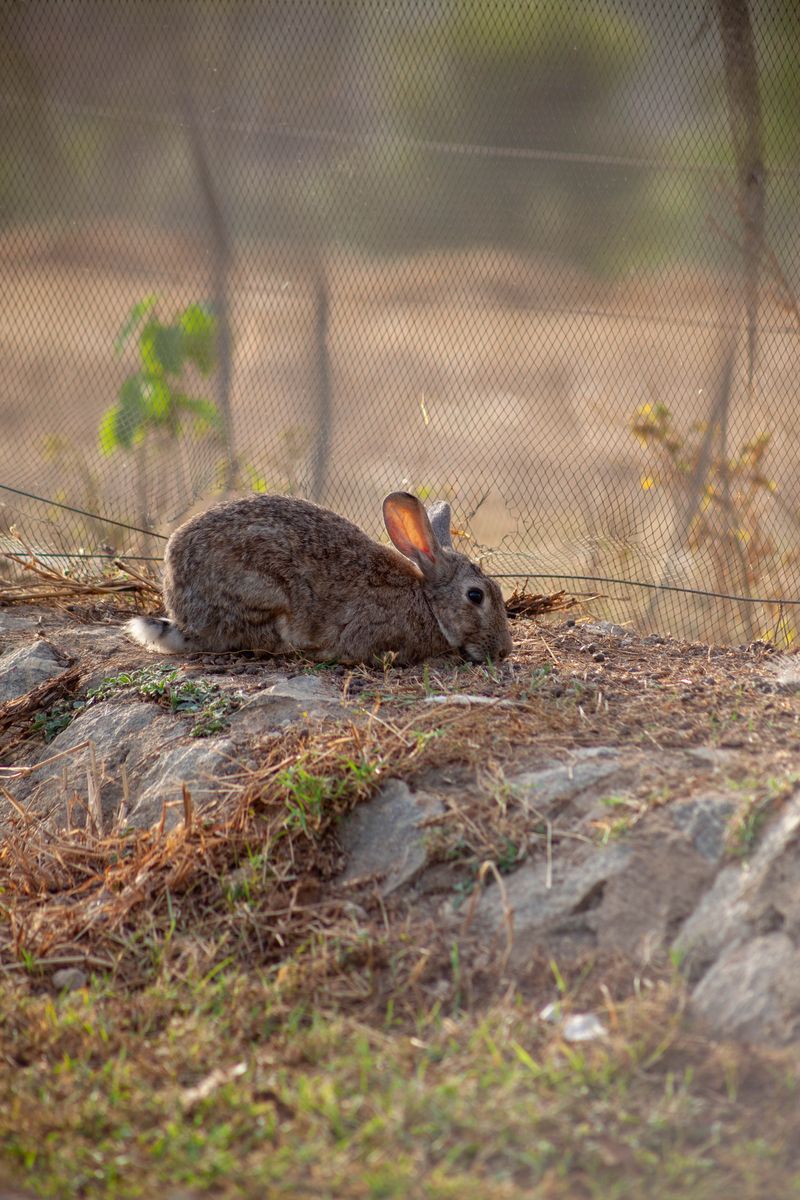
What They Look Like
Rabbits have compact, rounded bodies built for speed and agility. Their most distinctive features are their long ears, which can measure up to 10 centimeters (about 4 inches) in most breeds and help them detect predators from far away. A rabbit’s large eyes are positioned on the sides of its head, giving it nearly 360 degrees of vision, though it has a small blind spot directly in front of its nose. Their powerful hind legs are much longer than their front legs, allowing them to leap up to 3 meters (about 9 feet) in a single bound and sprint at speeds of up to 56 kilometers per hour (35 miles per hour). Rabbits come in a wide variety of colors and patterns, including white, brown, gray, black, spotted, and even striped, depending on the breed.
Lagomorphs, Not Rodents
Many people assume that rabbits are rodents, but they actually belong to a completely different order of mammals called Lagomorpha. The main difference between lagomorphs and rodents comes down to teeth. Rabbits have four upper incisors instead of two: behind their two large front teeth sits a second, smaller pair called peg teeth that rodents do not have. Like rodents, a rabbit’s teeth never stop growing throughout its life, which is why rabbits need to chew on tough, fibrous plants to keep their teeth worn down to a healthy length. If a rabbit cannot chew enough, its teeth can grow so long that it has trouble eating. The order Lagomorpha also includes hares and pikas, making them the rabbit’s closest relatives rather than mice or squirrels.
Life in a Warren

Wild European rabbits are social animals that live in large underground tunnel systems called warrens. A warren can be home to dozens of rabbits and may contain many interconnected tunnels, chambers, and multiple entrances and exits for quick escapes from predators. Rabbits dig these warrens using their strong front paws and maintain them over many generations, sometimes using the same tunnel network for decades. Inside the warren, rabbits create special nesting chambers lined with grass and fur where mothers raise their young. Living underground protects rabbits from weather extremes and from predators such as foxes, hawks, and owls. Not all rabbit species build warrens, though. Cottontail rabbits, which are common across North and South America, live above ground and shelter in dense brush or shallow depressions called forms.
What They Eat
Rabbits are herbivores that feed mainly on grasses, clover, wildflowers, and leafy plants. They have a remarkable digestive system that allows them to extract as much nutrition as possible from tough plant material. Rabbits are hindgut fermenters, meaning that special bacteria in a pouch called the cecum break down the cellulose in plants after the food has passed through the stomach. To get the most out of this process, rabbits produce soft droppings called cecotropes, which they eat directly so the nutrients can pass through their digestive system a second time. This might sound unpleasant, but it is a perfectly normal and essential part of a rabbit’s diet. Domestic rabbits thrive on hay, fresh vegetables, and specially made pellets, though hay should make up the largest part of their diet to keep their digestive systems and ever-growing teeth healthy.
Communication
Rabbits may seem quiet, but they actually communicate in many creative ways. One of their most well-known signals is thumping a hind foot against the ground, which warns other rabbits of nearby danger. Rabbits also use body language to express their feelings: a happy rabbit may leap and twist in the air in a movement called a “binky,” while a frightened rabbit will flatten its body against the ground with its ears pressed back. Scent plays a major role in rabbit communication as well, since rabbits have scent glands under their chins and use them to mark their territory by rubbing their chins on objects. Although rabbits are mostly silent, they can make soft sounds like purring when content, grunting when annoyed, and even screaming when in extreme distress. Understanding these signals helps pet owners recognize what their rabbits are feeling.
Kits and Family
Baby rabbits are called kits (short for kittens), and they are born in litters of three to twelve. Newborn kits are blind, deaf, and nearly hairless, making them completely dependent on their mother for warmth and milk. The mother rabbit, called a doe, visits the nest only once or twice a day to nurse her babies, spending just a few minutes each time so that she does not attract predators to the nest with her scent. Despite these brief visits, rabbit milk is incredibly rich and nutritious, allowing kits to grow quickly. Within about 10 days, their eyes open, and by three to four weeks old they begin eating solid food. Wild rabbits can breed rapidly. A single doe can produce several litters per year, which is one reason the phrase “multiplying like rabbits” became so well known.
Rabbits Around the World
Rabbits live on every continent except Antarctica, but their introduction to new places has sometimes caused serious problems. When European settlers brought rabbits to Australia in 1859, the animals had no natural predators there and their population exploded. Within decades, hundreds of millions of rabbits were stripping the land of vegetation, causing soil erosion, and driving native plant and animal species toward extinction. Australia tried everything from thousands of kilometers of rabbit-proof fencing to introducing diseases like myxomatosis to control the population, with mixed results. Similar problems have occurred on islands and in other regions where rabbits were introduced without natural predators to keep their numbers in check. These examples show how an animal that seems harmless in its native habitat can become a destructive invasive species when moved to new environments.
Rabbits and People
Humans have kept rabbits for meat, fur, and companionship for hundreds of years, and today rabbits are the third most popular pet mammal in the United States after dogs and cats. Domestic rabbits can be litter-trained, learn to respond to their names, and form strong bonds with their owners. Rabbits have also made a lasting mark on human culture, appearing in stories and folklore from around the world, including tales of trickster rabbits in African, Native American, and East Asian traditions. In science, rabbits have been important research animals, and the phrase “test it on rabbits” once described early safety testing for cosmetics and medicines, a practice that has declined as alternatives have been developed. Whether wild or domestic, rabbits continue to capture our curiosity and affection with their gentle nature and surprising complexity.
 OtterKnow Kids Encyclopedia