What They Look Like
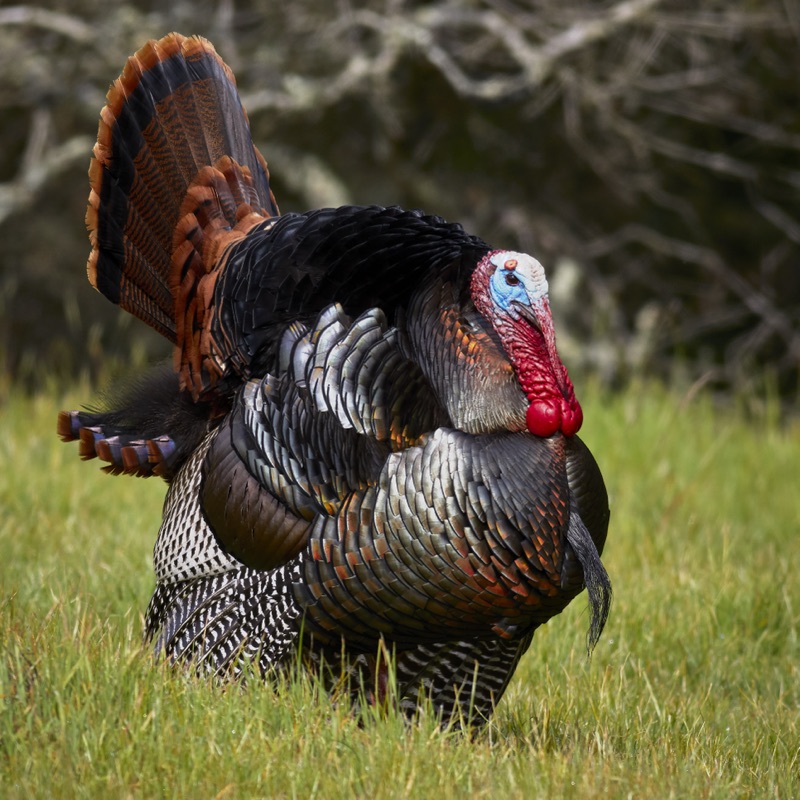
Turkeys are among the largest birds in North America, and wild tom (male) turkeys can stand up to 1.2 meters (about 4 feet) tall and weigh as much as 11 kilograms (24 pounds). Hens (females) are noticeably smaller, typically weighing between 3 and 5 kilograms (7 to 11 pounds). One of the most striking features of a turkey is the fleshy, bumpy skin on its head and neck. The long flap of skin that hangs over the beak is called a snood, the drooping skin under the chin is the wattle, and the small, warty bumps on the head and neck are known as caruncles. Male turkeys also have a tuft of coarse, hair-like feathers called a beard hanging from the center of their chest, which can grow 20 centimeters (about 8 inches) long or more. Wild turkeys have iridescent bronze, copper, and green feathers that shimmer in the sunlight, while most domestic turkeys have been bred to have plain white feathers.
Wild vs. Domestic
Wild turkeys and domestic turkeys may share the same ancestors, but centuries of selective breeding have made them very different birds. Wild turkeys are lean, athletic, and surprisingly quick: they can run at speeds up to 40 kilometers per hour (25 miles per hour) and fly in short bursts reaching 90 kilometers per hour (55 miles per hour). Domestic turkeys, on the other hand, have been bred to grow extremely large, extremely fast. A commercial domestic turkey can reach over 18 kilograms (40 pounds) in just a few months, making it too heavy to fly or even to walk very well. Because of this size difference, domestic turkeys also cannot reproduce naturally and must be bred through artificial insemination. Wild turkeys roost in trees at night to stay safe from predators, something their heavy domestic cousins simply cannot do.
Color Vision and Senses
Turkeys have remarkable eyesight that is actually better than human vision in several ways. Their eyes are positioned on the sides of their heads, giving them a nearly 270-degree field of view, which helps them spot predators approaching from almost any direction. Unlike most birds, turkeys can see in full color, and their eyes are sensitive to a wider range of light wavelengths than ours, including some ultraviolet light that is completely invisible to people. This excellent color vision helps turkeys find food, recognize other turkeys, and notice the color changes in a tom’s head during mating displays. Turkeys also have sharp hearing and can pinpoint the direction of a sound very accurately, though they have a poor sense of smell, much like chickens and most other birds.
Displaying and Communication
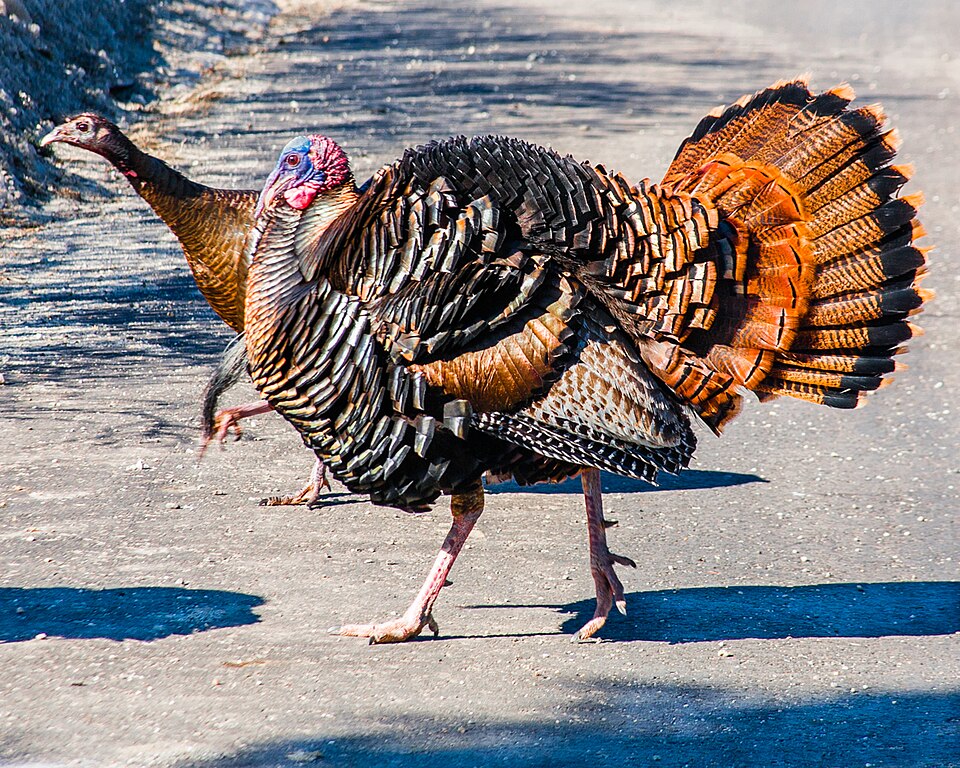
Male turkeys put on one of the most spectacular shows in the bird world when they want to attract a mate. A tom fans out his broad tail feathers into a wide semicircle, puffs up his body feathers to look almost twice his normal size, and drags his wing tips along the ground. At the same time, the bare skin on his head and neck rapidly changes color, shifting between red, white, and blue depending on his mood and level of excitement. These color changes are caused by blood flow to the skin and can happen in just seconds. Turkeys are also quite vocal, with males producing the famous “gobble” call that can be heard nearly a kilometer (over half a mile) away, along with drumming sounds made by vibrating their chest. Hens make softer clucking and yelping sounds to communicate with each other and with their young, called poults.
Where They Live
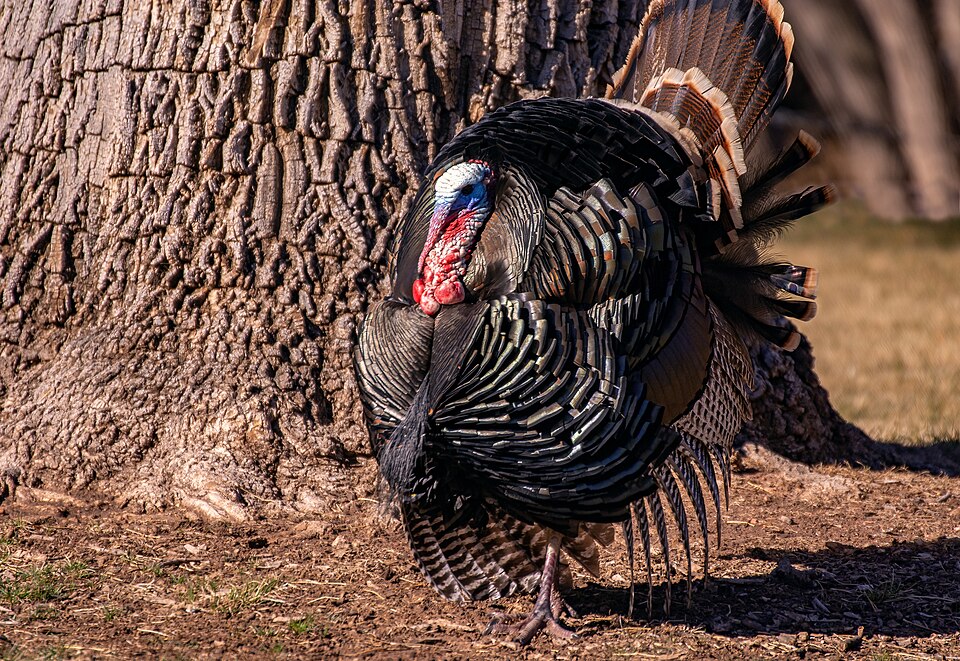
Wild turkeys are found throughout much of North America, from southern Canada through the United States and into central Mexico. They prefer a mix of forests and open fields, using the trees for roosting at night and the clearings for feeding during the day. Turkeys are omnivores with a varied diet that includes acorns, nuts, berries, seeds, insects, small lizards, and even the occasional small snake. In spring, turkeys eat a lot of fresh green shoots and insects, while in fall and winter they rely more on nuts and seeds that have dropped to the forest floor. Wild turkeys live in flocks that can range from a dozen birds to more than 200, and they typically separate into groups of hens with poults and groups of toms outside of mating season.
Turkeys and Thanksgiving
Turkeys and the American holiday of Thanksgiving are closely linked in the popular imagination, though the history is more complicated than most people realize. Historians believe that the Pilgrims and Wampanoag people did share a harvest feast at Plymouth Colony in 1621, but there is only one brief written account mentioning “fowl,” and it is unclear whether turkeys were actually served. Turkey gradually became the preferred Thanksgiving meat during the 1800s because the birds were large enough to feed a big family and were more affordable than other options like beef or goose. A popular myth claims that Benjamin Franklin wanted the turkey to be America’s national bird instead of the bald eagle, but this is not quite accurate: Franklin wrote a private letter to his daughter in 1784 joking that the turkey was a more respectable bird than the eagle, but he never formally proposed it as a national symbol. Today, Americans consume roughly 46 million turkeys each Thanksgiving, making it the single largest day for turkey consumption in the world.
Wild Turkey Conservation
The story of wild turkey conservation is one of the greatest wildlife comeback successes in North American history. By the early 1900s, wild turkeys had nearly disappeared from most of their original range due to overhunting and the clearing of forests for farmland, with their numbers falling to an estimated 30,000 birds. Beginning in the 1940s, state wildlife agencies and organizations like the National Wild Turkey Federation started ambitious restoration programs, trapping wild turkeys in areas where they still survived and relocating them to places where they had been wiped out. These efforts were remarkably successful: today, the wild turkey population in the United States has grown to an estimated 6 to 7 million birds, and they can be found in every U.S. state except Alaska. The wild turkey’s recovery shows what is possible when people, scientists, and conservation groups work together to protect a species.
 OtterKnow Kids Encyclopedia