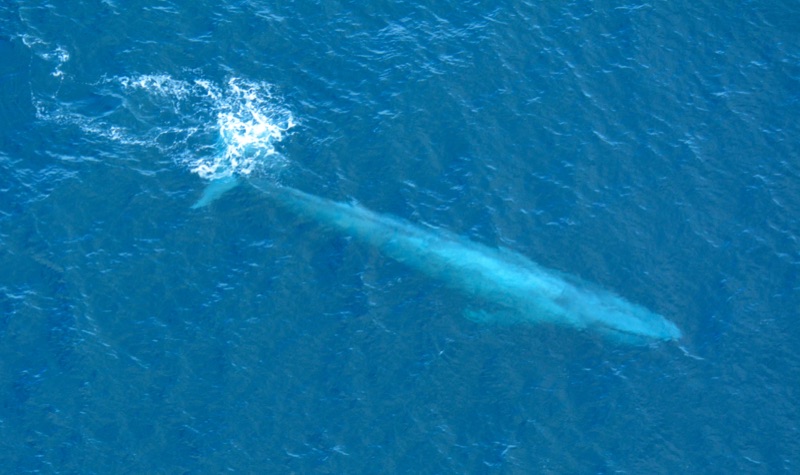
The Largest Animal Ever
Nothing in the history of life on Earth has ever grown as large as the blue whale. Adults typically reach about 25 to 30 meters (82 to 98 feet) in length and can weigh up to 200 tonnes (about 440,000 pounds). To put that in perspective, a single blue whale weighs roughly as much as 33 African elephants. Even a newborn blue whale calf is enormous, measuring around 7 meters (23 feet) long and weighing about 2,700 kilograms (6,000 pounds) at birth. Calves grow quickly, gaining roughly 90 kilograms (200 pounds) every day during their first year by drinking their mother’s rich, fatty milk.
What They Look Like
Blue whales have long, streamlined bodies built for cruising through the open ocean. Their skin is a mottled blue-gray color, with lighter patches that give each whale a unique pattern, almost like a fingerprint. When seen from below the surface, they can appear bright blue, which is how they got their name. A blue whale’s head is broad and flat, shaped somewhat like a U when viewed from above. Their flippers are long and slender, and their tail flukes can stretch about 7.6 meters (25 feet) wide, which is wider than many classrooms.
Baleen and Krill
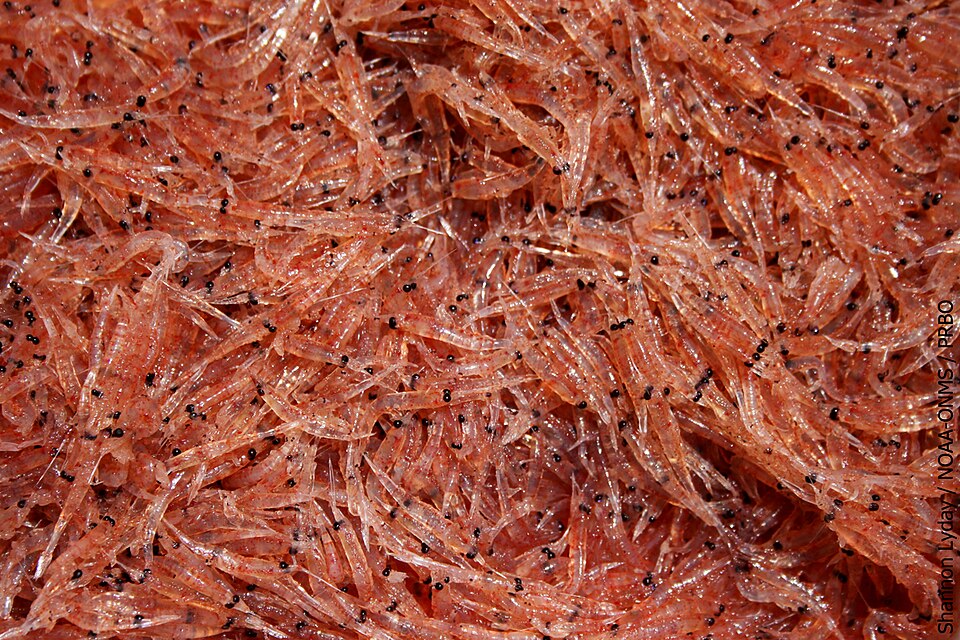
Instead of teeth, blue whales have rows of stiff, brush-like plates called baleen hanging from their upper jaws. These plates are made of keratin, the same material found in human fingernails. When a blue whale feeds, it lunges forward with its mouth wide open, swallowing a massive gulp of water along with clouds of krill. Then it pushes the water out through the baleen plates, which trap the tiny krill inside. A blue whale can eat up to 3,600 kilograms (about 8,000 pounds) of krill in a single day, making it one of the hungriest animals on the planet.
Breathing and Diving
Like all mammals, blue whales breathe air and must come to the surface regularly. When a blue whale exhales, it blasts a column of mist from its blowhole that can shoot up to 9 meters (30 feet) into the air, tall enough to be spotted from far away. Blue whales usually dive for about 10 to 20 minutes at a time, though they can stay underwater for up to 30 minutes if needed. They generally do not dive very deep compared to some other whales, spending most of their time in the upper 100 meters (330 feet) of the ocean where krill are most plentiful. Between dives, they take several quick breaths at the surface to refill their lungs with fresh air.
The Blue Whale’s Song
Blue whales produce incredibly deep, powerful sounds that travel vast distances through the ocean. Their low-frequency calls can reach up to 188 decibels, which is louder than a jet engine at takeoff. These sounds are so deep in pitch that most of them fall below the range of human hearing. Scientists believe blue whales use their calls to communicate with other whales hundreds or even thousands of kilometers away. Males often sing repeating patterns during the breeding season, and researchers think these songs may help attract mates or announce their location to other blue whales across the ocean. Unlike the complex, varied songs of humpback whales, blue whale calls tend to be simple, steady pulses and moans.
Where They Live and Migrate
Blue whales are found in all of the world’s major oceans, from the frigid waters near the Arctic and Antarctic to warmer tropical seas. They are among the greatest travelers in the animal kingdom, migrating thousands of kilometers each year between feeding and breeding grounds. During summer, blue whales head toward the cold polar waters where krill blooms in huge numbers, giving them plenty to eat. When winter approaches, they swim toward warmer waters closer to the equator to mate and give birth. Along the way, they may cross paths with other ocean travelers like dolphins, orcas, and narwhals, though blue whales tend to travel alone or in small groups of two or three.
Conservation
Before commercial whaling began in the early 1900s, there may have been as many as 250,000 blue whales in the world’s oceans. Whalers hunted them relentlessly for their blubber, meat, and oil, and by the 1960s the population had crashed to fewer than 5,000 animals. In 1966, the International Whaling Commission banned the hunting of blue whales, giving the species a chance to recover. Today, the global population is estimated at between 10,000 and 25,000, and the species is classified as Endangered by the International Union for Conservation of Nature (IUCN). Blue whales still face threats from ship strikes, ocean noise pollution, climate change affecting krill supplies, and entanglement in fishing gear, so continued protection remains essential for their survival.
 OtterKnow Kids Encyclopedia