Physical Characteristics
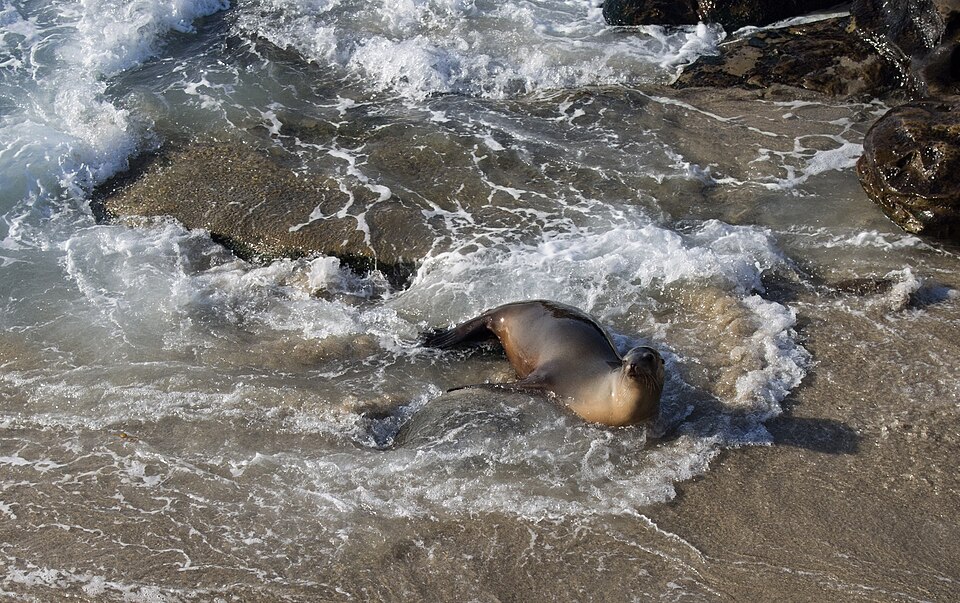
California sea lions have streamlined, torpedo-shaped bodies covered in short, dense fur that ranges from chocolate brown to tan. Males and females differ dramatically in size, a trait called sexual dimorphism. Adult males can reach 2.4 meters (7.9 feet) in length and weigh up to 390 kilograms (860 pounds), while females are considerably smaller at about 1.8 meters (5.9 feet) and 110 kilograms (240 pounds). Males also develop a prominent bony bump on top of their skulls called a sagittal crest, which gives their heads a distinctive domed shape. Unlike true seals, California sea lions have external ear flaps and large, rotating hind flippers that allow them to walk and even gallop on land. Their long, sensitive whiskers, called vibrissae, help them detect vibrations from prey moving through the water.
Where They Live
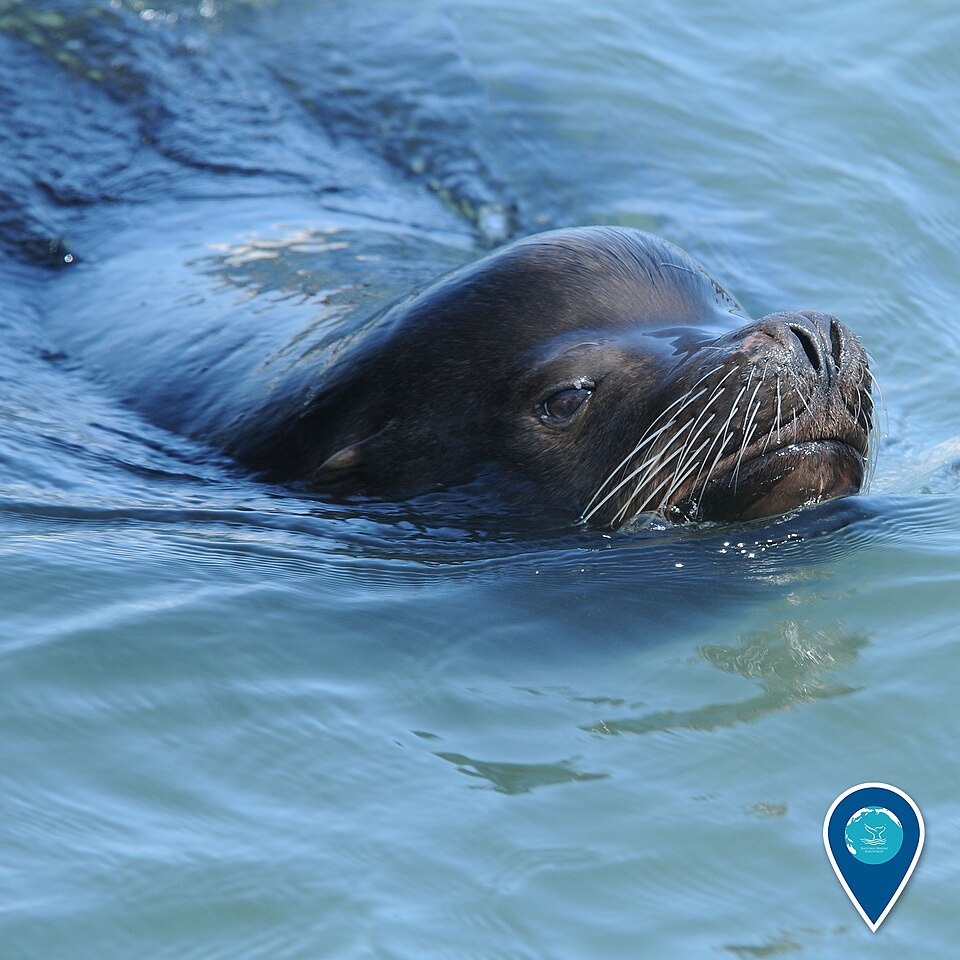
California sea lions range along the eastern Pacific coast from southeastern Alaska to central Mexico, though they breed primarily on offshore islands in southern California and western Mexico. The Channel Islands off the coast of California are one of the most important breeding areas. Outside of breeding season, males migrate northward as far as British Columbia, while females and young tend to stay closer to the breeding colonies. These adaptable animals use a wide variety of coastal habitats for resting, including sandy beaches, rocky ledges, jetties, buoys, and even the floating docks of marinas and harbors. In the water, they can be found from shallow coastal areas to the open ocean, diving to depths of up to 274 meters (899 feet) in search of food.
Diet and Hunting
California sea lions are opportunistic predators that feed on a wide variety of prey, including squid, anchovies, sardines, mackerel, rockfish, and herring. They typically hunt at depths of 20 to 80 meters (65 to 260 feet) but can dive much deeper when needed. A single dive usually lasts about two minutes, though they can hold their breath for up to ten minutes. Their large eyes are adapted for seeing in low-light underwater conditions, and their sensitive whiskers can detect the movements of nearby fish even in murky or dark water. Sea lions sometimes hunt cooperatively, working together to herd schools of fish into tight groups before taking turns feeding. They have been observed feeding alongside dolphins, sea otters, and seabirds, all taking advantage of the same schools of fish.
Social Behavior and Communication
California sea lions are highly social animals that gather in large groups called colonies, which can number in the hundreds or even thousands. They are among the most vocal of all marine mammals, producing a range of barks, growls, honks, and roars. Males establish territories on breeding beaches during the summer and bark loudly and continuously to defend their space and attract females. Mothers and pups recognize each other by their unique calls, which is essential because breeding colonies are crowded and chaotic. A mother returning from a feeding trip at sea can locate her own pup among thousands by listening for its distinctive voice, then confirming its identity through smell. Pups are born in June or July and can swim within a few weeks, though they nurse for up to a year.
Intelligence and Training
California sea lions are considered one of the most intelligent marine mammals. In scientific studies, they have demonstrated the ability to understand simple logical rules, follow sequences, and remember tasks they learned years earlier. One famous sea lion named Rio, studied at the University of California Santa Cruz, could still remember sign-like commands she had learned 10 years before being retested. Their intelligence, trainability, and comfort around humans have made them popular performers at marine parks and aquariums worldwide. The United States Navy Marine Mammal Program has trained California sea lions since the 1960s to perform tasks such as locating underwater mines, recovering equipment from the ocean floor, and detecting unauthorized swimmers near naval vessels.
Conservation
California sea lions were once hunted extensively and their populations declined significantly in the early twentieth century. After the passage of the Marine Mammal Protection Act in 1972, their numbers rebounded dramatically. Today the population is estimated at around 250,000 to 300,000 individuals, making them one of the most abundant pinnipeds in the world. However, they still face threats including entanglement in fishing gear, pollution, algal blooms that produce toxins called domoic acid, and competition with commercial fisheries for prey. Climate events like El Nino can cause mass starvation among pups when warm water reduces the availability of prey fish near breeding colonies. California sea lions serve as an important indicator species for the health of Pacific coastal ecosystems, and monitoring their populations helps scientists understand broader changes in the marine environment.
 OtterKnow Kids Encyclopedia