The World’s Densest Fur
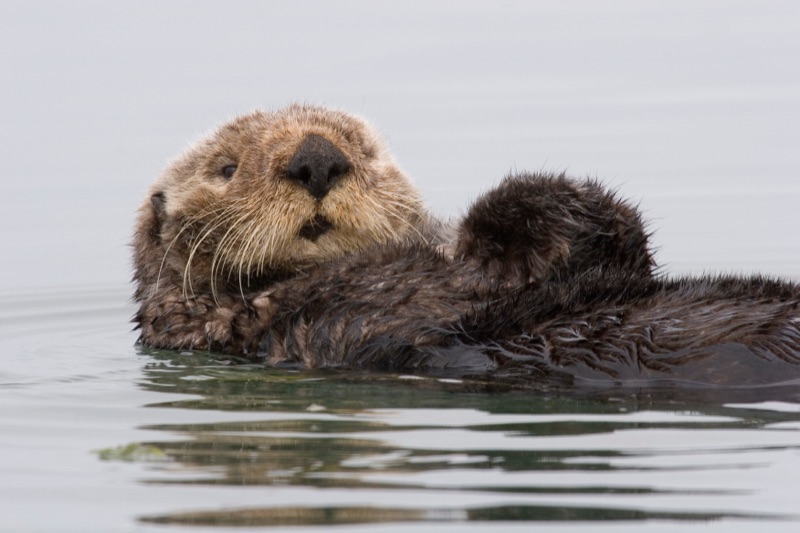
A sea otter’s fur is unlike anything else in the animal kingdom. While a human head has about 100,000 hairs total, a sea otter can have up to one million hairs packed into a single square inch of skin. This incredibly thick fur works by trapping a layer of air close to the otter’s body, creating a natural wetsuit that keeps cold water from ever touching its skin. Sea otters spend a surprising amount of time grooming, sometimes several hours a day, because if their fur becomes dirty or matted, it loses its ability to trap air and the otter could freeze. Because this luxurious fur made sea otters a target for hunters in the 1700s and 1800s, grooming is quite literally a matter of life and death for these animals.
What They Look Like
Sea otters have long, streamlined bodies with short, thick tails that help them steer through the water. Their hind feet are large and webbed like flippers, making them powerful swimmers, while their front paws are short with retractable claws, perfect for gripping food and using tools. Most sea otters have dark brown fur, though their heads and necks often lighten to a pale cream or silver as they age, giving older otters a distinguished look. Their round faces feature small ears, bright eyes, and long whiskers called vibrissae that help them detect prey in murky water. Adult males are noticeably larger than females, sometimes reaching up to 1.5 meters (nearly 5 feet) in length from nose to tail.
Sea otters are one of the very few animals on Earth that use tools, placing them in an elite group alongside chimpanzees, crows, and dolphins. When a sea otter dives to the ocean floor and collects a clam, mussel, or sea urchin, it often brings a flat rock back to the surface as well. Floating on its back, the otter places the rock on its chest and smashes the shellfish against it until the hard shell cracks open. Some otters are picky about their tools, keeping a favorite rock tucked under a loose flap of skin near their armpit so they can use it again and again. Scientists have observed that mothers teach this skill to their pups, and different otter populations sometimes develop their own unique techniques for cracking open different types of prey.
Eating to Stay Warm
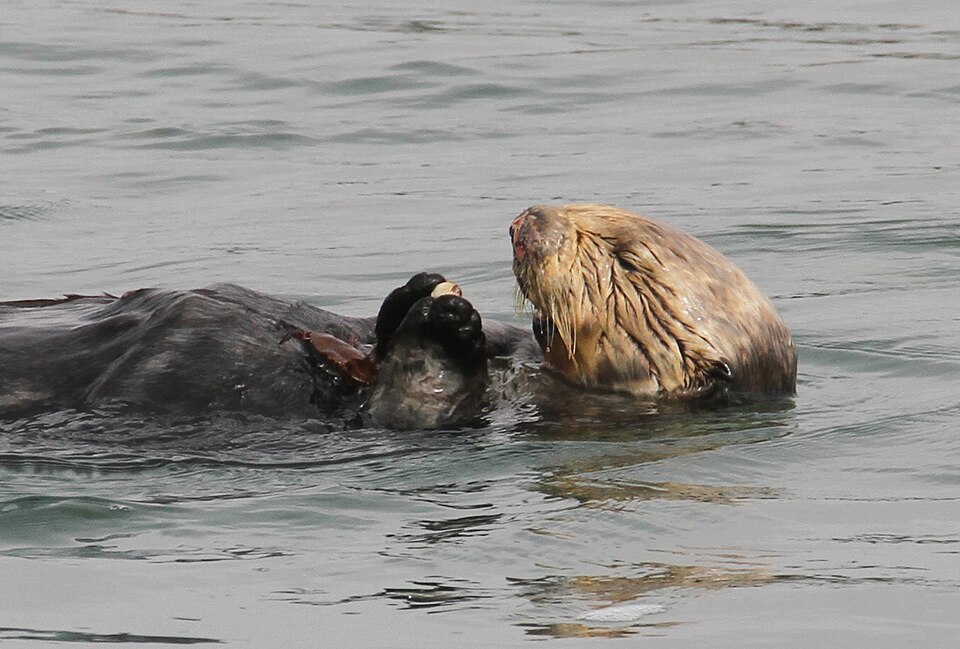
Because sea otters have no blubber, they must burn enormous amounts of energy just to stay warm in the cold Pacific waters. To fuel this furnace, a sea otter eats roughly 25 percent of its own body weight in food every single day. For a 30-kilogram otter, that means consuming about 7.5 kilograms (roughly 17 pounds) of food daily, which would be like a human eating more than 60 hamburgers. Their diet includes sea urchins, crabs, clams, mussels, abalone, snails, and occasionally fish or starfish. Sea otters have strong, flat molars designed for crushing the hard shells of their prey, and their metabolic rate is about two to three times higher than that of a land mammal the same size.
Rafts and Social Life
Sea otters are social animals that often gather together in groups called rafts, which can range from a handful of individuals to several hundred. Within a raft, otters float on their backs at the surface, and they frequently wrap themselves in long strands of kelp to keep from drifting away while they rest. One of their most endearing behaviors is holding hands with each other while sleeping, which helps the raft stay together in currents and waves. Males and females usually form separate rafts, coming together mainly during the breeding season. Mothers with young pups are especially attentive, rarely leaving their baby’s side and often cradling the pup on their belly as they float together through the kelp forest.
Pups
Sea otter mothers give birth to a single pup at a time, usually in the water, and the bond between mother and pup is remarkably strong. A newborn pup weighs about 1.4 to 2.3 kilograms (3 to 5 pounds) and is born with a thick coat of fluffy fur that traps so much air the pup literally cannot sink. For the first few months, the pup rides on its mother’s chest as she floats on her back, nursing and staying warm. The mother grooms her pup constantly, blowing air into its fur to keep it waterproof, and she will dive for food while leaving the pup bobbing safely at the surface. Pups begin learning to dive and forage at around two months old, but they typically stay with their mothers for six to eight months before becoming independent.
Keystone Species
Scientists call the sea otter a keystone species, meaning it plays a role in its ecosystem so important that everything else would fall apart without it. Sea otters eat large numbers of sea urchins, which are spiny creatures that graze on kelp. Without otters to keep the urchin population in check, sea urchins multiply rapidly and devour entire kelp forests, turning rich underwater habitats into bare, lifeless stretches of ocean floor called urchin barrens. Healthy kelp forests, protected by sea otters, provide shelter and food for hundreds of other species, from fish and sharks to invertebrates and seabirds. Kelp forests also absorb carbon dioxide from the atmosphere, so by keeping these forests healthy, sea otters indirectly help fight climate change.
Conservation
The story of the sea otter is one of near extinction and remarkable recovery. During the maritime fur trade of the 1700s and 1800s, hunters killed hundreds of thousands of sea otters for their valuable pelts, reducing the worldwide population from an estimated 150,000 to 300,000 animals down to fewer than 2,000 by 1911. That year, an international treaty banned commercial sea otter hunting, and slowly the populations began to rebuild. Today, there are roughly 125,000 to 150,000 sea otters in the wild, and the species is listed as Endangered by the International Union for Conservation of Nature (IUCN). Sea otters still face threats from oil spills, which destroy the insulating ability of their fur, as well as habitat loss, pollution, and conflicts with shellfish fisheries, making continued conservation efforts essential for their future.
 OtterKnow Kids Encyclopedia