What They Look Like
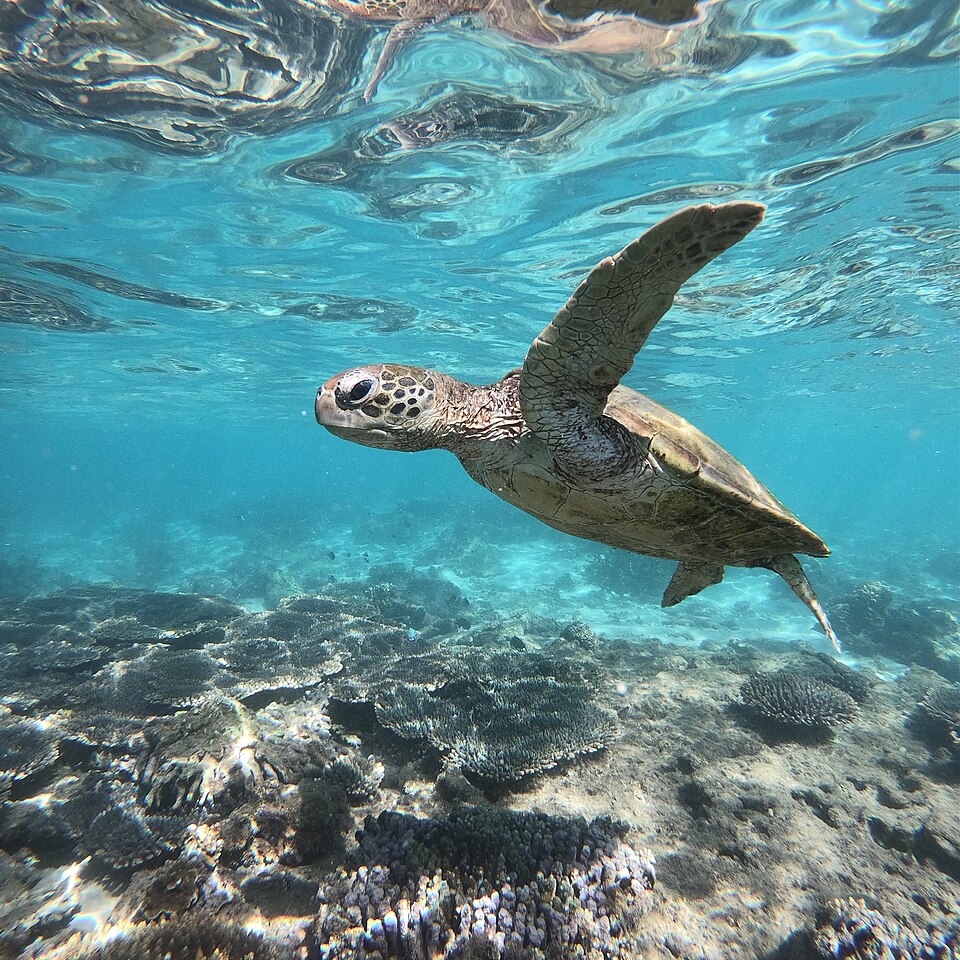
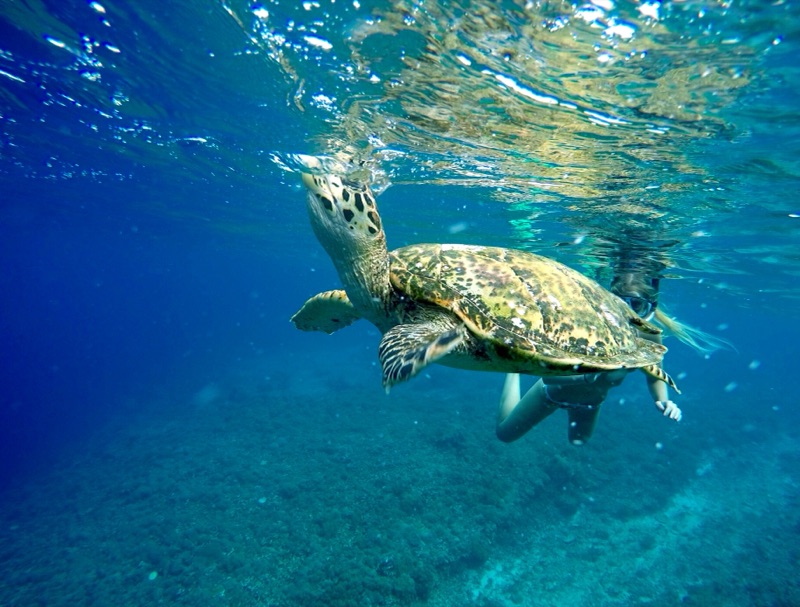
Sea turtles have streamlined, teardrop-shaped shells and large, paddle-like flippers that make them powerful swimmers. Their front flippers work like wings, pulling them through the water in a motion that looks almost like flying. Depending on the species, an adult sea turtle can range from about 60 centimeters (2 feet) long for a Kemp’s ridley to over 2 meters (6.5 feet) for a leatherback, the largest of all sea turtles. Leatherbacks can weigh more than 900 kilograms (2,000 pounds), making them one of the heaviest reptiles alive today. Shell colors vary from olive green and reddish-brown to dark gray, and each species has a slightly different head and shell shape that helps scientists tell them apart.
Ancient Mariners
Sea turtles are among the most ancient creatures on Earth, with ancestors that first appeared roughly 110 million years ago during the age of the dinosaurs. Fossils show that early sea turtles lived alongside giants like Tyrannosaurus rex and Triceratops, and they survived the mass extinction event that wiped out the dinosaurs about 66 million years ago. The broader turtle lineage stretches back even further, around 200 million years, making turtles older than both snakes and lizards. Over all that time, the basic body plan of sea turtles has changed surprisingly little, meaning the green turtles swimming in today’s oceans are not very different from their prehistoric relatives. Their incredible staying power makes sea turtles one of the great success stories of animal evolution.
Navigation and the Birth Beach
One of the most astonishing abilities of sea turtles is their sense of navigation. Female sea turtles return to the exact same beach where they were born to lay their own eggs, sometimes after decades of wandering thousands of kilometers across the ocean. Scientists have discovered that sea turtles can detect Earth’s magnetic field and use it like an invisible map to find their way. Each stretch of coastline has a slightly different magnetic signature, and hatchlings seem to imprint on the magnetic pattern of their home beach shortly after they emerge from the sand. This magnetic sense, combined with cues from ocean currents, water chemistry, and possibly even smell, allows adults to navigate back with remarkable precision.
Nesting and Eggs
When a female sea turtle is ready to nest, she crawls ashore under cover of darkness, digs a deep hole in the sand with her back flippers, and deposits a clutch of roughly 80 to 120 soft, leathery eggs. She carefully covers the nest with sand, packing it down to hide it from predators, and then returns to the sea, leaving the eggs to incubate on their own. After about 45 to 70 days, the hatchlings break out of their shells and dig their way up through the sand, usually at night to avoid predators and the scorching sun. The tiny turtles, each about the size of a child’s palm, scramble toward the brightest horizon, which is normally the moonlit ocean. Despite the large number of eggs laid, only about one in every thousand hatchlings is estimated to survive to adulthood because of threats from crabs, birds, fish, and other predators.
Temperature-Dependent Sex Determination
Unlike most animals, the sex of a sea turtle is not determined at the moment of fertilization. Instead, it depends on the temperature of the sand surrounding the eggs during a critical period of incubation. Cooler nest temperatures, generally below about 27.7 degrees Celsius (about 82 degrees Fahrenheit), tend to produce mostly male hatchlings, while warmer temperatures above roughly 31 degrees Celsius (about 88 degrees Fahrenheit) produce mostly females. Temperatures in between yield a mix of both sexes. This system is called temperature-dependent sex determination, and it makes sea turtles especially vulnerable to climate change. As global temperatures rise and beaches get hotter, scientists have found that some nesting populations are producing almost all female hatchlings, which could make it harder for these turtles to find mates in the future.
What They Eat
Different species of sea turtles have very different diets. Green sea turtles are mostly herbivores as adults, grazing on seagrass and algae growing on the ocean floor, which actually gives their body fat a greenish color and explains their name. Loggerhead turtles have powerful jaws built for crushing hard-shelled prey like crabs, conchs, and sea urchins. Leatherbacks specialize in eating jellyfish, diving deep into the water column and consuming hundreds of kilograms of them each week. Hawksbill turtles use their narrow, pointed beaks to reach into crevices on coral reefs and pull out sponges, which few other animals can digest. No matter what they eat, sea turtles play important roles in their ecosystems, from keeping seagrass beds trimmed and healthy to controlling jellyfish populations.
A Long, Slow Life
Sea turtles grow and mature very slowly compared to most other reptiles. Depending on the species, a young sea turtle may take 20 to 30 years or even longer to reach adulthood and be ready to reproduce. During those early decades, juveniles drift with ocean currents, feeding and growing through what scientists sometimes call the “lost years” because so little is known about this stage of their lives. Once mature, adults may live for 50 years or more, and some scientists believe certain species could live past 100. Because sea turtles take so long to start breeding and produce many offspring that mostly do not survive, losing even a small number of adults can have a big impact on the whole population.
Conservation
All seven species of sea turtle are considered threatened or endangered, and they face dangers from many directions. Tens of thousands of sea turtles are accidentally caught each year in fishing nets and on longline hooks, a problem called bycatch. Coastal development and artificial lighting confuse nesting females and disorient hatchlings, leading them away from the ocean and toward roads and buildings. Plastic pollution is another serious threat because turtles often mistake floating plastic bags for jellyfish and swallow them, which can block their digestive systems. Conservation efforts including protected nesting beaches, turtle excluder devices in fishing nets, and international agreements like the Convention on International Trade in Endangered Species (CITES) have helped some populations begin to recover. People around the world are working to protect these ancient mariners so that sea turtles can continue gliding through the oceans for millions of years to come.
 OtterKnow Kids Encyclopedia