Ancient Survivors
Sharks have existed for more than 450 million years, which means they were swimming in ancient seas long before the first dinosaurs walked the land and even before the first trees grew on Earth. Scientists know this because of fossilized shark teeth and scales found in rocks from that era, though complete shark fossils are rare because cartilage does not preserve as well as bone. One of the most famous prehistoric sharks was Megalodon, a giant predator that lived roughly 23 to 3.6 million years ago and may have grown up to 15 meters (50 feet) long, with teeth the size of an adult’s hand. Over hundreds of millions of years, sharks have survived five major mass extinctions that wiped out countless other species, including the one that ended the age of dinosaurs. Their ability to adapt to changing oceans has made sharks some of the most successful survivors in the history of life on Earth.
What They Look Like
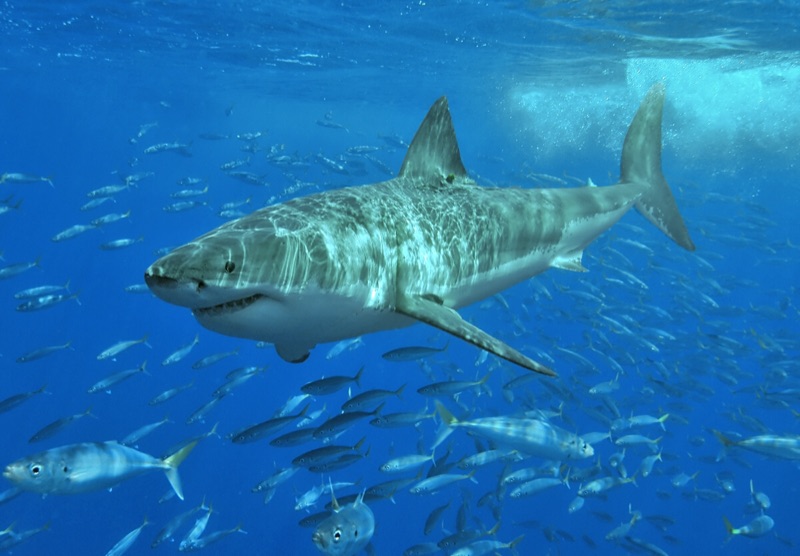
Most people picture a shark as a torpedo-shaped fish with a pointed snout, a tall triangular dorsal fin, and a powerful crescent-shaped tail, and many species do look exactly like that. Their skin is covered in tiny tooth-like structures called dermal denticles, which reduce drag and help them glide smoothly through the water. Instead of a bony skeleton, a shark’s entire frame is built from cartilage, which is lighter than bone and gives the shark greater flexibility for quick turns and bursts of speed. Sharks breathe by passing water over their gills, and most species have five to seven gill slits on each side of their head. Not all sharks match the classic image, though: hammerhead sharks have wide, flattened heads shaped like the letter T, angel sharks look like flat rays resting on the seafloor, and the enormous whale shark has a broad, blunt snout quite different from its sleeker relatives.
The Senses of a Shark
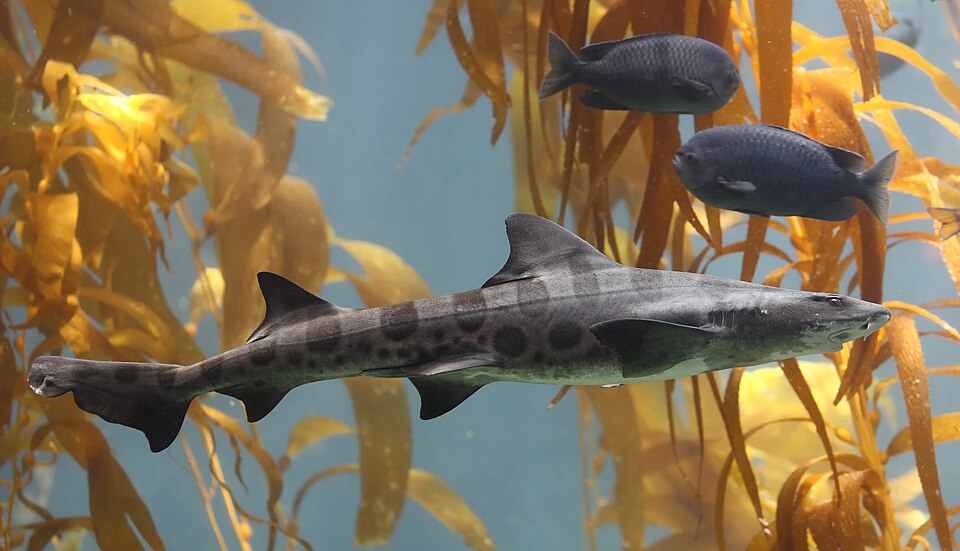
Sharks possess an extraordinary set of senses that make them highly effective hunters. Like other fish, they have a lateral line system, a row of fluid-filled canals along each side of their body that detects vibrations and movements in the water from great distances. Their sense of smell is legendary: some species can detect a single drop of blood diluted in an Olympic-sized swimming pool of seawater. Sharks also have excellent vision, and many species have a reflective layer behind the retina called the tapetum lucidum that helps them see in dim or murky water. Perhaps their most remarkable sense is electroreception, powered by tiny gel-filled pores on their snouts called the ampullae of Lorenzini, which can detect the faint electrical fields produced by the muscles and nerves of other living creatures. This means a shark can locate prey even when it is buried under sand or hiding in complete darkness.
Teeth and Feeding
A shark’s mouth is one of its most fascinating features, and different species have teeth shaped for very different diets. Great white sharks have large, serrated triangular teeth designed for cutting through the flesh of seals and sea lions, while the nurse shark has flat, plate-like teeth built for crushing the shells of crabs and sea urchins. Sharks continuously grow new teeth throughout their lives, with replacement teeth forming in rows behind the front ones and sliding forward like a conveyor belt when older teeth fall out. A single shark can go through tens of thousands of teeth over its lifetime. Not all sharks are fearsome hunters, however. The whale shark, the largest fish in the ocean, is a gentle filter feeder that swims with its enormous mouth wide open to strain tiny plankton and small fish from the water, much like some species of whales do.
Shark Diversity
The more than 500 species of sharks show just how diverse this group of fish really is. The great white shark, bull shark, and tiger shark are powerful predators that patrol coastlines and open water, while the blue shark is a graceful, long-distance traveler that migrates thousands of kilometers across the Atlantic and Pacific Oceans. Hammerhead sharks use their uniquely shaped heads to pin stingrays against the ocean floor before eating them, and their wide-set eyes give them a broader field of vision than most other sharks. In the deep ocean, the cookiecutter shark takes circular bites out of much larger animals, including dolphins, tuna, and even other sharks. The Greenland shark, which lives in the frigid waters of the Arctic, is one of the longest-lived vertebrates on Earth, with some individuals estimated to be over 400 years old. From tropical coral reefs to icy polar seas, sharks have adapted to nearly every marine habitat on the planet.
Sharks and the Ocean Ecosystem
As apex predators near the top of the food chain, sharks play a critical role in maintaining the health and balance of ocean ecosystems. By hunting weak, sick, or slow-moving prey, sharks help keep populations of other fish and marine animals strong and prevent any one species from becoming too numerous. When shark populations decline in an area, the effects ripple through the entire food web: populations of smaller predators can explode, which then over-consume the species below them, throwing the whole ecosystem off balance. Sharks also influence where other animals choose to feed and rest, which prevents overgrazing of seagrass beds and coral reefs. Some species, like the tiger shark, are considered keystone predators because removing them would cause dramatic changes to the habitats they patrol. In this way, healthy shark populations help protect the ocean environments that countless other species, from tiny shrimp to massive whales, depend upon.
Sharks and Humans
Sharks have a reputation as fearsome man-eaters, but the reality is far less dramatic. On average, sharks are responsible for fewer than ten human deaths worldwide each year, while humans kill an estimated 100 million sharks every year through fishing, bycatch, and the shark fin trade. Shark finning, the practice of catching sharks, cutting off their fins for use in shark fin soup, and discarding the rest of the body, has driven many species toward extinction. Unprovoked shark attacks on humans are extremely rare, and most occur because a shark mistakes a surfer or swimmer for its natural prey, such as a seal. Scientists who study sharks emphasize that these animals are far more threatened by us than we are by them. Learning the truth about sharks helps replace fear with respect and understanding, which is an important step toward protecting these ancient ocean travelers.
Conservation
Many shark species around the world are now threatened or endangered, largely because of overfishing and habitat loss. Sharks grow slowly, mature late, and produce relatively few offspring compared to most fish, which means their populations cannot recover quickly when they are overharvested. International agreements such as the Convention on International Trade in Endangered Species (CITES) have placed protections on some of the most vulnerable species, including the great white shark, the whale shark, and several species of hammerhead. Marine protected areas and shark sanctuaries, where fishing for sharks is banned, have been established in places like Palau, the Bahamas, and the Maldives. Scientists are also working to develop shark-safe fishing gear that reduces bycatch, and public awareness campaigns are helping to reduce the demand for shark fin soup. Protecting sharks is not just about saving one group of animals; it is about preserving the balance of the entire ocean.
 OtterKnow Kids Encyclopedia