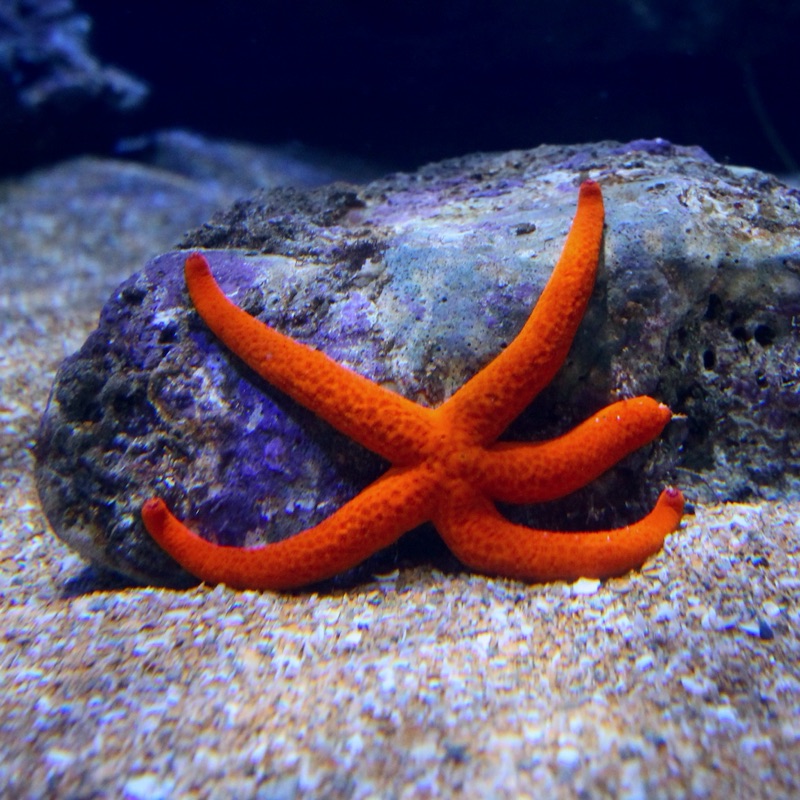
Sea Star, Not Starfish
Because starfish are not fish in any way, many marine biologists prefer to call them “sea stars” instead. Fish have backbones, breathe through gills, and swim using fins, but sea stars have none of those things. They are invertebrates, meaning they have no backbone or skeleton inside their bodies. Instead, their bodies are supported by a hard outer covering made of tiny plates of calcium carbonate, similar to the material in seashells. The name “sea star” is more scientifically accurate, though “starfish” is still commonly used in everyday language and even in some scientific texts.
What They Look Like
Most sea stars have a central disk-shaped body with five arms radiating outward, giving them their famous star shape. However, not all sea stars follow this pattern. Some species, like the sunflower sea star, can have twenty or more arms, and a few rare species grow more than forty. Sea stars come in an incredible range of colors, including red, orange, purple, blue, and even striped or spotted patterns. Their upper surface is rough and covered with small spines or bumps that help protect them from predators. On the underside of each arm, you can see rows of tiny, flexible structures called tube feet, which the sea star uses to move around and grip surfaces.
Tube Feet and the Water Vascular System
Sea stars move using a system that is completely unlike anything found in mammals, birds, or fish. Instead of muscles attached to bones, they use a network of water-filled canals inside their bodies called the water vascular system. Seawater enters through a small opening on the top of the sea star called the madreporite and flows through canals that branch into each arm. The water is pumped into hundreds of tiny tube feet, causing them to extend outward and press against surfaces. By filling and emptying these tube feet in a coordinated pattern, the sea star slowly pulls itself along rocks, sand, and coral. Although this movement looks slow to us, tube feet are strong enough to pry open the shells of clams and mussels.
How They Eat
Sea stars are predators, and many species have one of the most unusual feeding methods in the animal kingdom. When a sea star finds a clam or mussel, it wraps its arms around the shell and uses its tube feet to pull the two halves apart, creating just a tiny gap. Then it does something very unusual: it pushes its own stomach out through its mouth and slides it through that gap into the shell. The stomach releases digestive juices that break down the prey’s soft body right inside the shell, and the sea star absorbs the nutrients before pulling its stomach back inside. This process can take several hours, but it allows sea stars to eat prey that is much larger than their small mouths could otherwise handle. Some species also feed on algae, sponges, and other small organisms they find on the ocean floor.
Regeneration
One of the most amazing abilities of sea stars is their power to regrow lost body parts, a process called regeneration. If a predator bites off one of a sea star’s arms, the sea star can slowly grow a completely new one over the course of several months. In some species, the situation is even more extraordinary: a single severed arm can regenerate an entirely new body, producing a whole new sea star from just one piece. This ability is possible because sea stars’ bodies contain special cells that can develop into many different types of tissue. Scientists study sea star regeneration closely because understanding how it works could eventually help doctors develop new ways to treat injuries and regrow damaged tissue in humans.
No Brain and No Blood
Sea stars have a very different internal setup compared to animals like dolphins or octopuses. They have no brain at all. Instead, their nervous system is a ring of nerves around the central disk with branches running into each arm, allowing them to sense light, temperature, and touch. They also have no blood flowing through their bodies. Instead of blood, sea stars use filtered seawater pumped through their water vascular system to carry nutrients and oxygen to their cells. Each arm tip has a simple eyespot that can detect light and dark, helping the sea star orient itself and find food. Despite lacking a brain, sea stars are surprisingly effective hunters and can coordinate all of their arms to move, eat, and escape danger.
Where They Live
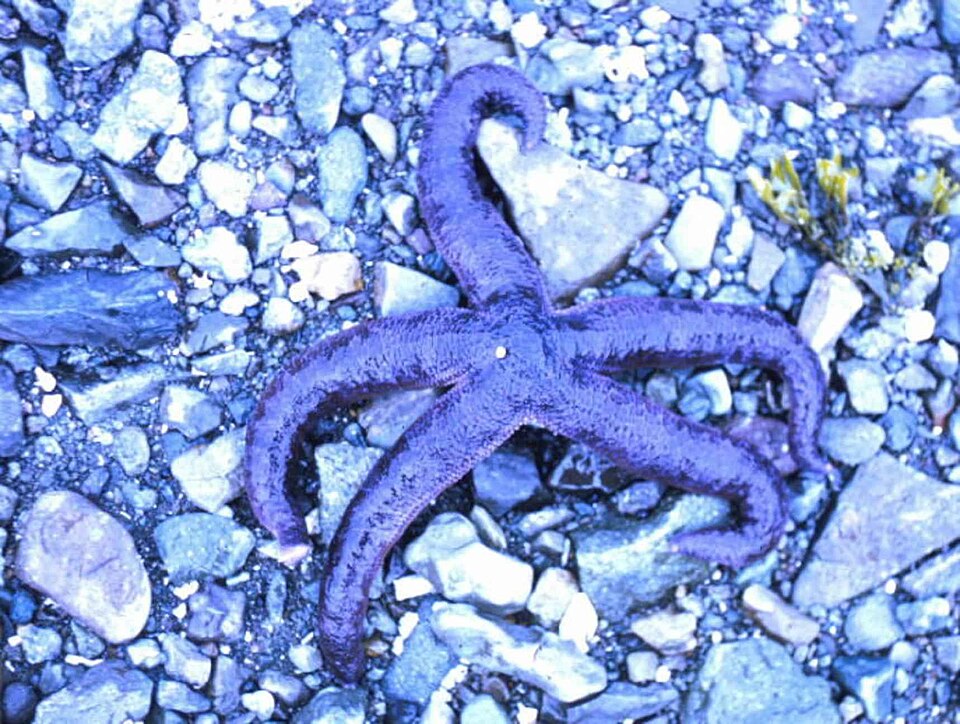
Sea stars are found in oceans all around the world, but they cannot survive in fresh water. They are especially common in tide pools along rocky coastlines, where you can often spot them clinging to rocks at low tide. Some species live on coral reefs in tropical waters, while others thrive on sandy or muddy ocean floors hundreds of meters deep. The sunflower sea star, one of the largest species, lives along the Pacific coast of North America and can grow to nearly one meter across. The purple sea star, also called the ochre star, is one of the most studied species because of its important role in coastal ecosystems along the west coast of the United States and Canada.
Sea Star Wasting Disease and Conservation
In 2013, scientists noticed something alarming happening along the Pacific coast of North America. Millions of sea stars began developing strange lesions on their bodies, losing their arms, and dissolving into piles of mush within days. This devastating illness, called sea star wasting disease, killed enormous numbers of sea stars across more than twenty species, with the sunflower sea star being hit especially hard. Researchers believe a combination of a virus and warming ocean temperatures may have triggered the outbreak, though the exact cause is still being studied. The loss was especially concerning because certain sea stars, like the purple sea star, are keystone species, meaning they play a critical role in keeping their ecosystem balanced by controlling populations of mussels and other animals. Without enough sea stars, mussel beds can take over rocky coastlines and crowd out dozens of other species. Conservation efforts now focus on monitoring sea star populations, understanding the disease, and protecting the ocean habitats sea stars depend on.
 OtterKnow Kids Encyclopedia