A Life Upside Down
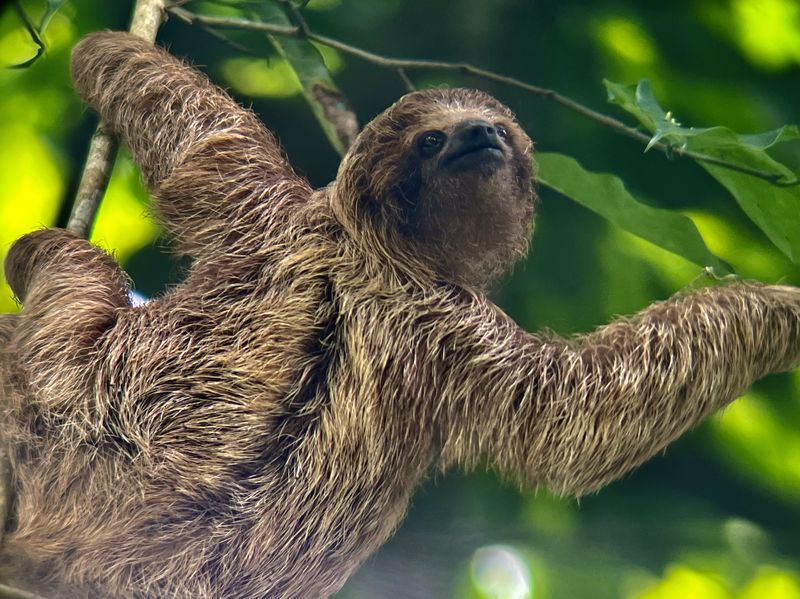
Almost everything a sloth does happens while hanging upside down. Sloths eat, sleep, mate, and even give birth while dangling from branches by their powerful curved claws. Their grip is so strong that sloths have been found still clinging to branches after they have died. A sloth’s internal organs are arranged differently from most mammals, with special attachments that keep the stomach and liver from pressing down on the lungs while the animal hangs inverted. This remarkable body design means a sloth can spend up to 20 hours a day resting comfortably in the canopy without ever needing to touch the ground.
Why So Slow?
Sloths move slowly not because they are lazy, but because their bodies run on very little energy. They have an extremely low metabolic rate — about 40 to 45 percent lower than what scientists would expect for an animal their size. This slow metabolism means their muscles produce less power, so sloths can only move at a top speed of about 0.24 kilometers per hour on the ground. Moving slowly also turns out to be an excellent survival strategy, because predators like jaguars and harpy eagles detect prey mainly through movement. By staying nearly motionless in the trees, sloths become very difficult to spot.
Algae in the Fur
A sloth’s shaggy coat is home to an entire miniature ecosystem. The coarse, grooved hairs trap moisture from the humid rainforest air, creating a perfect environment for green algae to grow. This algae tints the sloth’s fur a greenish color, providing excellent camouflage among the leaves and branches of the canopy. Scientists have also discovered moths, beetles, fungi, and even some species of bacteria living in sloth fur that exist nowhere else on Earth. The relationship benefits both sides: the algae gets a safe place to grow, and the sloth gets a living coat of camouflage that helps it hide from predators.
The Weekly Descent
About once a week, sloths make a slow, dangerous trip down from the safety of the treetops to the forest floor to defecate. This behavior has puzzled scientists for years because it exposes sloths to predators like anacondas and wild cats. Researchers believe sloths make this risky journey for several important reasons. By depositing waste at the base of their favorite trees, sloths may be fertilizing the very trees they depend on for food and shelter. The dung piles may also serve as a form of communication, marking territory and helping sloths find each other during mating season.
Where They Live
Sloths are found in the tropical rainforests of Central and South America, from southern Mexico through Brazil. They prefer dense, humid forests where the canopy provides plenty of leaves to eat and branches to cling to. Two-toed sloths tend to be slightly more adaptable and can sometimes be found in secondary forests and even cacao plantations. Three-toed sloths, on the other hand, usually stick to undisturbed primary rainforest. Both types spend the vast majority of their time high in the canopy, typically between 15 and 30 meters above the ground.
What They Eat
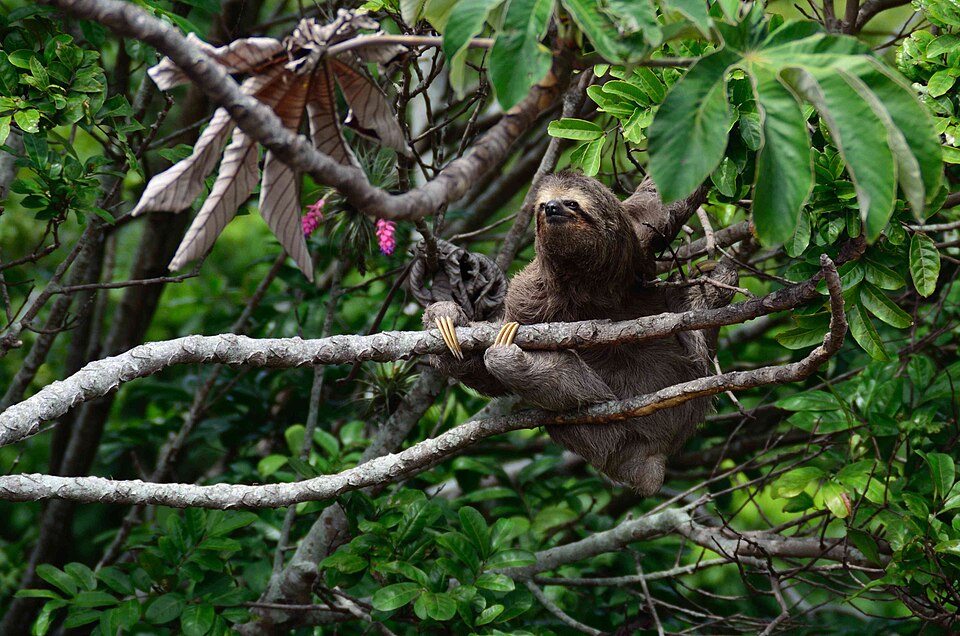
Sloths are herbivores that feed mainly on leaves, buds, and tender shoots from the trees where they live. Three-toed sloths are especially picky eaters, often sticking to the leaves of just a few tree species, particularly cecropia trees. Two-toed sloths have a slightly more varied diet and will also eat fruits, flowers, and occasionally small insects. Because leaves are low in nutrients and hard to digest, sloths have a large, multi-chambered stomach that uses bacteria to slowly break down the tough plant material. Digesting a single meal can take up to a month, which is one of the slowest digestion rates of any mammal.
Conservation
While sloths are not currently among the most endangered mammals, several species face growing threats. The pygmy three-toed sloth, found only on a tiny island off the coast of Panama, is critically endangered with fewer than 100 individuals remaining. Habitat loss from deforestation is the biggest danger to sloths overall, as logging and farming destroy the rainforest trees they depend on. Sloths are also vulnerable when they cross roads or power lines while trying to move between patches of forest. Conservation groups in countries like Costa Rica and Colombia run rescue centers that rehabilitate injured sloths and work to protect the forest corridors that connect sloth habitats.
 OtterKnow Kids Encyclopedia