Ancient Survivors
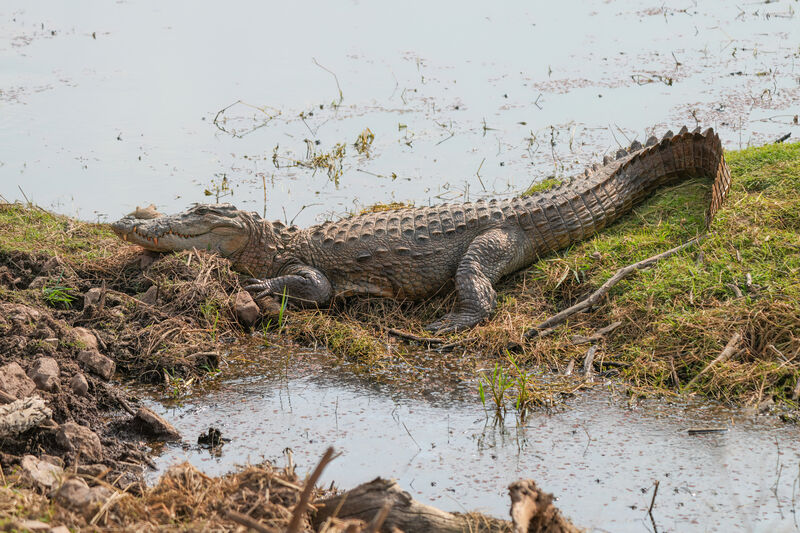
Crocodiles belong to a group of animals called archosaurs, which means they are more closely related to birds and dinosaurs than they are to lizards or snakes. The ancestors of modern crocodiles first appeared over 200 million years ago, during the age of the dinosaurs. While the dinosaurs went extinct 66 million years ago, crocodiles survived and continued to thrive. Scientists believe their ability to go long periods without food, their tough bodies, and their semi-aquatic lifestyle helped them endure mass extinctions that wiped out countless other species. Today’s crocodiles look remarkably similar to fossils from millions of years ago, earning them the nickname “living fossils.”
Crocodile vs. Alligator
People often confuse crocodiles with alligators, but there are several ways to tell them apart. A crocodile has a long, V-shaped snout, while an alligator’s snout is wider and U-shaped. When a crocodile closes its mouth, some of the teeth on its lower jaw stick out and remain visible, but an alligator’s lower teeth are hidden. Crocodiles also tend to be lighter in color — usually olive or tan — compared to the darker, almost black skin of most alligators. Another key difference is habitat: crocodiles have special salt glands that allow them to live in saltwater, while alligators prefer freshwater environments like swamps and marshes.
The Most Powerful Bite
Crocodiles possess the strongest bite force ever measured in a living animal. The saltwater crocodile can clamp its jaws shut with a force of over 3,700 pounds per square inch — enough to crush bone with ease. Interestingly, while the muscles that close a crocodile’s jaw are incredibly strong, the muscles that open it are surprisingly weak. A person could hold a crocodile’s mouth shut with their bare hands, though getting close enough to try would be extremely dangerous. Crocodiles use their powerful bite not for chewing but for gripping, since they swallow their food in large chunks or tear it into smaller pieces by thrashing.
Hunting and the Death Roll
Crocodiles are patient hunters that rely on stealth and surprise. They float just below the surface of the water with only their eyes and nostrils exposed, waiting motionless for an animal to come close to the water’s edge. When the moment is right, a crocodile lunges forward with incredible speed, clamping its jaws around its prey and dragging it underwater. To tear apart larger prey, crocodiles perform a move called the “death roll,” spinning their entire body rapidly while gripping their catch. This technique allows them to rip off manageable pieces of meat, since their teeth are designed for gripping rather than cutting.
Where They Live
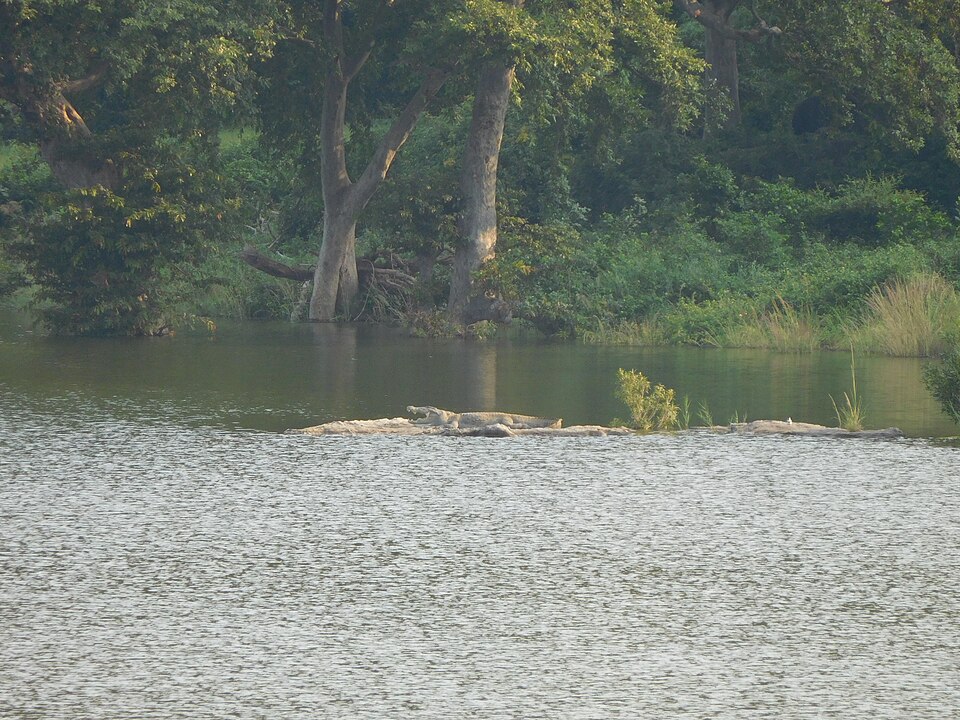 like Africa, Australia, and South America. They spend most of their time in the water. Crocodiles are very good at hiding with just their eyes and nose above the surface.
Crocodiles are found in tropical and subtropical regions around the world. The saltwater crocodile, which can grow over 20 feet long and weigh more than a ton, ranges from Southeast Asia to northern Australia and sometimes swims far out to sea. The Nile crocodile lives throughout much of sub-Saharan Africa and is one of the most widespread species. In the Americas, the American crocodile inhabits coastal areas from southern Florida through Central America and into northern South America. Crocodiles are cold-blooded, so they depend on warm climates and bask in the sun to regulate their body temperature.
Underwater Adaptations
Crocodiles have evolved remarkable features for their life in the water. They have a transparent third eyelid, called a nictitating membrane, that slides across the eye like a pair of built-in goggles so they can see clearly underwater. Special valves in their ears and nostrils close tightly when they submerge, keeping water out. A crocodile can hold its breath for over an hour by slowing its heart rate, and a special flap at the back of its throat prevents water from flooding its lungs even when its mouth is open underwater. You may have heard the phrase “crocodile tears,” which describes someone faking sadness — it comes from the old myth that crocodiles cry while eating, though in reality their eyes simply water to keep moist when they are out of the water for a long time.
Motherly Care
Despite their fierce reputation, crocodiles are surprisingly devoted mothers. A female crocodile carefully builds a nest of vegetation or digs a hole in sand, where she lays between 20 and 80 eggs depending on the species. She then guards the nest for about three months, rarely leaving it unattended and fiercely defending it from predators. When the babies are ready to hatch, they make chirping sounds from inside their eggs, and the mother gently digs them out. She then carries the tiny hatchlings to the water in her massive jaws with extraordinary delicacy, and she may stay nearby to protect them for several weeks or even months.
Conservation
Several crocodile species face serious threats from habitat loss, pollution, and illegal hunting for their valuable skin. The Philippine crocodile and the Siamese crocodile are among the most endangered crocodilians in the world, with only a few hundred individuals remaining in the wild. Conservation programs, including captive breeding and habitat protection, have helped some species recover — the American crocodile, for example, has made a strong comeback in southern Florida thanks to decades of protection. Crocodiles play an important role in their ecosystems by controlling fish and animal populations and by creating water holes that other wildlife depends on during dry seasons. Protecting crocodiles means protecting the health of the rivers, wetlands, and coastlines where countless other species also live.
 OtterKnow Kids Encyclopedia