The Art of Origami
Origami is the ancient Japanese art of folding paper into shapes without using scissors or glue. The word “origami” comes from two Japanese words: “oru,” meaning to fold, and “kami,” meaning paper. Traditional origami uses a single square sheet of paper and transforms it through a series of precise folds into animals, flowers, boxes, and countless other forms. One of the most famous origami masters was Akira Yoshizawa, who invented the wet-folding technique, which uses slightly damp paper to create softer, more rounded and lifelike shapes. Yoshizawa also developed the system of arrows and dotted lines that origami instructions use around the world today.
The Legend of 1,000 Cranes
One of the most moving stories connected to origami is the legend of the thousand paper cranes. Japanese tradition says that anyone who folds one thousand origami cranes will be granted a wish. This legend became world-famous through the story of Sadako Sasaki, a Japanese girl who developed leukemia after the atomic bombing of Hiroshima. Sadako began folding paper cranes in the hospital, hoping to reach a thousand, and her story has inspired people around the world to fold cranes as symbols of peace and healing. Today, millions of paper cranes are sent to the Hiroshima Peace Memorial each year in her memory.
Beyond Traditional Origami
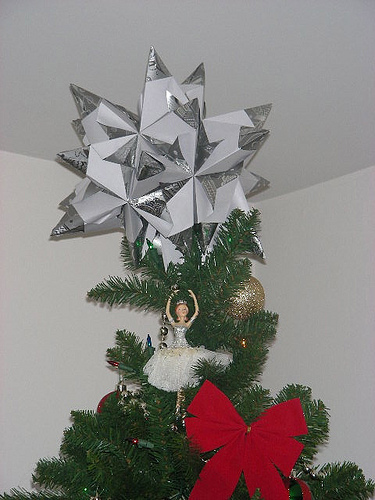
While traditional origami uses a single uncut sheet, other paper-folding arts expand the possibilities. Modular origami involves folding many identical units and fitting them together like puzzle pieces to create complex geometric shapes, stars, and spheres. Kirigami is the art of folding and cutting paper to create intricate designs, including pop-up cards and delicate snowflake patterns. Scientists and engineers have even studied origami principles to solve real-world problems — NASA has used origami-inspired folding techniques to design solar panels that fold up compactly for launch and then unfold in space. The mathematics behind origami folding patterns has become a serious field of study at universities around the world.
Papier-Mâché and Other Paper Crafts
Papier-mâché is a crafting technique that uses strips of paper soaked in a paste made from flour and water to build three-dimensional shapes over a mold or frame. The name comes from French and means “chewed paper,” describing how the paper becomes soft and pulpy. Once dry, papier-mâché becomes surprisingly strong and can be painted and decorated in countless ways. Paper quilling is another beautiful craft that involves rolling thin strips of paper into coils and arranging them into decorative patterns and designs. Decoupage, the art of decorating surfaces with cut-out paper images sealed under layers of varnish, has been popular in Europe since the 1700s.
Paper Crafts Around the World
Many cultures have developed their own unique paper craft traditions. Chinese paper cutting, called jianzhi, is an ancient folk art where intricate designs are cut from red paper using scissors or knives, often displayed during festivals and celebrations. Mexican papel picado, meaning “perforated paper,” involves cutting elaborate patterns into tissue paper to create colorful banners for holidays and parties. German scherenschnitte is a tradition of cutting detailed silhouette scenes from folded paper. Each of these traditions shows how a simple material like paper can become a canvas for cultural expression and artistic creativity across the globe.
 OtterKnow Kids Encyclopedia