History and Origins
The earliest known use of papier-mâché dates back to China’s Han Dynasty, around 200 BCE, where artisans discovered that layers of lacquered paper could be molded into hard, durable objects. Chinese craftspeople used the technique to make pot lids, helmet decorations, and even mirror cases. The knowledge spread along trade routes to Persia and the Middle East, where artisans created ornamental boxes and trays with elaborate painted designs.
Papier-mâché arrived in Europe by the 1600s. In France, where it got its modern name, workers in the 1700s discovered they could press wet paper pulp into molds to mass-produce decorative ceiling ornaments, furniture panels, and snuff boxes. In England, a company called Jennens and Bettridge became famous for making papier-mâché furniture, trays, and even piano cases that were lacquered and inlaid with mother-of-pearl. During the 1800s, papier-mâché was so popular that entire architectural elements like columns and wall panels were manufactured from it.
Techniques and Methods
There are two main papier-mâché techniques. The strip method, also called layering, involves dipping torn strips of newspaper into paste and laying them over a form. Each layer is smoothed down before adding the next, and most projects need at least three to five layers for strength. The pulp method involves soaking paper in water until it breaks down into a mushy pulp, then mixing it with paste to create a clay-like material that can be shaped by hand or pressed into molds.
The paste itself can be made several ways. The simplest recipe mixes one part white flour with two parts water, cooked briefly on the stove until smooth. White glue diluted with water also works well and dries clearer. For forms, crafters use balloons for round shapes, crumpled newspaper taped with masking tape for irregular shapes, and wire or chicken wire for large structures. Once dry, the surface can be sanded smooth, sealed with a coat of white paint or gesso, and then decorated with acrylic paints, tissue paper, glitter, or fabric.
Piñatas
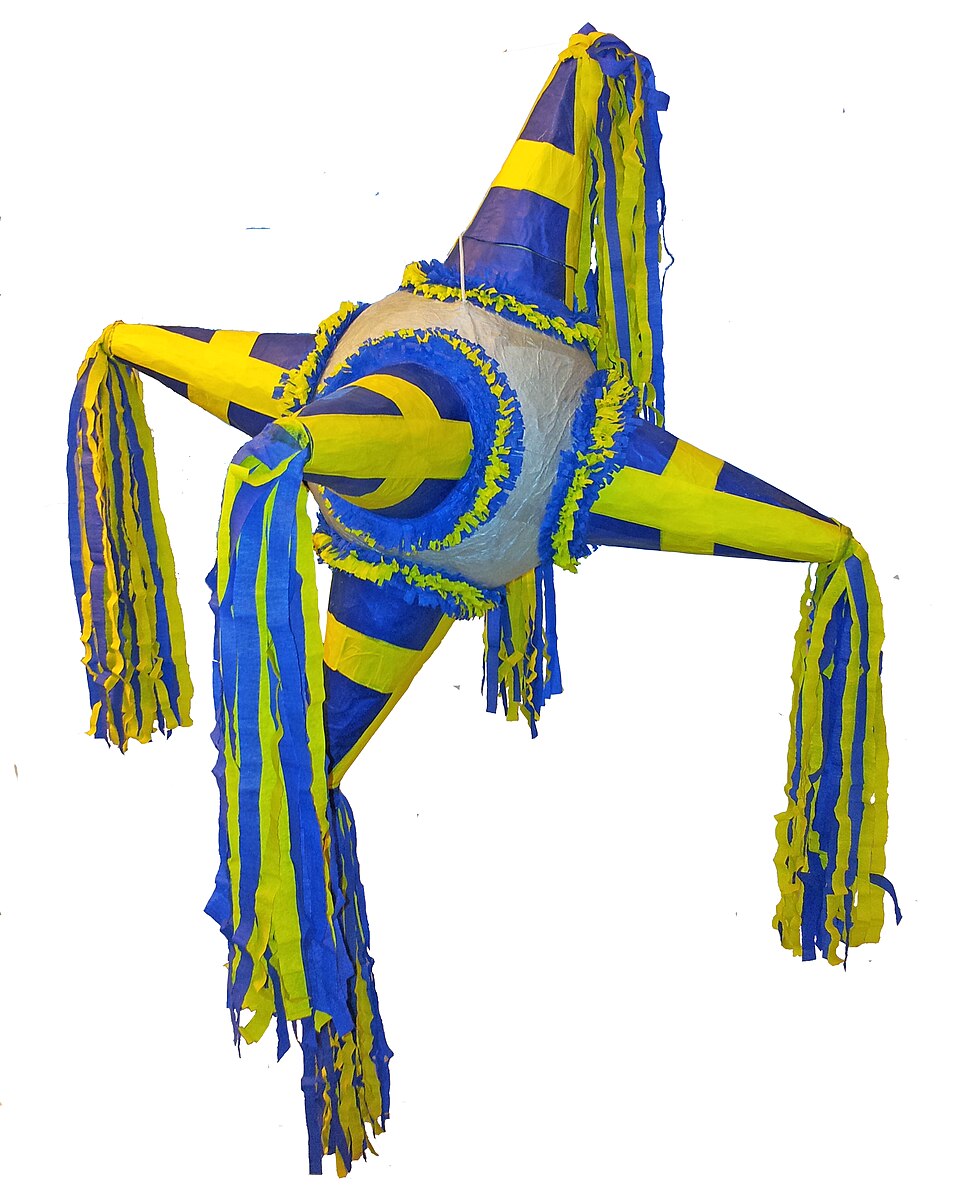
One of the most beloved papier-mâché traditions is the piñata. Piñatas originated in China, where they were used in New Year celebrations, and were brought to Europe by the explorer Marco Polo in the 1300s. Spanish missionaries later carried the tradition to Mexico in the 1500s, where it merged with local Aztec customs and became a central part of celebrations called posadas held during the Christmas season.
Traditional Mexican piñatas are star-shaped with seven points, and each point originally represented one of the seven deadly sins. Breaking the piñata symbolized the triumph of good over evil, and the candy that spilled out represented the rewards of keeping faith. Today, piñatas come in every shape imaginable, from cartoon characters to animals to sports equipment, and they appear at birthday parties and festivals around the world. They are made by layering papier-mâché over a clay pot or balloon, letting it dry, filling it with candy and small toys, and decorating it with brightly colored tissue paper.
Carnival Floats and Giant Sculptures
Papier-mâché plays a starring role in carnival celebrations around the world. At the Carnival of Viareggio in Italy, artists build enormous parade floats that can stand over 20 meters (65 feet) tall, featuring giant moving figures of politicians, celebrities, and fantastical creatures, all constructed from papier-mâché over steel and wood frames. In the city of Nice, France, the annual carnival features enormous papier-mâché king and queen figures that preside over the festivities. At Mardi Gras in New Orleans, many of the elaborate parade floats use papier-mâché sculptures to create their eye-catching designs.
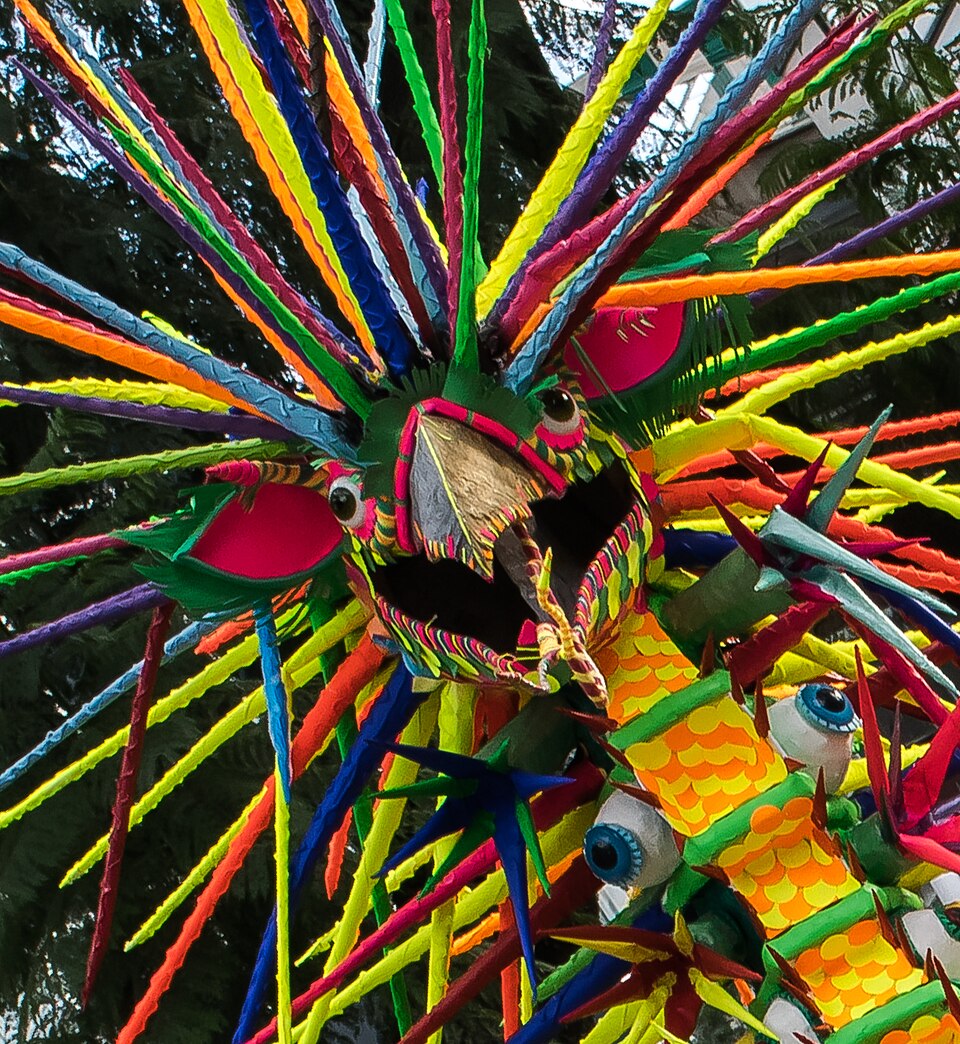
In Mexico, artists create alebrijes, fantastical creature sculptures that combine features from different animals, such as a dragon with butterfly wings or a lion with eagle talons. While some alebrijes are carved from wood, many are made from papier-mâché and painted in vivid, psychedelic colors. The tradition was started in the 1930s by an artist named Pedro Linares, who said the creatures came to him in a fever dream.
Theater and Props
Papier-mâché has been an essential material in theater for centuries. Because it is lightweight, inexpensive, and easy to shape, it is perfect for making stage props, masks, and set pieces. Commedia dell’arte performers in Italy used papier-mâché masks as early as the 1500s, and the tradition continues in theater productions today. Puppeteers around the world use papier-mâché to create puppet heads and marionettes because the material is light enough to manipulate easily but holds fine detail well.
Film and television productions also rely on papier-mâché for creating props and special effects. Before computer-generated imagery became widespread, movie studios used papier-mâché to build everything from boulders and cave walls to creature costumes. Even today, many practical effects artists prefer papier-mâché for certain props because it can be made quickly, painted realistically, and is safe for actors to interact with since it is so lightweight.
Fun Facts
The oldest surviving papier-mâché objects are lacquered pieces from ancient China that are over 2,000 years old. During the 1800s in Europe, papier-mâché was used to make everything from boats to church domes; a village in Norway even built an entire church from papier-mâché in 1859. Today, papier-mâché remains popular in classrooms around the world because it costs almost nothing to make, uses recycled materials, and teaches sculpture techniques. The world’s largest piñata, created in Philadelphia in 2008, measured over 16 meters (53 feet) long, demonstrating just how far this simple art form can be scaled up from a classroom project to a record-breaking creation.
 OtterKnow Kids Encyclopedia