Ancient Murals and Cave Paintings
The history of murals stretches back tens of thousands of years. The earliest known murals are cave paintings found in places like Lascaux in France and Altamira in Spain, where prehistoric people painted animals, hunting scenes, and handprints on cave walls using natural pigments made from minerals, charcoal, and animal fat. These cave paintings are over 17,000 years old and give us a window into how ancient people lived.
As civilizations developed, murals became more elaborate. In the ancient Roman city of Pompeii, which was buried by a volcanic eruption in 79 CE, archaeologists discovered detailed wall paintings preserved under layers of ash. These murals showed scenes of daily life, mythology, and landscapes, and they reveal how important wall painting was to Roman culture. Ancient Egyptians also painted murals inside tombs and temples to honor gods and guide the dead in the afterlife.
Fresco and Mosaic Techniques
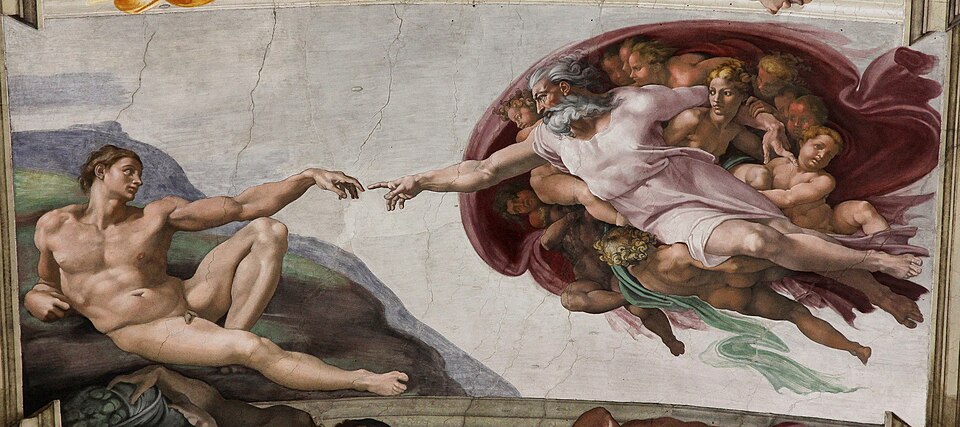
Two of the most important mural techniques developed over centuries are fresco and mosaic. In fresco painting, the artist applies pigment directly onto wet plaster on a wall. As the plaster dries, the paint becomes part of the wall itself, making it extremely durable. The Italian artist Michelangelo used this technique when he painted the ceiling of the Sistine Chapel in Vatican City between 1508 and 1512. The Sistine Chapel ceiling, which shows scenes from the Bible including the famous image of God reaching out to touch Adam’s hand, is considered one of the greatest artistic achievements in history.
Mosaics are another ancient mural technique. Instead of paint, mosaic artists arrange thousands of tiny pieces of colored glass, stone, or tile called tesserae into patterns and images. Mosaics were especially popular in ancient Rome and the Byzantine Empire, where they decorated the walls and ceilings of churches, palaces, and public buildings. Some Byzantine mosaics used pieces of gold-colored glass to create shimmering, glowing surfaces.
Diego Rivera and the Mexican Mural Movement
In the 1920s, a powerful mural movement emerged in Mexico that changed the art world. The Mexican government commissioned artists to paint large murals on public buildings to educate people about Mexican history, culture, and social justice. The three most famous artists of this movement were Diego Rivera, David Alfaro Siqueiros, and Jose Clemente Orozco, often called “Los Tres Grandes” (The Three Great Ones).
Diego Rivera became the most well-known muralist in the world. His murals filled the walls of government buildings, schools, and museums in Mexico and the United States. Rivera believed that art should be for everyone, not just wealthy collectors, and that painting on public walls was the best way to reach ordinary people. His murals at the National Palace in Mexico City tell the entire history of Mexico in vivid, sweeping scenes. Rivera also painted murals at the Detroit Institute of Arts, celebrating the American industrial worker.
Modern Street Art and Murals
Today, murals have taken on new forms through the street art movement. Starting in the 1970s and 1980s in cities like New York and Philadelphia, artists began painting large-scale artworks on buildings, highway walls, and abandoned structures. What was once considered vandalism has evolved into a respected art form, with cities around the world now commissioning street artists to create murals that attract visitors and revitalize neighborhoods.
Modern muralists use a variety of tools and materials, including spray paint, house paint, wheat paste, and even projection technology to plan their designs. Some street murals are photorealistic, looking almost like giant photographs, while others use bold colors and abstract shapes. Cities like Berlin, Melbourne, and Bogota have become famous for their street art scenes, and mural festivals bring artists from around the world together to transform entire neighborhoods in just a few days.
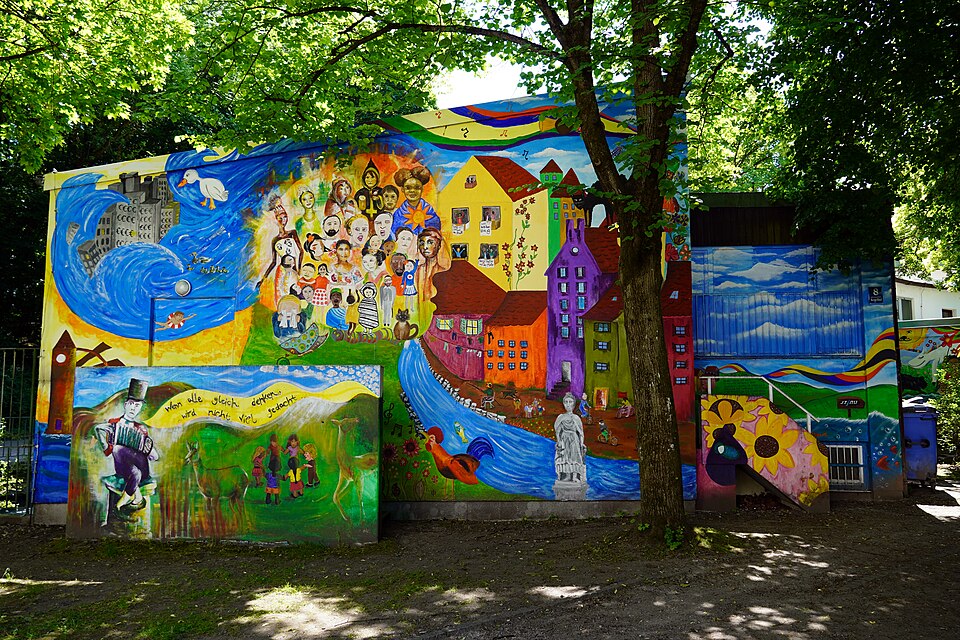
One of the most meaningful types of murals is the community mural, where local residents work together with artists to create a piece of art that represents their neighborhood’s history, values, and hopes. Community murals give people who might never set foot in a museum the chance to participate in creating art and to see their stories reflected on the walls around them.
The community mural movement gained momentum in the 1960s and 1970s in cities across the United States. In Chicago, the Wall of Respect, painted in 1967 on a building in the South Side, celebrated African American heroes and inspired a wave of community murals across the country. Philadelphia’s Mural Arts Program, founded in 1984, has overseen the creation of nearly 4,000 murals across the city, making Philadelphia one of the most mural-rich cities in the world.
Why Murals Matter
Murals do more than just decorate walls. They serve as a form of public storytelling, preserving history and culture for future generations. They can bring communities together, give a voice to people who might not otherwise be heard, and turn neglected spaces into sources of pride and beauty. Studies have even shown that neighborhoods with public art, including murals, tend to have lower rates of vandalism because people feel more connected to and respectful of their surroundings. Whether painted on a cave wall 40,000 years ago or spray-painted on a building yesterday, murals remind us that the human desire to create and share art is timeless.
 OtterKnow Kids Encyclopedia