How Watercolor Works
Unlike oil or acrylic paint, which sit on top of a surface in opaque layers, watercolor sinks into the paper and stains it with transparent color. The white paper underneath shows through the paint, so the lightest areas in a watercolor painting are simply places where no paint has been applied. This means watercolor artists must plan ahead and leave areas of white paper for highlights rather than adding white paint on top, which is the opposite of how most other painting works. The paint is made from finely ground pigment held together with gum arabic, a natural substance from acacia trees, and comes in small dry cakes (pans) or in tubes. Adding more water to the paint makes it lighter and more transparent, while using less water creates darker, more intense colors.
Wet-on-Wet and Wet-on-Dry
The two most fundamental watercolor techniques have to do with whether the paper is wet or dry when you apply paint. Wet-on-wet painting means applying wet paint to a surface that is already damp, which causes the colors to spread and blend softly into each other with no hard edges. This technique is perfect for painting misty landscapes, cloudy skies, and soft backgrounds, but it requires working quickly and accepting some loss of control. Wet-on-dry painting means applying paint to completely dry paper, which produces sharp, defined edges and allows for precise detail work. Most watercolor paintings combine both techniques — wet-on-wet for the atmospheric backgrounds and wet-on-dry for the detailed foreground elements.
Famous Watercolor Artists
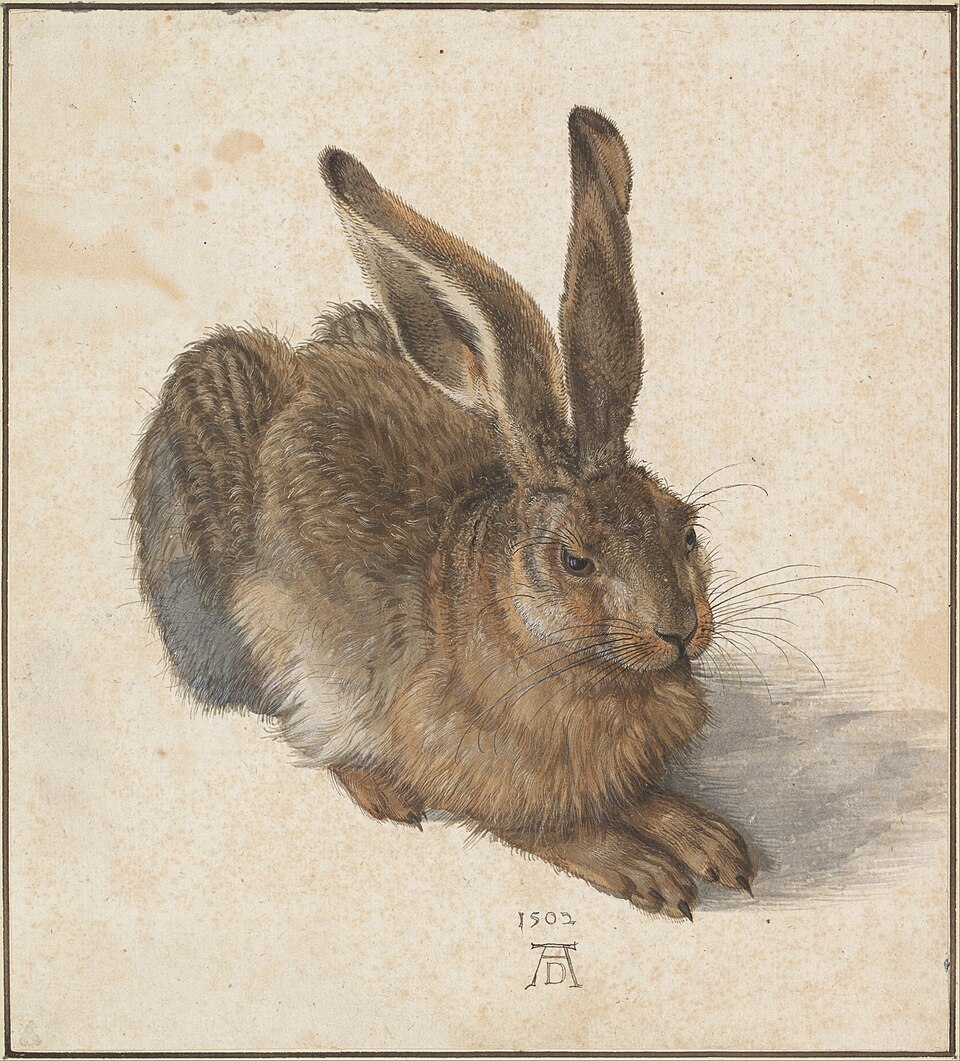
Albrecht Durer, a German artist working in the late 1400s and early 1500s, was one of the first European artists to create standalone watercolor paintings rather than just using watercolor for quick studies. His detailed watercolors of plants and animals, like his famous painting of a young hare, showed that watercolor could be a medium for serious, finished artwork. J.M.W. Turner, an English painter of the 1800s, used watercolor to create glowing atmospheric effects — his paintings of storms, sunsets, and sea scenes seem to glow with light from within. The English watercolor tradition became so strong that an entire society, the Royal Watercolour Society, was founded in 1804 to promote the medium. Winslow Homer, an American artist, used watercolor to paint powerful scenes of the sea, fishing, and outdoor life that are among the finest watercolors ever created.
Watercolor Techniques and Effects
Beyond wet-on-wet and wet-on-dry, watercolor artists use many creative techniques to achieve special effects. Dropping salt onto wet paint creates a speckled, crystalline texture as the salt absorbs water and pushes pigment away. Lifting paint by pressing a clean, damp brush or paper towel against wet color removes some pigment, creating lighter areas or soft highlights. Masking fluid, a liquid rubber that can be painted onto paper before watercolor is applied, protects areas of white paper from paint and can be peeled off later to reveal clean white shapes. Blooms and backruns — those soft, feathery edges that happen when wet paint meets drier paint — are sometimes considered mistakes, but experienced watercolorists learn to use them as beautiful features of their paintings.
Getting Started with Watercolor
Watercolor is a wonderful medium for young artists because the supplies are affordable and cleanup is easy since everything is water-based. Good watercolor paper is one of the most important investments because thin paper will buckle and warp when wet, while heavier paper (140 pounds or thicker) stays flat and allows better paint control. Start with a basic set of colors — you can mix hundreds of shades from just six or eight good colors — and practice making smooth washes and controlling how much water you use. The biggest lesson in watercolor is learning to embrace the unexpected, because water does not always do what you want it to do, and sometimes the happiest accidents become the most beautiful parts of a painting. With patience and practice, watercolor can become a lifelong source of creative joy.
 OtterKnow Kids Encyclopedia