Actors are the performers who bring characters to life on stage using their voices, facial expressions, and body movements. They spend weeks or months in rehearsal learning their lines, perfecting their timing, and developing their characters. In musicals, performers must also sing and dance, which requires additional training and stamina. Many professional actors study acting techniques like the Stanislavski method, which teaches them to deeply understand what their character is thinking and feeling. Understudies are backup actors who learn a role so they can step in if the main actor cannot perform, and they must be ready to go on stage at a moment’s notice.
Directors
The director is the creative leader of a production. They decide how the story should be told, guide the actors on how to perform their roles, and make choices about the overall look and feel of the show. Before rehearsals begin, the director studies the script closely and develops a vision for the production. During rehearsals, they work with actors on blocking, which means planning exactly where each actor stands, moves, and enters or exits the stage. Famous directors like Julie Taymor, who directed The Lion King on Broadway, are known for their unique artistic visions that transform how audiences experience a story.
Stage Managers
The stage manager is one of the most important behind-the-scenes jobs in theater. They are responsible for keeping the entire production organized and running on schedule. During rehearsals, the stage manager takes detailed notes, tracks blocking, and makes sure everyone knows when and where they need to be. During performances, the stage manager “calls the show,” which means they use a headset to give cues to the lighting, sound, and stagecraft crews at exactly the right moment. A single late cue can throw off an entire scene, so stage managers must be incredibly focused and organized.
Lighting and Sound Designers

Lighting designers use light to create mood, focus attention, and establish the time of day or location in a scene. They work with hundreds of different lights, gels, and filters to paint the stage with color and shadow. A warm golden light might suggest a sunny afternoon, while a cold blue light could create a spooky nighttime feeling. Sound designers are responsible for everything the audience hears besides the actors’ voices, including music, sound effects, and ambient noise. In modern theaters, sound designers also manage microphones that help the audience hear the performers clearly, especially in large venues with over a thousand seats.
Set Designers and Scenic Artists
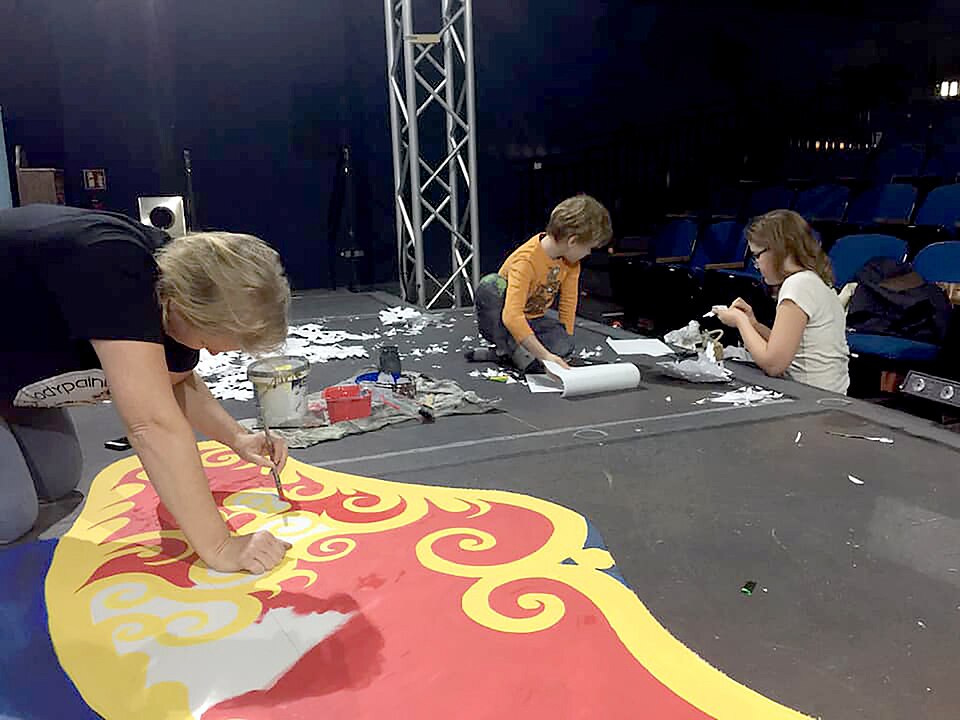
Set designers, also called scenic designers, create the physical world of the play. They design everything the audience sees on stage, from walls and furniture to trees and mountains. Set designers start by reading the script and sketching ideas, then they build small scale models before the full-sized set is constructed. Scenic artists are the painters and craftspeople who bring the set designer’s vision to life, painting backdrops, adding textures, and creating details that make a flat piece of wood look like a stone wall or a forest. Some Broadway productions spend over a million dollars on set construction alone.
Costume Designers and Playwrights
Costume designers research the time period, setting, and personality of each character to design clothing that tells the audience who that character is before they even speak. They choose fabrics, colors, and styles that work under bright stage lighting and allow actors to move freely. A single Broadway show might require hundreds of individual costume pieces. Playwrights are the writers who create the scripts that everyone else brings to life. They write the dialogue, stage directions, and story structure. Some playwrights, like William Shakespeare, wrote plays over 400 years ago that are still performed today. Modern playwrights like Lin-Manuel Miranda combine traditional playwriting with new musical styles to create groundbreaking shows like Hamilton.
 OtterKnow Kids Encyclopedia