Early Animation and the Birth of Cartoons
The history of animated cartoons stretches back to the late 1800s, when inventors created devices like the zoetrope and phenakistoscope that made sequences of drawings appear to move. The first true animated films appeared in the early 1900s. In 1908, French artist Emile Cohl created what many consider the first fully animated film, called Fantasmagorie, which featured simple stick-figure characters.
In the 1910s and 1920s, animation studios began producing short cartoon films to show before feature movies in theaters. Winsor McCay, an American cartoonist, amazed audiences with his 1914 animated short Gertie the Dinosaur, one of the earliest cartoons to feature a character with a distinct personality. These early pioneers proved that drawings could come alive on screen.
Walt Disney and the Golden Age
Walt Disney transformed the animation industry in the late 1920s and 1930s. In 1928, Disney introduced Mickey Mouse in the short film Steamboat Willie, one of the first cartoons to feature synchronized sound throughout. Mickey became an international sensation and remains one of the most recognized characters in the world.
Disney’s studio continued to push boundaries. In 1937, Snow White and the Seven Dwarfs became the first full-length animated feature film produced in the United States. It was a massive commercial and artistic success, earning over $8 million during its original release at a time when movie tickets cost just a quarter. Disney went on to produce classics like Fantasia, Bambi, and Cinderella, establishing animation as a serious art form.
Hanna-Barbera and Television Cartoons
When television became popular in the 1950s, a new era of cartoons began. William Hanna and Joseph Barbera founded Hanna-Barbera Productions and developed a style of limited animation that was cheaper and faster to produce than Disney’s detailed theatrical films. This made it possible to create cartoons specifically for television on a weekly schedule.
Hanna-Barbera produced some of the most beloved cartoon series in history, including The Flintstones (1960), which was the first animated series to air during prime-time television, Yogi Bear, Scooby-Doo, and The Jetsons. Their work shaped the Saturday morning cartoon tradition that entertained generations of children.
How Cel Animation Works
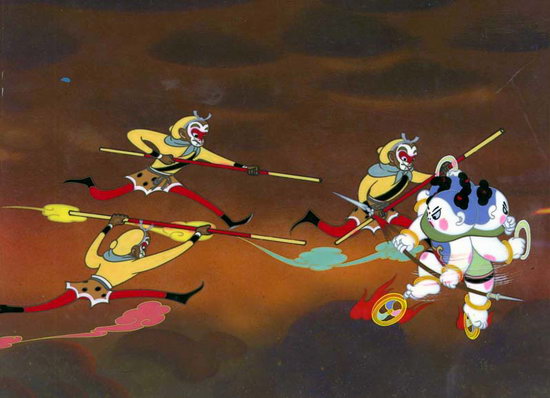
Traditional animated cartoons were made using a technique called cel animation. Artists drew characters on transparent sheets of celluloid, called cels, which were then placed over a painted background and photographed one frame at a time. By changing the cel slightly between each photograph, the characters appeared to move when the film was played back.
A single second of smooth animation requires 24 individual frames. Creating a seven-minute cartoon short could require over 10,000 drawings. To save time and money, studios developed tricks like drawing characters on separate layers so that only the moving parts needed to be redrawn, while the background stayed the same. Lead animators would draw the key poses, and assistant animators would fill in the frames in between, a process called “in-betweening.”
Computer Animation and CGI
Beginning in the 1990s, computer-generated imagery, or CGI, began to change the animation industry. Pixar’s Toy Story (1995) was the first feature-length film made entirely with computer animation, proving that three-dimensional digital characters could carry a full movie. Since then, CGI has become the dominant method for producing animated films.
In CGI animation, artists build digital three-dimensional models of characters and environments, then use software to position, light, and render each frame. While the tools are different, the fundamental principles remain the same: animators must understand movement, timing, and expression to bring characters to life. Many modern animated TV shows still use two-dimensional digital drawing, which mimics the look of traditional hand-drawn animation but is created on computers using drawing tablets and specialized software.
Anime and Global Styles
Anime is a distinctive style of animation that originated in Japan and has become enormously popular worldwide. Anime is characterized by its colorful visuals, dynamic action sequences, and stories that range from lighthearted comedies to epic adventures. Studios like Studio Ghibli, founded by Hayao Miyazaki, have produced films such as Spirited Away (2001), which won the Academy Award for Best Animated Feature.
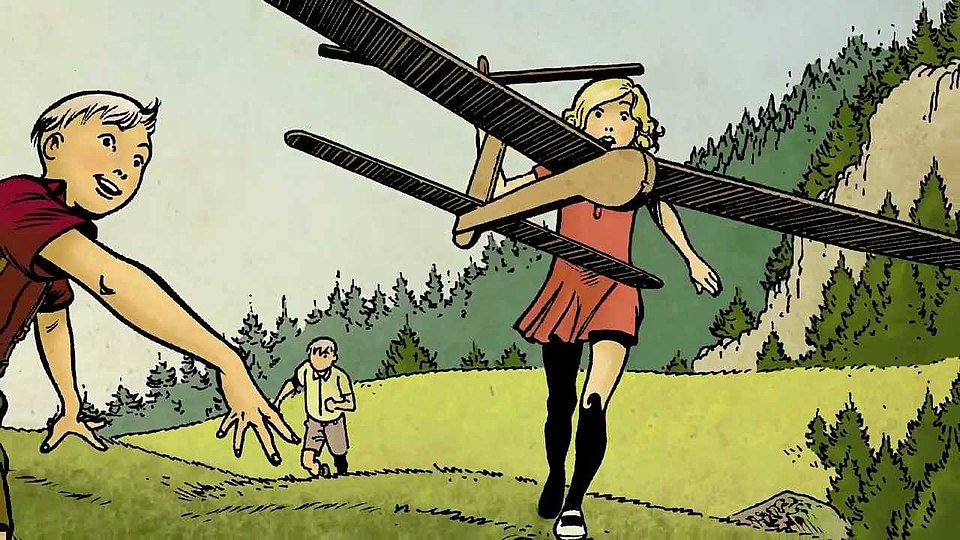
Other countries have developed their own cartoon traditions as well. France has a long history of comic art called bande dessinee, and French animation studios have produced acclaimed films. India is one of the largest producers of animated content in the world. Each culture brings its own visual style and storytelling traditions to the art of cartooning.
Editorial and Political Cartoons
Not all cartoons are meant for entertainment. Editorial cartoons, also called political cartoons, use humor and exaggeration to comment on current events, politics, and social issues. These single-panel drawings appear in newspapers and magazines and have a long history going back to the 1700s. Famous editorial cartoonists like Thomas Nast helped shape public opinion in the United States during the 1800s, and the tradition continues today in newspapers and online.
Fun Facts
- The word “cartoon” comes from the Italian word “cartone,” meaning a large sheet of paper or card used for drawing.
- The longest-running animated TV series in the United States is The Simpsons, which first aired in 1989 and has produced over 750 episodes.
- A single frame of a Pixar movie can take up to 24 hours to render on a computer, even though the finished film plays at 24 frames per second.
- Anime makes up over 60 percent of all animated entertainment produced worldwide.
- The first cartoon to appear in a newspaper was published in 1843 in the British magazine Punch.
 OtterKnow Kids Encyclopedia