Building Your Own Instruments
Some of the world’s most creative music comes from homemade instruments. You can build a rain stick by filling a long cardboard tube with rice and sealing the ends, then tilting it slowly to hear a gentle patter. A rubber-band guitar made from a shoebox and different-sized rubber bands lets you explore how thickness and tension change the pitch of a note — thicker, looser bands vibrate more slowly and produce lower sounds, while thinner, tighter ones sound higher.
Around the world, people have long traditions of building instruments from available materials. In Paraguay, the Cateura Orchestra is made up of young musicians who play instruments built entirely from recycled materials found in a landfill, including violins made from oil cans and flutes made from water pipes. Their music proves that creativity matters more than having expensive equipment.
Songwriting and Composition
Songwriting is the art of combining words and music to express an idea or tell a story. Many songwriters start with a simple melody — a short sequence of notes that sounds interesting — and then build lyrics around it. Others begin with words, like a poem, and find a melody that fits the mood. There is no single right way to write a song, and even professional songwriters use different methods every time.
One helpful trick is to use a pentatonic scale, which is a set of five notes that always sound good together no matter what order you play them in. The black keys on a piano form a pentatonic scale, so you can press any combination of them and it will sound musical. Many famous melodies from folk songs to pop hits are built on pentatonic scales. Once you have a melody you like, try adding a repeating rhythm and simple lyrics to turn it into a full song.
Improvisation and Jamming
Improvisation means making up music on the spot without planning it ahead of time. Jazz musicians are famous for improvising — they know the basic structure of a song but create new melodies and rhythms in the moment. Improvisation is also a big part of blues, rock, and many world music traditions. It might sound difficult, but everyone improvises naturally when they hum a tune in the shower or tap out a rhythm on a desk.
Jamming is when a group of people improvise together, listening to each other and responding in real time. One person might start a rhythm on a drum, another adds a melody on a keyboard, and a singer joins in with made-up words. The key to good jamming is listening — paying attention to what others are playing and finding ways to add to it rather than playing over it. Group improvisation teaches cooperation and communication in a way that feels like play.
Digital Music and Technology
Today, anyone with a computer, tablet, or smartphone can create music using digital tools. Programs like GarageBand, which comes free on Apple devices, let you record your voice, play virtual instruments, and layer multiple tracks together to build a complete song. You can add drums, bass, keyboards, and sound effects without owning any physical instruments.
Loop pedals and looping apps let you record a short musical phrase and play it back on repeat while you add new layers on top. This technique is popular with solo performers who want to sound like a full band. Beat-making software lets you arrange drum patterns, add synthesizer sounds, and create electronic music track by track. Digital tools have made music creation more accessible than ever before — you can try just about anything.
Tips for Getting Started
The best way to start making music is simply to begin. Pick up anything that makes a sound — a pot, a glass of water, your own voice — and experiment. Record yourself on a phone so you can listen back and decide what you like. Do not worry about making mistakes, because even the greatest musicians in history wrote songs they threw away before finding the ones they loved.
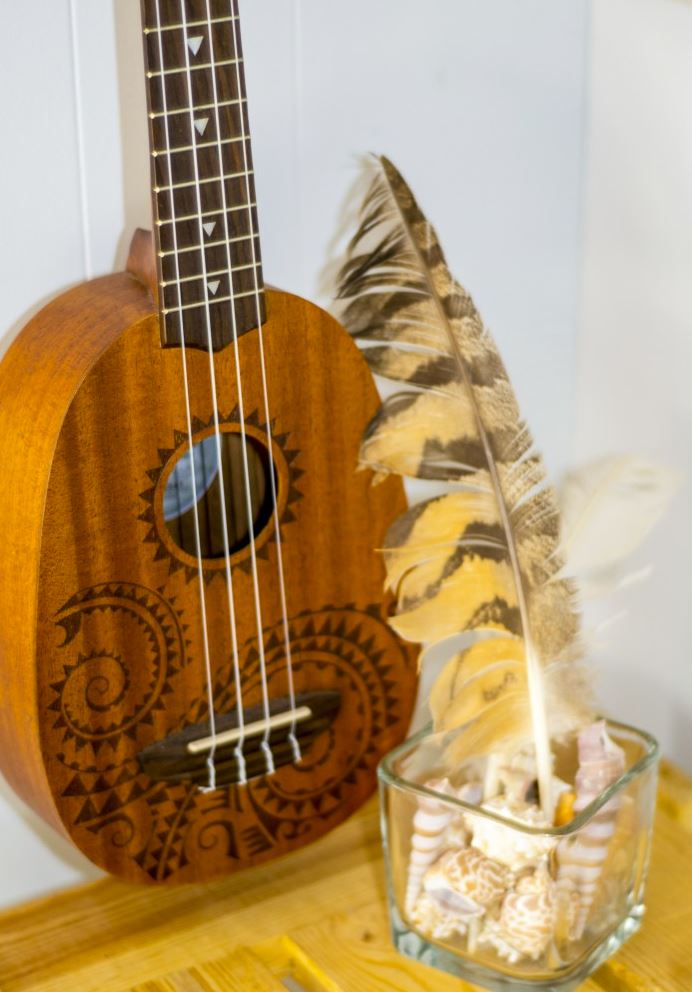
Try learning three or four chords on a ukulele or keyboard, which is enough to play hundreds of popular songs. Sing along with your favorite music and change the words to make it your own. Join a school band, choir, or after-school music group to play with other people. The more you practice and experiment, the more your musical ideas will grow, and before long you will have created something that is entirely yours.
 OtterKnow Kids Encyclopedia