Early Life
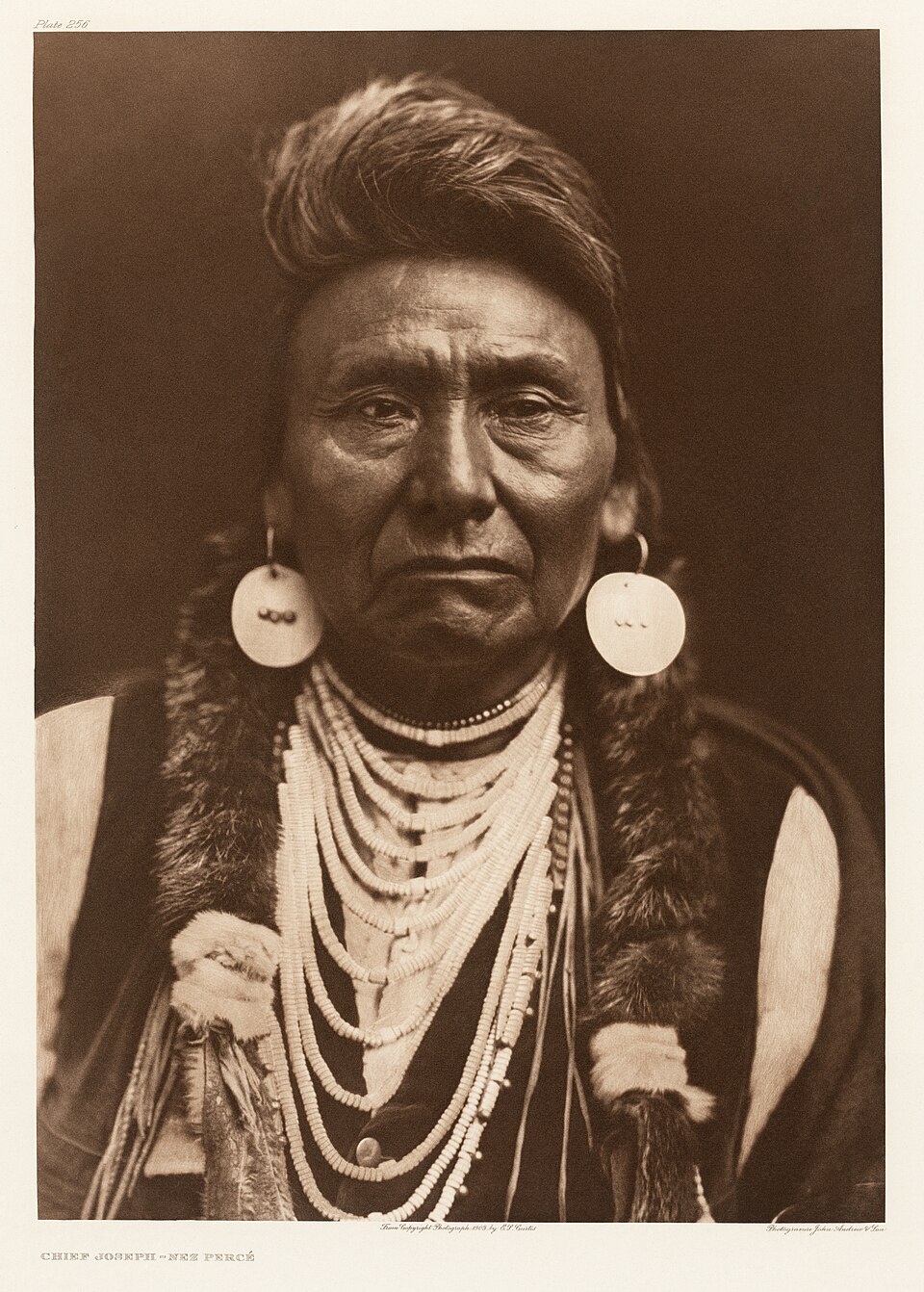
Chief Joseph was born around 1840 in the Wallowa Valley of present-day northeastern Oregon. His Nez Perce name was Hin-mah-too-yah-lat-kekt, which means “Thunder Rolling Down the Mountain.” His father, also called Chief Joseph by settlers, was one of the first Nez Perce leaders to convert to Christianity and had signed an early treaty with the United States government. However, when a new treaty in 1863 tried to take away the Wallowa Valley, his father refused to sign and tore up his Bible in protest. When his father died in 1871, the younger Joseph became the leader of his band and promised to protect their homeland.
The Long Retreat
In 1877, the U.S. government ordered all Nez Perce bands onto a small reservation in Idaho. Rather than fight or give up their way of life, Chief Joseph and other Nez Perce leaders decided to lead their people to safety in Canada. Over the next several months, about 750 Nez Perce men, women, and children traveled roughly 1,170 miles across Oregon, Idaho, Wyoming, and Montana, outmaneuvering the U.S. Army in several battles along the way. They were finally surrounded just 40 miles from the Canadian border in the Bear Paw Mountains of Montana. On October 5, 1877, Chief Joseph delivered his famous surrender speech, expressing the deep sorrow and exhaustion of his people.
Legacy
After his surrender, Chief Joseph spent the rest of his life peacefully advocating for his people’s right to return to their homeland in the Wallowa Valley. He traveled to Washington, D.C., and met with President Rutherford B. Hayes to plead the Nez Perce case, but his people were never allowed to go home. Chief Joseph died on September 21, 1904, on the Colville Reservation in Washington State. He is remembered as a symbol of dignity, courage, and resistance, and his story continues to remind people of the injustices faced by Native Americans throughout history.
 OtterKnow Kids Encyclopedia