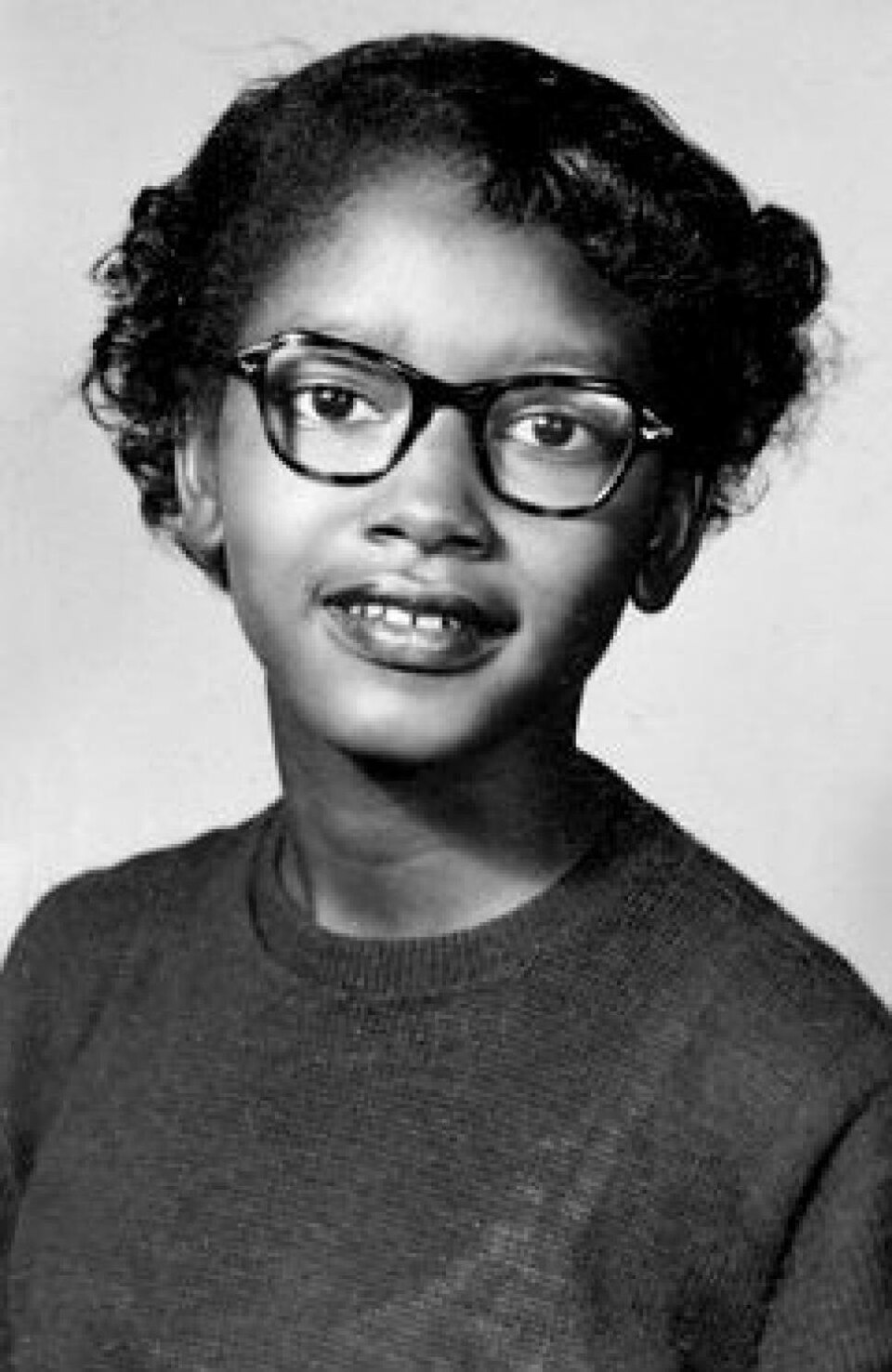
Early Life
Claudette Colvin was born on September 5, 1939, in Montgomery, Alabama. She grew up during a time when the Jim Crow laws forced Black people and white people to use separate schools, restaurants, drinking fountains, and seats on public buses. In school, Claudette was a strong student who loved learning about history, especially the stories of African American leaders like Harriet Tubman and Sojourner Truth. These stories inspired her to think deeply about fairness and justice, even as a young teenager.
Standing Up by Sitting Down
On March 2, 1955, fifteen-year-old Claudette was riding the bus home from school when the driver ordered her to give up her seat to a white passenger. Claudette refused, later saying she felt like the hands of Harriet Tubman and Sojourner Truth were pushing her down into her seat. She was arrested and taken off the bus by police officers, becoming one of the first people in Montgomery to be arrested for resisting bus segregation. Later that year, Claudette became a key plaintiff in the court case Browder v. Gayle, and her testimony helped convince the judges to rule that segregated buses were unconstitutional. The U.S. Supreme Court upheld that decision in November 1956, ending bus segregation in Alabama.
Legacy
For many years, Claudette Colvin’s role in the civil rights movement was not widely known because movement leaders chose Rosa Parks as the public face of the bus boycott. Claudette moved to New York City, where she worked as a nurse’s aide for decades. In recent years, books and articles have brought her story to light, and in 2021, a court in Alabama expunged her arrest record, clearing her name more than sixty-six years after her arrest. Claudette’s courage as a teenager reminds us that young people can change the world, and that every act of bravery matters, even if it takes years to be recognized.
 OtterKnow Kids Encyclopedia