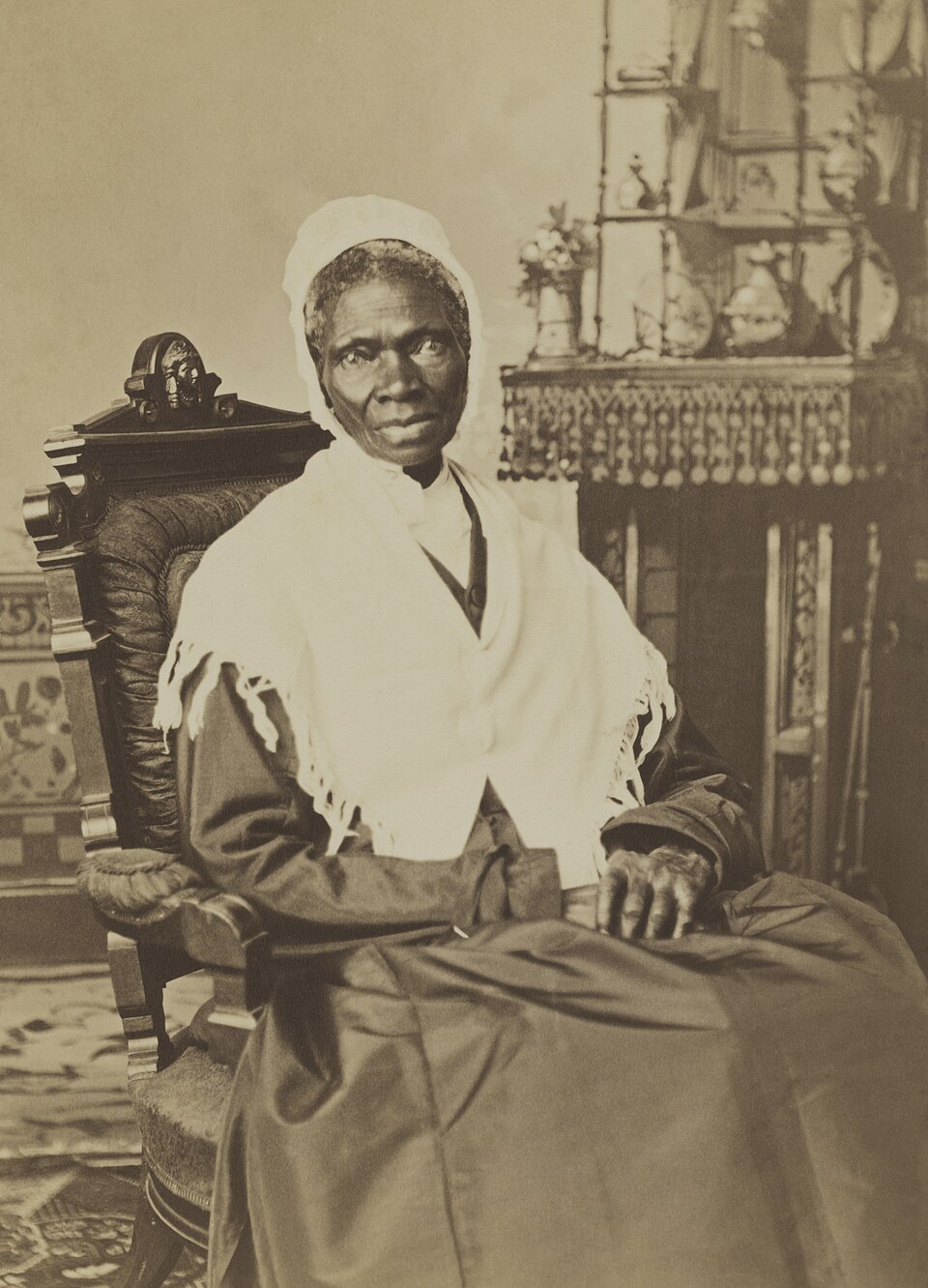
Early Life in Slavery
Sojourner Truth was born around 1797 in Ulster County, New York, with the name Isabella Baumfree. She was enslaved from birth and was bought and sold several times during her childhood. Isabella was forced to do hard labor and suffered cruel treatment from some of her enslavers. She spoke Dutch as her first language because her earliest enslavers were Dutch settlers. In 1826, about a year before New York’s law freeing enslaved people took effect, Isabella escaped to freedom with her infant daughter, Sophia.
A New Name and a New Mission
In 1843, Isabella Baumfree changed her name to Sojourner Truth because she felt called to travel and tell the truth about the wrongs of slavery. She became a powerful public speaker, traveling across the northern United States to share her experiences and call for the end of slavery. Sojourner could not read or write, but her words moved audiences deeply because she spoke from her heart and her own life. She joined the abolitionist movement alongside leaders like Frederick Douglass and William Lloyd Garrison. Her tall stature and booming voice made her an unforgettable presence at rallies and meetings.
Standing Up for Women’s Rights
In 1851, Sojourner Truth gave a now-famous speech at the Women’s Rights Convention in Akron, Ohio, that is often called “Ain’t I a Woman?” In it, she argued that women were just as strong and capable as men, using her own life of hard work as proof. She challenged people who said women were too weak or too delicate to deserve equal rights. Sojourner was one of the few people at the time who fought for both the abolition of slavery and equal rights for women. Her speech became one of the most famous in American history.
Later Life and Legacy
During the Civil War, Sojourner Truth helped recruit Black soldiers for the Union Army and gathered supplies for troops. She met President Abraham Lincoln at the White House in 1864 and continued her activism after the war ended. Sojourner pushed for the government to give land grants to formerly enslaved people so they could build new lives. She died on November 26, 1883, in Battle Creek, Michigan, at about 86 years old. Her courage and determination made her one of the most important figures in the fight for freedom and equality in America.
 OtterKnow Kids Encyclopedia