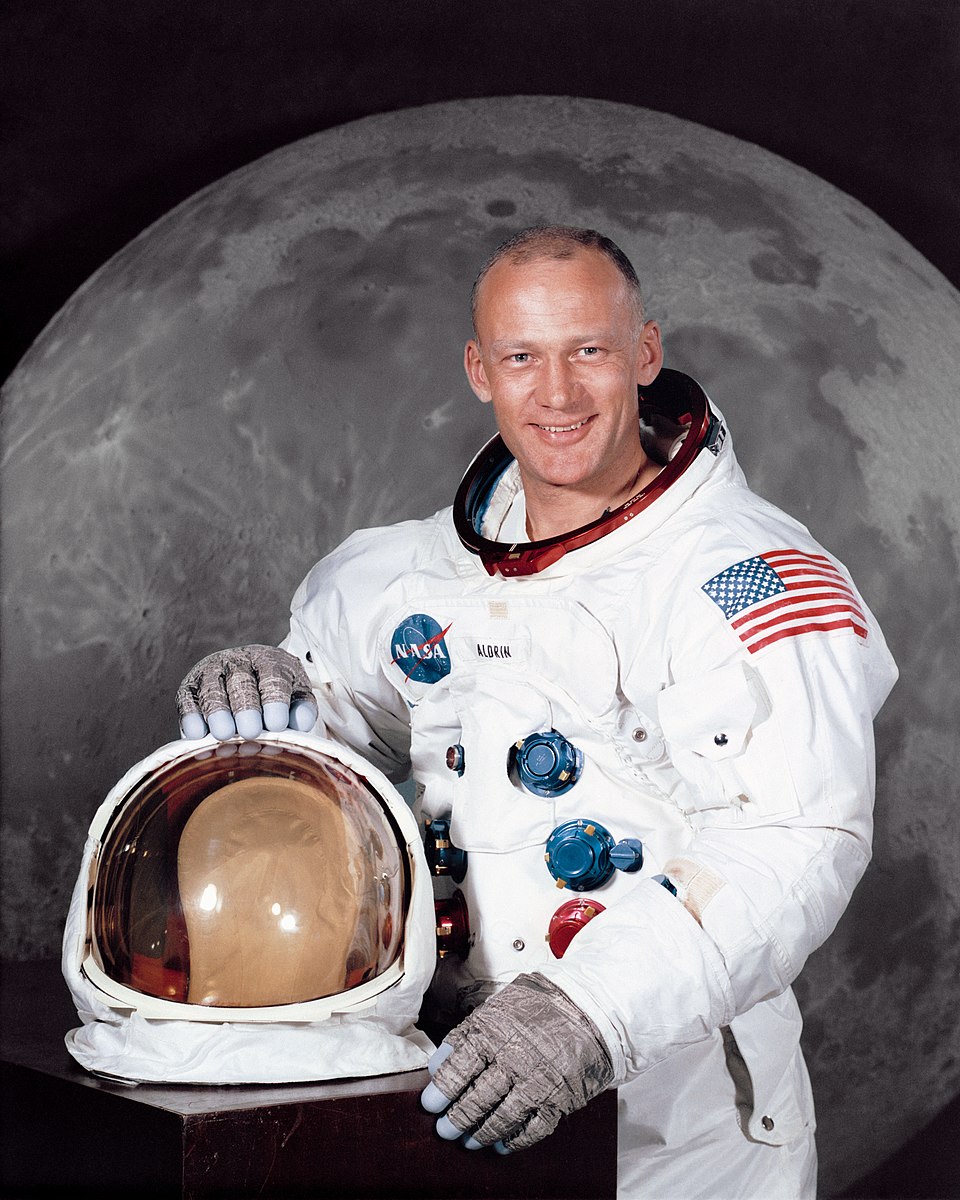
Education and Military Service
Aldrin graduated from the United States Military Academy at West Point in 1951, earning a degree in mechanical engineering. He then became a fighter pilot in the United States Air Force and flew 66 combat missions during the Korean War. After the war, he earned a doctorate in astronautics from the Massachusetts Institute of Technology (MIT), where he studied orbital mechanics, the science of how spacecraft move through space. His advanced education would later prove extremely valuable during the Apollo program.
Joining NASA
In 1963, NASA selected Aldrin as part of its third group of astronauts. His first spaceflight was Gemini 12 in November 1966, where he proved that astronauts could work effectively outside a spacecraft during spacewalks. During that mission, he spent over five hours outside the capsule, setting a record at the time. His success helped pave the way for the more complex spacewalks that would be needed during future Moon missions.
Walking on the Moon
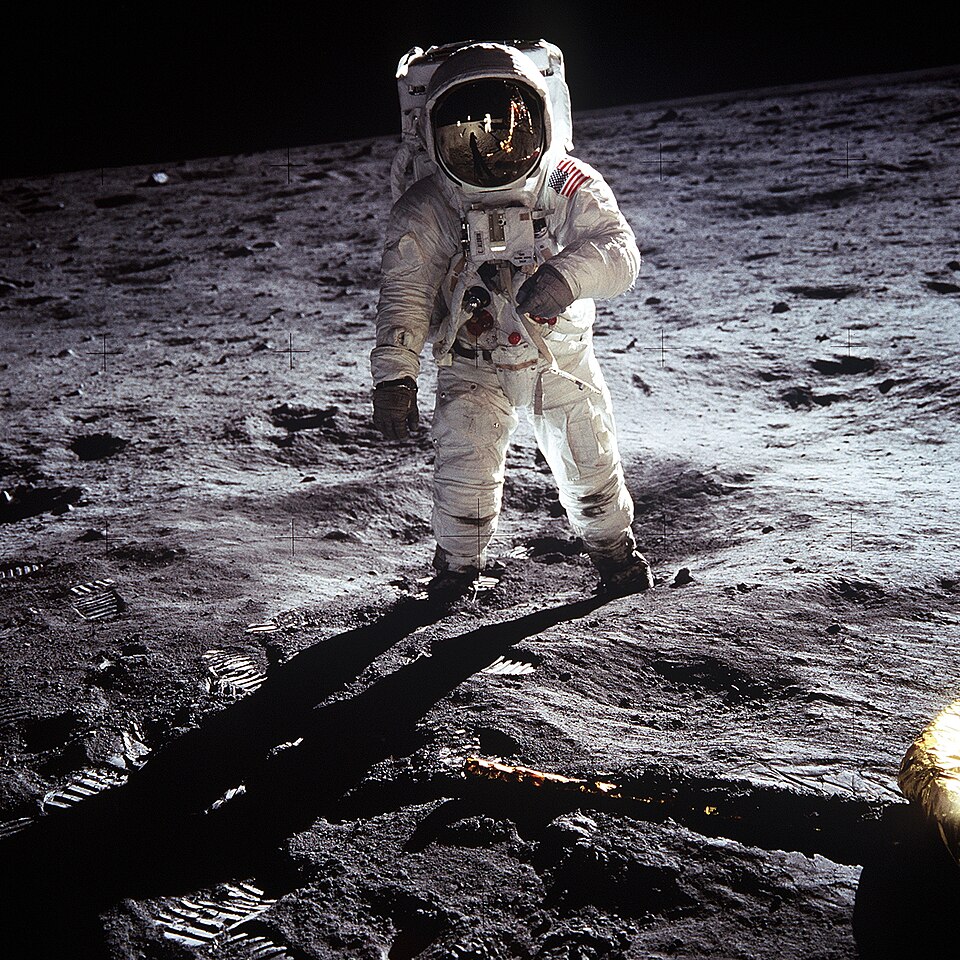
On July 20, 1969, Buzz Aldrin and Neil Armstrong landed on the Moon’s surface in the Apollo 11 lunar module, called Eagle. Armstrong stepped out first, and about 20 minutes later Aldrin followed, becoming the second person ever to walk on the Moon. Looking out at the barren, gray landscape around him, Aldrin described what he saw as “magnificent desolation.” The two astronauts spent about two and a half hours outside, collecting rock samples and setting up scientific instruments, while Michael Collins orbited above in the command module.
Life After Apollo
Returning to Earth as a worldwide hero was not easy for Aldrin. He struggled with depression and alcoholism in the years following his Moon landing, partly because no future achievement seemed to compare. He was open about his battles with mental health, and his honesty helped reduce the shame that many people felt about seeking help. Over time, he became an advocate for recovery and encouraged others to get treatment when they needed it.
Pushing for Mars
Throughout his later career, Aldrin became one of the strongest voices calling for human missions to Mars. He developed a concept called the “Aldrin Cycler,” a spacecraft that would travel in a continuous loop between Earth and Mars, making trips to the Red Planet more practical. He wrote several books and gave talks around the world, urging governments and private companies to invest in deep space exploration. He believed that settling on Mars was the next great step for humanity, just as landing on the Moon had been decades earlier.
Legacy
Buzz Aldrin received the Presidential Medal of Freedom and numerous other awards for his contributions to space exploration. In 2019, on the 50th anniversary of the Apollo 11 landing, he was celebrated alongside his crewmates at events around the world. He has inspired generations of young people to study science, technology, engineering, and math. Now in his nineties, Aldrin continues to speak publicly about the importance of space exploration and the dream of reaching Mars.
 OtterKnow Kids Encyclopedia