Early Life
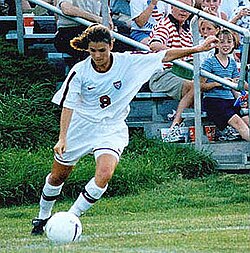
Mariel Margaret Hamm was born on March 17, 1972, in Selma, Alabama. Her family moved around a lot because her father was in the Air Force, and she grew up playing sports with her older siblings. She was a gifted athlete from a young age and joined the United States Women’s National Soccer Team when she was just 15 years old, making her the youngest player ever to join the team at that time. She went on to play college soccer at the University of North Carolina, where her team won four NCAA championships.
Soccer Career
Hamm was part of the U.S. team that won the very first FIFA Women’s World Cup in 1991 in China. She then helped the team win Olympic gold at the 1996 Atlanta Games, where women’s soccer was included in the Olympics for the first time. In 1999, she and her teammates electrified the nation by winning the World Cup on home soil in front of over 90,000 fans at the Rose Bowl. She earned her second Olympic gold medal at the 2004 Athens Games before retiring from international soccer.
Awards and Records
FIFA named Mia Hamm the best women’s soccer player in the world in both 2001 and 2002. During her career, she scored 158 international goals, which was a world record for either men or women at the time. She was inducted into the National Soccer Hall of Fame and the World Football Hall of Fame. Her skill, speed, and determination on the field inspired a whole generation of young girls to pick up a soccer ball.
Life Beyond Soccer
After retiring, Hamm continued to support soccer and other causes close to her heart. She created the Mia Hamm Foundation, which raises money for families who need bone marrow transplants. She started the foundation in honor of her brother Garrett, who passed away from a rare blood disease called aplastic anemia. Hamm has also been involved in efforts to grow women’s professional soccer in the United States, including co-owning a professional team.
Why She Matters
Mia Hamm showed the world that women’s sports deserve just as much attention and respect as men’s sports. Her success on the field helped create the professional women’s soccer leagues that exist today. She proved that hard work, passion, and teamwork can change not just a game but an entire culture. Young athletes everywhere continue to look up to her as a role model both on and off the field.
 OtterKnow Kids Encyclopedia