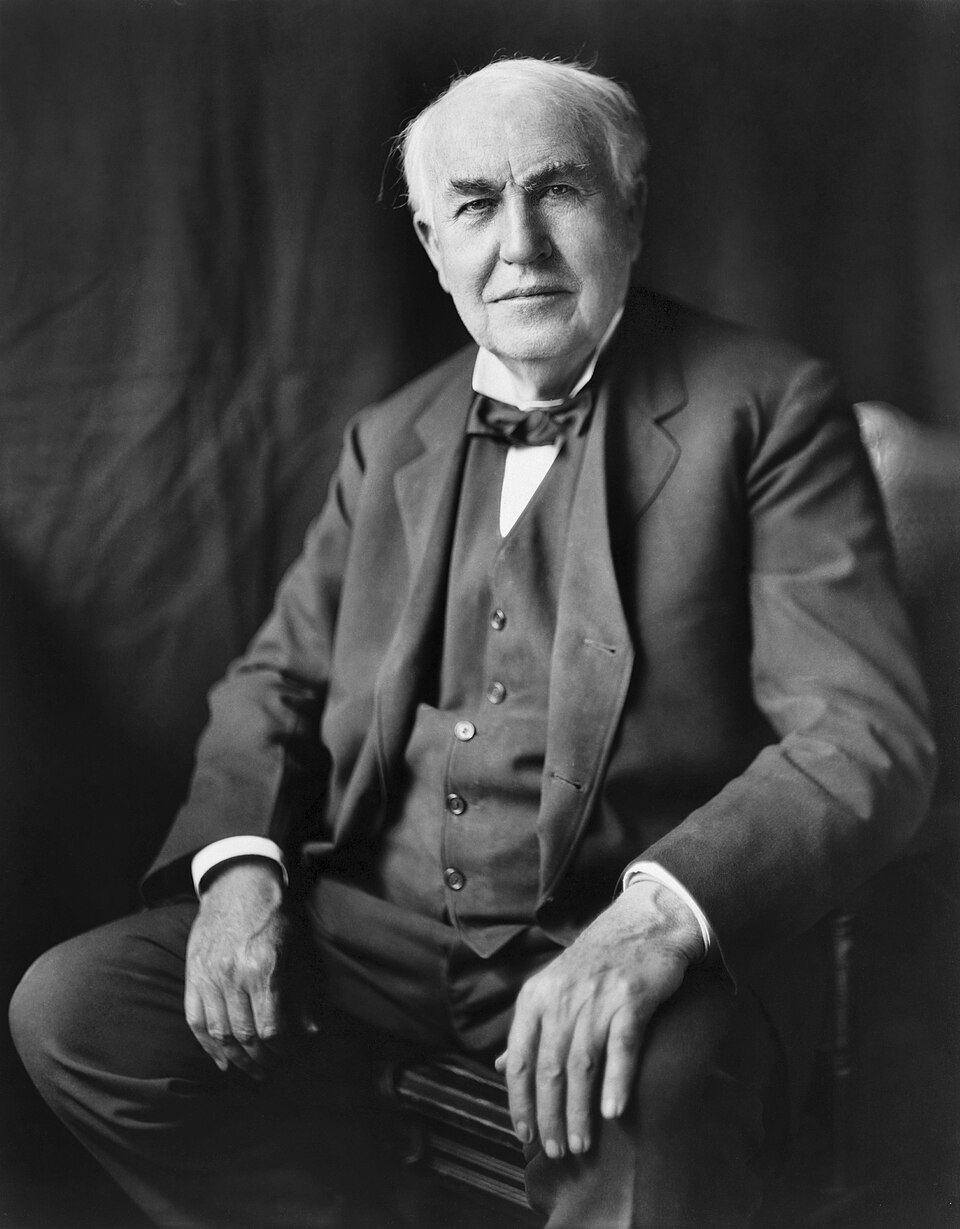
Young Entrepreneur
Edison showed his business spirit at a very young age. When he was just twelve years old, he got a job selling newspapers and snacks on a train that ran between Port Huron and Detroit, Michigan. He even set up a small chemistry lab in the baggage car of the train to do experiments during his breaks. At age fifteen, he learned to use the telegraph and got a job as a telegraph operator, which sparked his interest in electricity and communication. These early experiences taught him how to combine science with business, a skill that would make him famous.
The Invention Factory
In 1876, Edison built one of the most important places in the history of invention: his laboratory at Menlo Park, New Jersey. This was the world’s first industrial research laboratory, a place designed specifically for inventing new things. He gathered a team of skilled workers, including machinists, scientists, and craftsmen, to help him turn ideas into real products. Edison called it his “invention factory” because his goal was to produce a steady stream of new inventions. The Menlo Park lab was so successful that it became the model for modern research laboratories used by companies around the world today.
Greatest Inventions
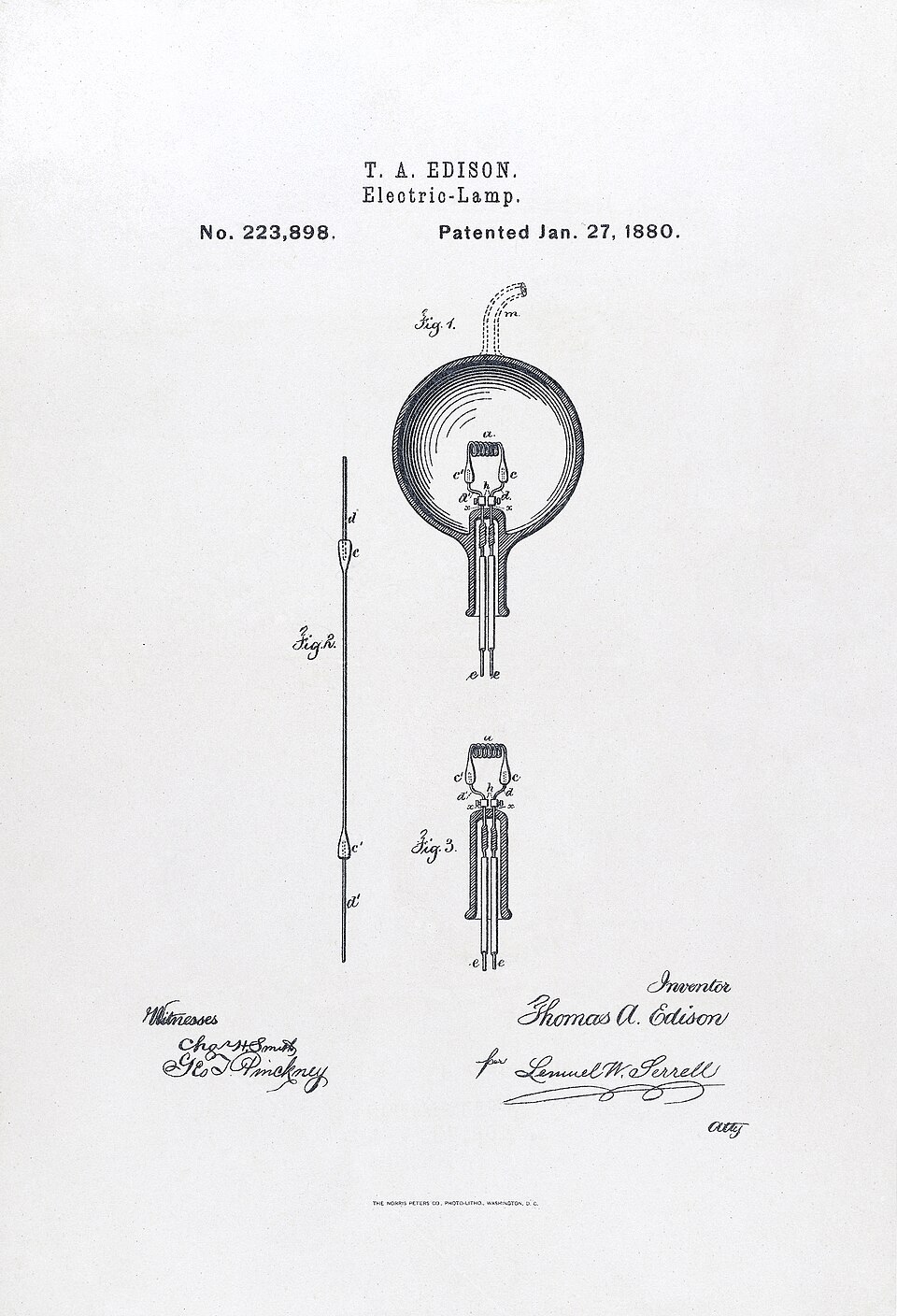
Edison is best known for creating the first practical electric light bulb in 1879, which changed the way people lived forever. He and his team tested thousands of different materials before finding that a carbonized bamboo filament could glow for over 1,200 hours. He also invented the phonograph in 1877, the first device that could record and play back sound. His work on the motion picture camera helped create the movie industry that entertains billions of people today. Over his lifetime, Edison received an incredible 1,093 United States patents, more than almost any other inventor in history.
Legacy
Edison famously said that genius is “one percent inspiration and ninety-nine percent perspiration,” meaning that hard work matters more than just having a good idea. He was involved in the famous “War of Currents” with Nikola Tesla and George Westinghouse, arguing that his direct current system was better than their alternating current system. Although alternating current eventually won out for delivering electricity over long distances, Edison’s power stations and electrical systems laid the groundwork for the modern electric grid. He continued inventing until his death on October 18, 1931, at the age of 84. Edison showed the world that persistence, curiosity, and teamwork could lead to inventions that change everyday life.
 OtterKnow Kids Encyclopedia