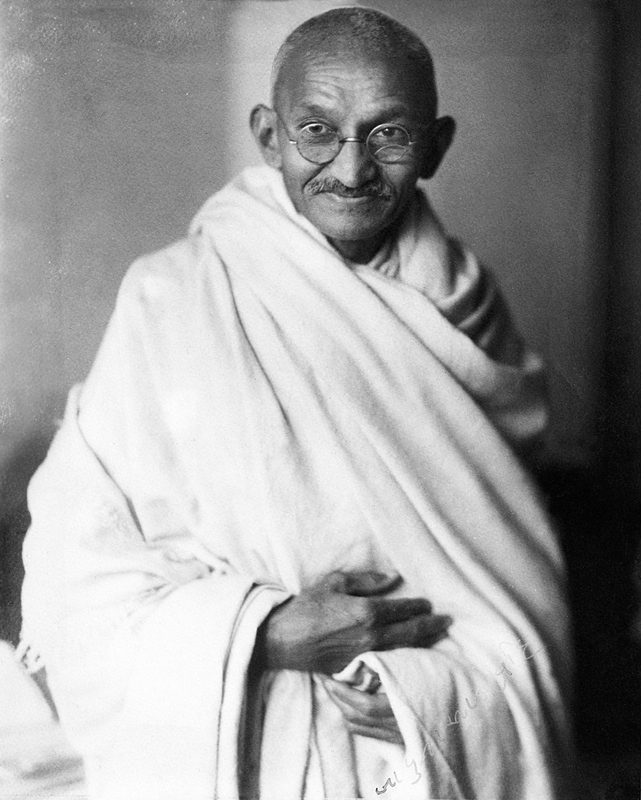
Years in South Africa
In 1893, Gandhi traveled to South Africa to work as a lawyer, and what he experienced there set him on a completely different path. He witnessed terrible discrimination against Indian people living in South Africa, who were treated as second-class citizens. On one famous occasion, he was thrown off a first-class train car simply because of the color of his skin. Over the next 21 years, he fought against unjust laws and developed his philosophy of peaceful resistance. His time in South Africa turned him from a shy lawyer into a bold leader who would inspire millions.
Satyagraha: The Power of Truth
Gandhi created a powerful idea called “Satyagraha,” which means “truth-force” or “holding firmly to truth” in Sanskrit. He believed that people could fight injustice without using violence — by refusing to obey unfair laws and accepting the punishment with dignity. This philosophy of nonviolent resistance became his greatest tool for creating change. Gandhi showed that standing up peacefully, even when facing threats and arrest, could be more powerful than any weapon. His ideas would later inspire civil rights leaders around the world, including Martin Luther King Jr. and Nelson Mandela.
The Salt March
One of Gandhi’s most famous acts of protest was the Salt March of 1930. The British government had made it illegal for Indians to collect or sell their own salt, forcing them to buy expensive British salt and pay a heavy tax on it. On March 12, 1930, Gandhi set out on foot from his home and walked 240 miles to the coastal town of Dandi, arriving on April 5. When he reached the sea, he picked up a handful of natural salt from the shore, breaking the unfair law in front of the entire world. Thousands of Indians joined him in making their own salt, sparking a massive wave of civil disobedience across the country.
Leading India to Independence
For decades, Gandhi led India’s struggle to break free from British colonial rule. He organized protests, boycotts, and strikes that brought attention to India’s desire for self-rule. He was arrested and imprisoned many times — spending a total of about six years in jail — but he never gave up or turned to violence. He encouraged Indians to spin their own cloth and buy Indian-made goods instead of British products, making the spinning wheel a symbol of independence. On August 15, 1947, India finally won its independence, and Gandhi’s lifelong dream became a reality.
A Simple Life
Despite being one of the most famous people in the world, Gandhi chose to live an extremely simple life. He spun his own cotton cloth on a small spinning wheel and wore simple handmade garments. He ate plain vegetarian food and often fasted — going without food for days or even weeks — as a form of protest against injustice. When he traveled by train, he rode in third class with ordinary people, even though he could have afforded better. Gandhi believed that living simply was a way to show solidarity with the poorest people of India and to prove that happiness does not come from material wealth.
The Title “Mahatma”
The name most people know him by, “Mahatma,” is actually not his real name at all. “Mahatma” is a Sanskrit word meaning “Great Soul,” and it was a title of deep respect given to him by the people of India. The famous poet Rabindranath Tagore is often credited with popularizing the title. Gandhi himself was uncomfortable with it and preferred to be called simply “Gandhiji” — the suffix “ji” being a term of affection and respect in Hindi. His full birth name was Mohandas Karamchand Gandhi, but to the world, he became the Mahatma — a symbol of peace, truth, and the power of the human spirit.
Death and Lasting Legacy
Tragically, Gandhi was assassinated on January 30, 1948, in New Delhi, just months after India achieved independence. He was shot while walking to an evening prayer meeting, and his last words are believed to have been “He Ram” (Oh God). The entire nation mourned, and world leaders expressed deep sorrow at the loss. In his honor, the United Nations declared his birthday, October 2, as the International Day of Non-Violence. Gandhi’s teachings continue to inspire people who fight for justice and equality through peaceful means, making him one of the most admired leaders in human history.
 OtterKnow Kids Encyclopedia