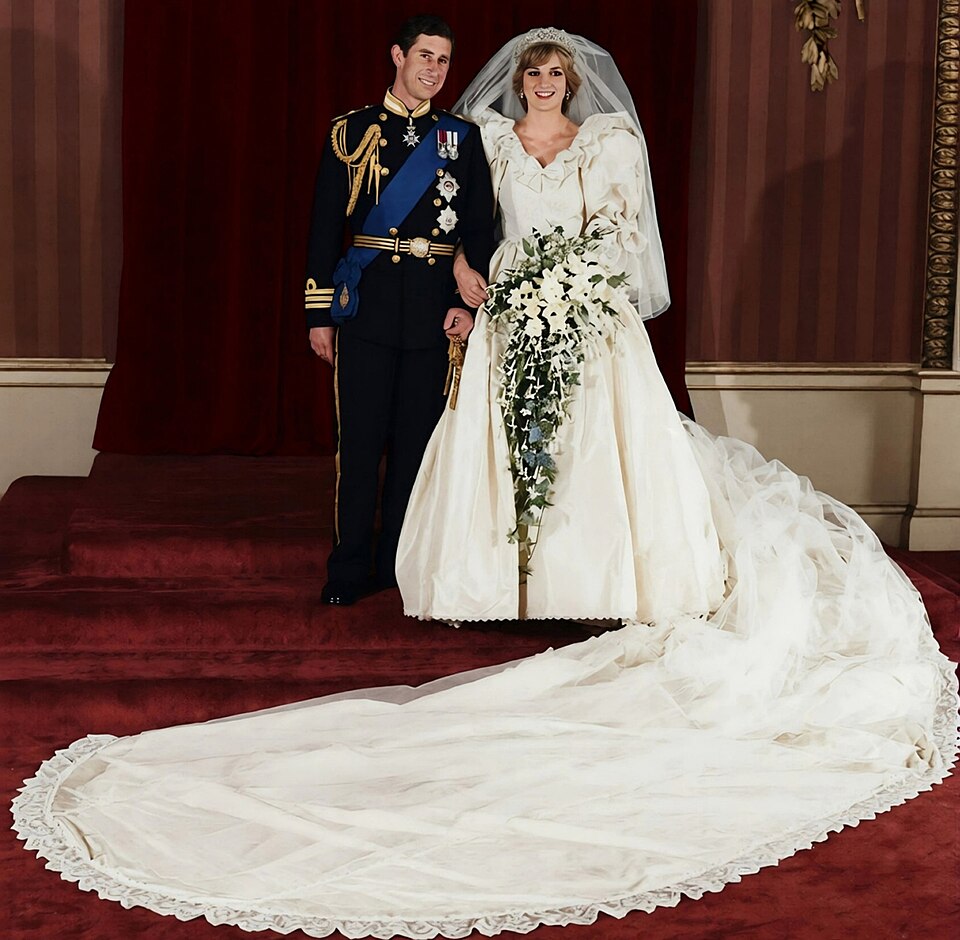
A Royal Wedding
Diana met Prince Charles, the eldest son of Queen Elizabeth II and heir to the British throne, in the late 1970s. The couple announced their engagement in February 1981, and the world was instantly fascinated by the young woman who would become a princess. On July 29, 1981, Diana and Charles were married at St. Paul’s Cathedral in London in a grand ceremony watched by about 750 million people on television around the world. Her wedding dress, with its 25-foot train, became one of the most famous gowns in history. The event was one of the most-watched broadcasts of the 20th century, and people celebrated in the streets of London.
Mother and Family Life
Diana became the mother of two sons who would grow up to play important roles in the British royal family. Prince William was born on June 21, 1982, and Prince Harry followed on September 15, 1984. Diana was determined to give her boys as normal a childhood as possible, even within the walls of Kensington Palace. She took them to amusement parks, fast-food restaurants, and homeless shelters so they could understand how ordinary people lived. Her hands-on approach to parenting was quite different from the more formal traditions of the royal family, and it made her even more popular with the public.
Helping People with AIDS
In the 1980s, many people were terrified of AIDS, a disease that was poorly understood at the time. Some believed you could catch it just by touching someone who was infected, and patients were often treated with fear and cruelty. In 1987, Diana visited a hospital ward for AIDS patients and shook hands with them without wearing gloves, showing the world that casual contact was safe. This simple act of kindness was seen on news programs everywhere and helped change how millions of people thought about the disease. Diana continued visiting AIDS patients and supporting organizations that helped them throughout her life.
The Landmine Campaign
Diana used her fame to draw attention to the terrible danger of landmines — hidden explosives buried in the ground during wars that continued to injure and kill innocent people long after fighting ended. In January 1997, she walked through an active minefield in Angola, Africa, wearing protective gear, to show the world the horrific effects of these weapons. Photographs of the princess walking among the mines were published in newspapers around the globe and created enormous public support for banning them. Later that year, the Ottawa Treaty was signed by over 120 countries, agreeing to ban the use of landmines. Many people credit Diana’s courage and visibility with helping make the treaty possible.
Champion of Many Causes
Diana supported more than 100 charities during her life, earning her the nickname “the People’s Princess” for her warmth and genuine care for others. She worked closely with organizations fighting homelessness, raising awareness about people living on the streets of London and other cities. She also spoke openly about eating disorders, a topic that was rarely discussed in public at the time, helping remove the shame that kept many people from seeking help. Diana visited hospitals, schools, and shelters around the world, often sitting beside patients and holding their hands. Her ability to connect with people from all walks of life set her apart from other members of the royal family.
Her Lasting Impact
Tragically, Princess Diana died in a car crash in Paris, France, on August 31, 1997, at just 36 years old. The news shocked the world, and an estimated 2.5 billion people watched her funeral on television, making it one of the most-viewed events in broadcast history. Thousands of people left flowers, cards, and candles outside Kensington Palace and Buckingham Palace in an outpouring of grief. Her son Prince William later continued her charitable work, supporting many of the same causes she championed. Diana’s influence lives on through the organizations she supported and the way she used her fame to help people who were often ignored.
Remembering Princess Diana
The Diana Award, established in her memory in 1999, recognizes young people around the world who make a positive difference in their communities. The Princess Diana Memorial Fountain in London’s Hyde Park was opened in 2004 as a place where people can gather and remember her. Her sons, William and Harry, have spoken publicly about how their mother’s love and dedication to helping others continues to inspire their own work. Schools and hospitals that Diana supported still carry on the programs she helped create. More than 25 years after her death, Princess Diana remains one of the most admired and beloved figures in modern history.
 OtterKnow Kids Encyclopedia