Education and Faith
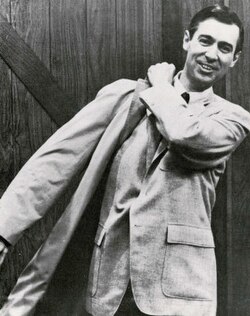
Fred Rogers attended Rollins College in Winter Park, Florida, where he earned a degree in music composition in 1951. He originally planned to become a minister, but when he saw his first television set, he was fascinated — and troubled — by how the new medium was being used. He decided he could serve children better through television than from a church pulpit. He studied at Pittsburgh Theological Seminary and was ordained as a Presbyterian minister in 1963, with a special charge to continue his work with children through media. This made him one of the only people ever ordained specifically to work in television.
Creating a Neighborhood
Fred Rogers developed and hosted “Mister Rogers’ Neighborhood,” which aired on PBS from 1968 to 2001. Over the course of 895 episodes, the show became one of the longest-running programs in television history. Each episode began with Fred walking through the door, changing into a cardigan sweater and sneakers, and singing “Won’t You Be My Neighbor?” The show featured the Neighborhood of Make-Believe, where puppets like Daniel Tiger, King Friday XIII, and Lady Elaine Fairchilde helped children explore their feelings. Fred created a calm, safe space on television where children felt valued and understood.
Helping Children with Difficult Feelings
What set “Mister Rogers’ Neighborhood” apart was its willingness to tackle difficult emotions that other children’s shows avoided. Fred helped kids understand feelings like anger, fear, jealousy, and sadness, and he addressed tough topics like divorce, death, and disability. His calm, gentle approach was not just a personality trait — it was based on real child psychology research. He worked closely with Dr. Margaret McFarland of the University of Pittsburgh, who helped him understand how young children think and feel. Every word on the show was carefully chosen to help children feel safe and respected.
Standing Up for Public Television
In 1969, the United States Senate was considering cutting $20 million in funding for public broadcasting. Fred Rogers traveled to Washington, D.C., to testify before Senator John Pastore’s subcommittee about why programs like his mattered. Instead of reading a formal speech, Fred spoke from the heart about how television could help children manage their emotions and build self-esteem. His six-minute testimony was so powerful and emotional that Senator Pastore, who had been skeptical at first, told Fred he had earned the $20 million. That moment saved public television funding and became one of the most famous congressional testimonies in American history.
Awards and Honors
Fred Rogers received many awards and honors throughout his career for his contributions to children and education. In 2002, President George W. Bush awarded him the Presidential Medal of Freedom, one of the highest civilian honors in the United States. He received over 40 honorary degrees from colleges and universities, and Rollins College holds the world’s largest collection of his famous cardigan sweaters. He was inducted into the Television Hall of Fame in 1999 and received a Lifetime Achievement Emmy Award. Despite all the recognition, Fred remained humble and always said the real reward was knowing he had helped children feel loved.
His Famous Message
Fred Rogers is remembered for many wise and comforting sayings, but perhaps his most famous message was simple and powerful: “I like you just the way you are.” He believed that every child needed to hear that they were special and lovable, exactly as they were. He also told children to “look for the helpers” during scary times, reminding them that there are always kind people ready to help. His words were not just for television — Fred lived them every day, treating every person he met with genuine kindness and respect.
A Life of Kindness
Fred Rogers died on February 27, 2003, of stomach cancer at the age of 74. His passing was mourned by millions of people who had grown up watching his show and feeling like his neighbor. In 2019, a documentary called “Won’t You Be My Neighbor?” and a movie starring Tom Hanks called “A Beautiful Day in the Neighborhood” introduced his story to a new generation. The United States Postal Service issued a stamp in his honor in 2018.
His Lasting Legacy
Fred Rogers’s impact on children’s television and education continues to grow even after his death. The Fred Rogers Center at Saint Vincent College in Latrobe carries on his work by supporting research on children’s media and learning. The animated show “Daniel Tiger’s Neighborhood,” based on his puppet character, teaches a new generation of young children about emotions and kindness. Fred proved that television could be a powerful force for good, and his gentle, loving approach to helping children remains a model for educators, parents, and media creators around the world.
 OtterKnow Kids Encyclopedia