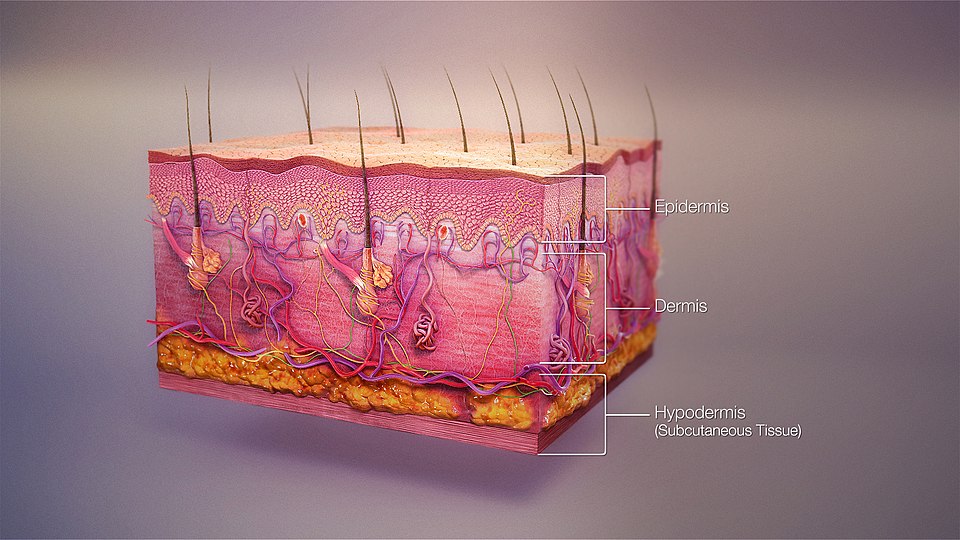
The Three Layers of Skin
Skin is made up of three distinct layers, each with its own important jobs. The epidermis is the thin outer layer that you can see and touch — it acts as a waterproof shield and gives skin its color. Beneath the epidermis lies the dermis, a thicker layer packed with hair follicles, sweat glands, blood vessels, and nerve endings. The deepest layer is the hypodermis, which is made mostly of fat that insulates your body to keep you warm and cushions your bones and organs from impact. Together, these three layers work as a team to protect and support your body.
Skin Is Always Renewing Itself
Your skin is constantly replacing itself in a process that never stops. The epidermis completely replaces itself every 2 to 4 weeks as new cells form at the bottom and push older cells to the surface. By the time skin cells reach the outer surface, they are dead and flat, forming a tough protective barrier. About 30,000 to 40,000 dead skin cells fall off your body every single hour, which adds up to nearly a million cells per day. Much of the dust in your house is actually made up of these tiny flakes of dead skin.
What Gives Skin Its Color
Skin color comes from a pigment called melanin, which is produced by special cells called melanocytes. All humans have roughly the same number of melanocytes regardless of skin color — the difference is how much melanin those cells produce. People whose ancestors lived in sunny regions near the equator tend to produce more melanin, which gives skin a darker color and provides extra protection from the sun’s ultraviolet rays. When you spend time in the sun, your melanocytes produce extra melanin, which is why your skin may get darker — this is your body’s natural defense against UV damage.
The Many Jobs of Skin
Skin does far more than just cover your body. It acts as a barrier against bacteria, viruses, and other pathogens that could make you sick. Skin helps regulate your body temperature — when you are hot, blood vessels near the surface widen and sweat glands release moisture to cool you down. Your skin also produces vitamin D when exposed to sunlight, which is essential for strong bones. Millions of nerve endings in your skin allow you to feel pressure, temperature, and pain, keeping you aware of your surroundings and warning you of danger.
Fingerprints: Your Unique Identity
Every person on Earth has a completely unique set of fingerprints. Fingerprints form while a baby is still developing in the womb, around the 10th week of pregnancy, and they never change throughout a person’s life. Even identical twins, who share the same DNA, have different fingerprints because the patterns are influenced by small differences in pressure and position in the womb. Fingerprints are made up of tiny ridges on the skin of your fingertips that help you grip objects. These ridges fall into three basic patterns — loops, whorls, and arches — but the exact arrangement is unique to every individual.
How Skin Heals Itself
Skin can repair itself after an injury. When you get a cut, your body springs into action within seconds — blood cells called platelets rush to the wound and begin forming a clot to stop the bleeding. Within hours, white blood cells arrive to fight off any germs that may have entered. Over the next several days, new skin cells begin growing from the edges of the wound to cover it. Over weeks, a protein called collagen rebuilds the underlying structure, though deep wounds may leave a scar where the new tissue is slightly different from the original skin.
Taking Care of Your Skin
Because your skin works so hard to protect you, it is important to take care of it. Washing your skin regularly removes dirt, oil, and germs that can cause infections or breakouts. Wearing sunscreen with an SPF of at least 30 protects against harmful ultraviolet rays that can damage skin cells and cause sunburn. Drinking plenty of water helps keep skin hydrated and healthy from the inside out. If you get a cut or scrape, cleaning the wound and keeping it covered helps your skin heal properly and prevents infection.
 OtterKnow Kids Encyclopedia