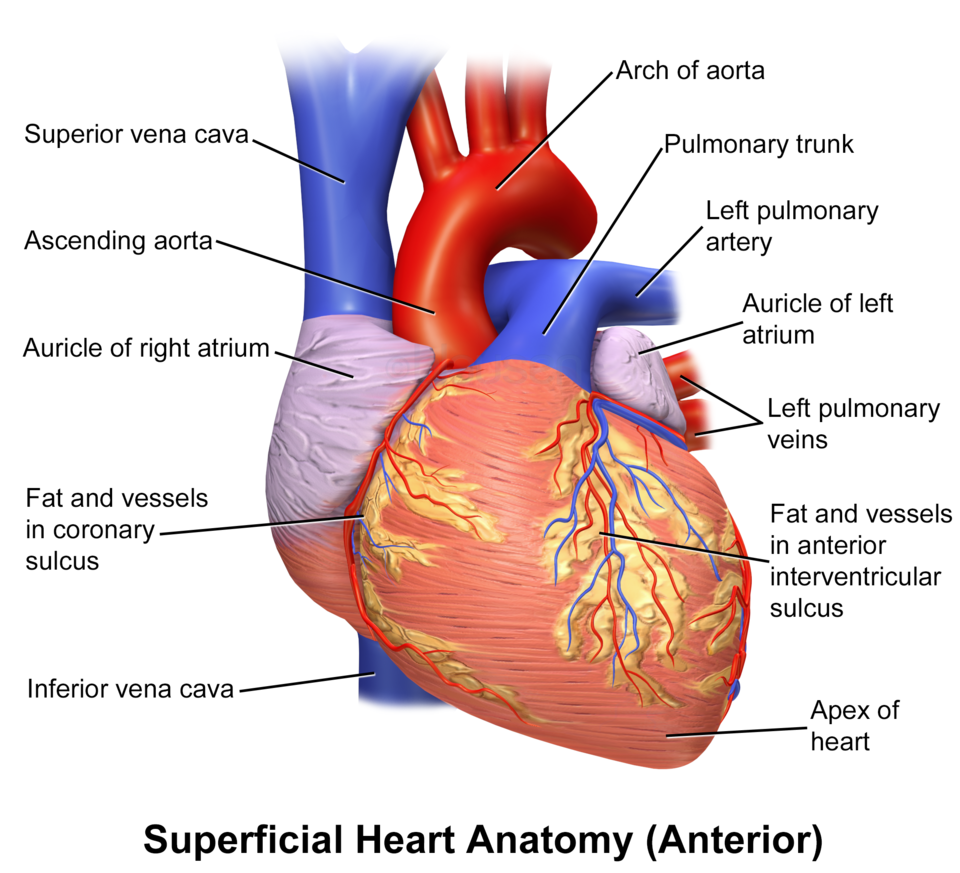
How Your Heart Works
Your heart is a powerful muscle about the size of your fist, located slightly to the left side of your chest. It beats about 60 to 100 times per minute, which adds up to roughly 100,000 beats every single day. At rest, the heart pumps about 5 liters (1.3 gallons) of blood per minute, but during intense exercise it can pump up to 25 liters (6.6 gallons) per minute. The heart has four chambers that work together like a well-organized team. The right atrium and right ventricle pump blood to the lungs, while the left atrium and left ventricle pump oxygen-rich blood out to the rest of the body.
Blood Vessels: The Body’s Highway System
Blood vessels are the tubes that carry blood throughout your body, and there are three main types. Arteries are thick-walled vessels that carry oxygen-rich blood away from the heart to your organs and tissues. Veins carry blood that has delivered its oxygen back to the heart, and they have special one-way valves to keep blood flowing in the right direction. Capillaries are the tiniest blood vessels — so small that red blood cells pass through them in single file. It is in the capillaries where oxygen and nutrients pass into your cells and waste products like carbon dioxide pass out.
The Journey of Blood
Blood follows a specific path called circulation, and it actually makes two loops through the body. In the first loop, called pulmonary circulation, the right side of the heart pumps blood to the lungs where it picks up fresh oxygen and drops off carbon dioxide. The oxygen-rich blood then returns to the left side of the heart. In the second loop, called systemic circulation, the left side of the heart pumps that oxygen-rich blood out to every part of the body. This complete double loop happens with every single heartbeat.
What’s in Your Blood?
Blood is made up of several important parts, each with its own job. Red blood cells carry oxygen using a protein called hemoglobin, which gives blood its red color. White blood cells are part of your immune system and fight off germs and infections. Platelets are tiny cell fragments that help your blood clot when you get a cut, forming a scab to stop the bleeding. All of these cells float in a yellowish liquid called plasma, which makes up about 55% of your blood and carries hormones, nutrients, and waste products.
A Vast Network
The total length of all the blood vessels in your body is about 100,000 kilometers (60,000 miles) — that is enough to circle the Earth nearly two and a half times. Most of that length comes from the billions of tiny capillaries spread throughout every tissue in your body. Your body contains about 5 liters (1.3 gallons) of blood, and the heart pumps all of it through the entire circulatory loop roughly once every minute. Even while you sleep, your cardiovascular system keeps working to make sure every cell gets what it needs.
More Than Just Delivery
The cardiovascular system does much more than simply deliver oxygen. It helps regulate your body temperature by directing more blood flow to the skin when you are hot, which is why your face turns red during exercise. It transports hormones — chemical messengers that control everything from growth to mood — from the glands that produce them to the organs that need them. The system also plays a key role in immune function by carrying white blood cells to areas where infections or injuries occur.
Keeping Your Heart Healthy
Taking care of your cardiovascular system now helps build a strong heart for the rest of your life. Regular exercise — at least 60 minutes of activity per day — strengthens the heart muscle and improves circulation. Eating plenty of fruits, vegetables, whole grains, and lean proteins gives your heart and blood vessels the nutrients they need. Getting enough sleep, drinking plenty of water, and avoiding too much sugar and salt are also important for keeping your cardiovascular system working well. The habits you build now can protect your heart for decades to come.
 OtterKnow Kids Encyclopedia