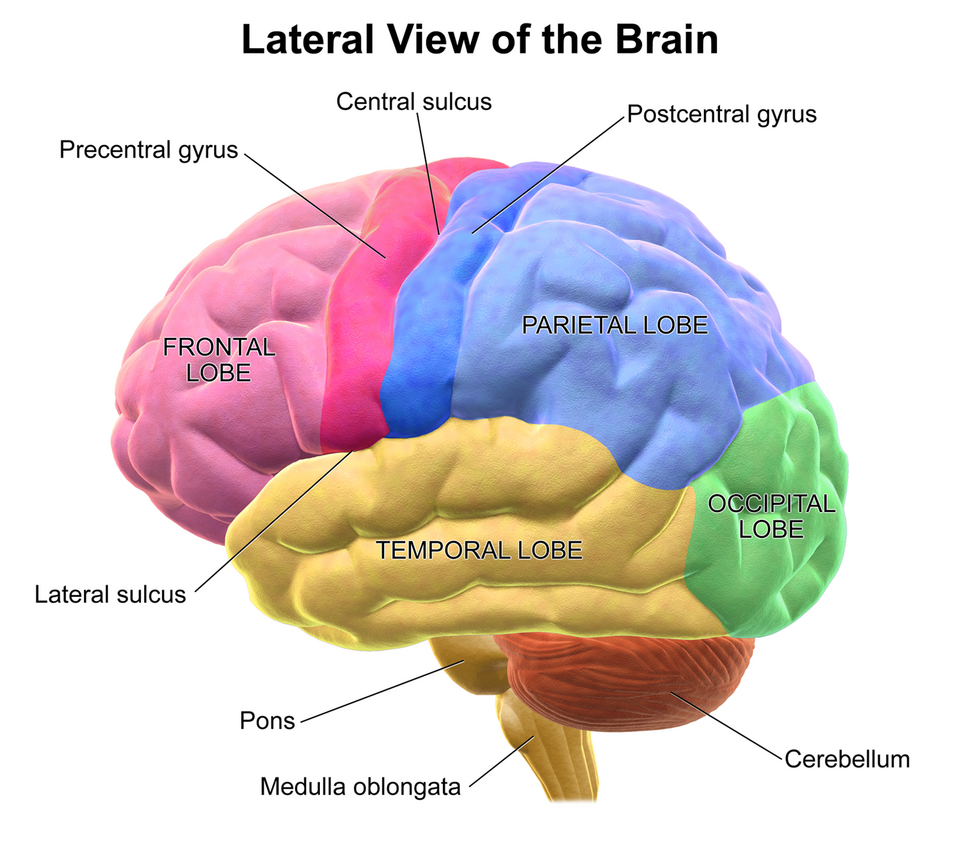
The Brain: Your Body’s Control Center
Your brain is the most complex organ in your body, containing about 86 billion neurons (nerve cells). Each neuron connects to thousands of other neurons, forming trillions of connections called synapses. Despite weighing only about 3 pounds (1.4 kilograms) — roughly 2% of your body weight — the brain uses about 20% of all the energy your body produces. The brain is about 60% fat, making it the fattiest organ in the body. It is protected by the skull, three layers of tissue called meninges, and a cushion of fluid called cerebrospinal fluid that absorbs shocks and impacts.
Parts of the Brain
The brain is divided into three main regions, each responsible for different tasks. The cerebrum is the largest part, making up about 85% of the brain’s weight, and it handles thinking, language, memory, and voluntary movement. The cerebellum sits at the back and bottom of the brain and is responsible for coordination, balance, and making movements smooth and precise. The brainstem connects the brain to the spinal cord and controls automatic functions you do not have to think about, like your heartbeat, breathing, and digestion. All three regions work together seamlessly every second of every day.
Specialized Brain Areas
Different parts of the cerebrum are specialized for different functions, and scientists have mapped many of these areas. Broca’s area, located in the left frontal lobe, controls speech production — damage to this area can make it difficult to speak even though the person knows what they want to say. Wernicke’s area, in the left temporal lobe, handles language comprehension and helps you understand words and sentences. The hippocampus, deep inside the brain, is essential for forming new memories and converting short-term memories into long-term ones. The amygdala, located near the hippocampus, processes emotions like fear and helps you recognize danger.
Neurons: The Messengers
Neurons are the special cells that carry messages throughout the nervous system. Each neuron has three main parts: the cell body, which contains the nucleus; dendrites, which are branch-like extensions that receive signals from other neurons; and the axon, a long fiber that sends signals onward. When a neuron fires, an electrical signal races down the axon at high speed. At the end of the axon, the signal triggers the release of chemicals called neurotransmitters, which cross a tiny gap (the synapse) to reach the next neuron. This electrochemical relay system is how every thought, sensation, and command travels through your body.
The Spinal Cord and Reflexes
The spinal cord is a long bundle of nerves about 45 centimeters (18 inches) long that runs from the brainstem down through the center of your spine. It acts as the main highway between your brain and the rest of your body, carrying signals in both directions. The spinal cord also manages some responses on its own, called reflexes, without waiting for instructions from the brain. When you touch something sharp, sensory nerves send a signal to the spinal cord, which immediately sends a signal back to your muscles to pull away — all before the pain signal even reaches your brain. This shortcut saves precious time and helps protect you from injury.
Neuroplasticity: The Changing Brain
Scientists have discovered that the brain can change and reorganize itself, a property called neuroplasticity. Every time you learn something new — whether it is a math concept, a musical instrument, or a new sport — your brain forms new connections between neurons and strengthens existing ones. The more you practice a skill, the stronger those neural pathways become, which is why repetition makes things easier over time. Neuroplasticity means that learning physically changes the structure of your brain throughout your entire life. Children’s brains are especially plastic, which is one reason why it is easier to learn languages and new skills when you are young.
Taking Care of Your Brain
Your brain needs the right care to perform at its best every day. Getting 9 to 12 hours of sleep each night gives your brain time to consolidate memories, clear out waste products, and recharge. Physical exercise increases blood flow to the brain and promotes the growth of new neurons, especially in the hippocampus. Eating a balanced diet with plenty of healthy fats (like those found in fish, nuts, and avocados), fruits, and vegetables provides the nutrients your brain needs. Challenging your brain with reading, puzzles, learning new skills, and creative activities keeps neural pathways strong and builds new ones. Wearing a helmet during activities like biking and skateboarding protects this irreplaceable organ from injury.
 OtterKnow Kids Encyclopedia