Bones Are Living Tissue
Many people think of bones as hard, dry, and lifeless, but bones are actually living tissue full of activity. They contain blood vessels, nerves, and several types of cells that are constantly at work. Osteoblast cells build new bone tissue, while osteoclast cells break down old bone in a process called bone remodeling. Your entire skeleton replaces itself roughly every 7 to 10 years through this cycle of breaking down and rebuilding. Bones have a hard, dense outer layer called compact bone and a lighter, spongy inner layer called cancellous bone that looks a bit like a honeycomb.
The Biggest and Smallest Bones
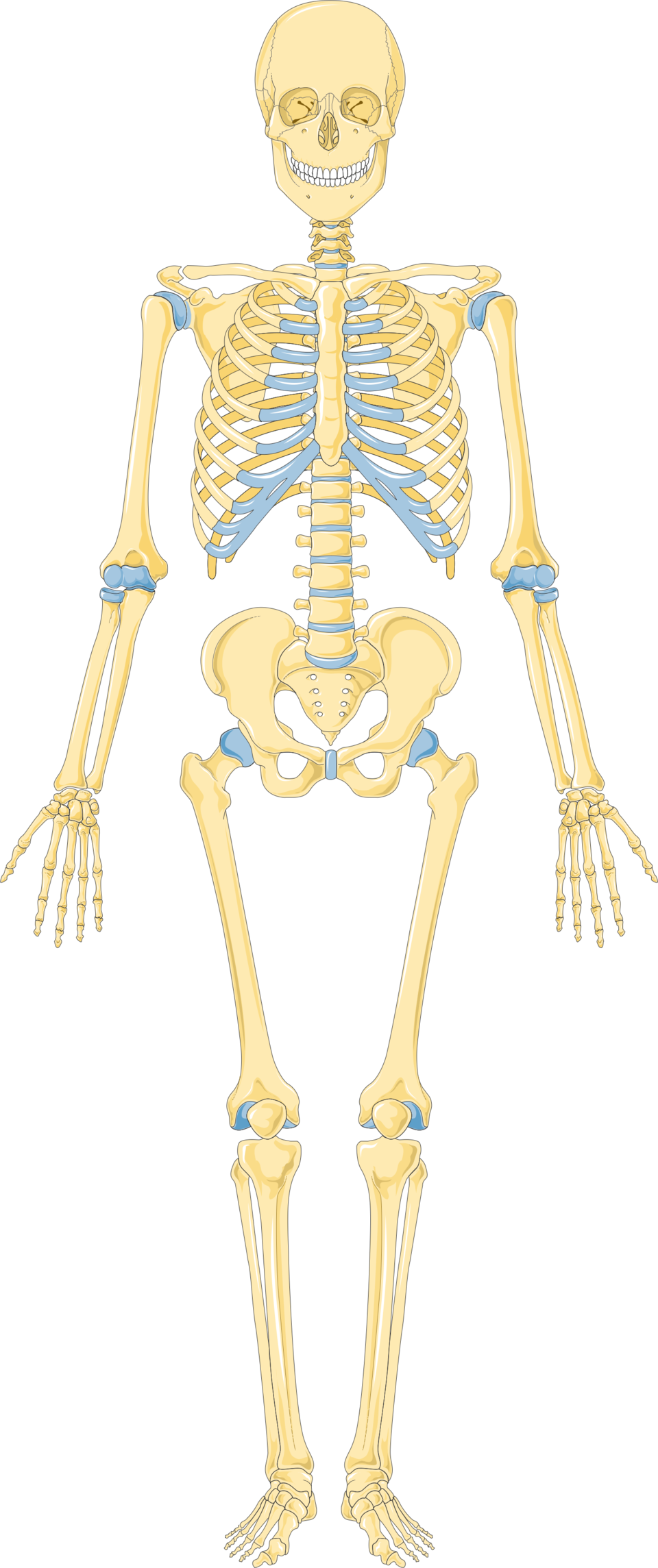
Your body has bones of all sizes, each designed for its specific job. The femur, or thigh bone, is the longest and strongest bone in the body — it can support up to 30 times your body weight. The smallest bone is the stapes, found deep inside your ear, measuring only about 3 millimeters long — roughly the size of a grain of rice. The stapes helps transmit sound vibrations so you can hear. Your hands and feet together contain more than half the bones in your entire body, with 27 bones in each hand and 26 in each foot. All these small bones work together to give your hands and feet their incredible flexibility.
Joints: Where Bones Meet
Joints are the places where two or more bones come together, and different types of joints allow different kinds of movement. Hinge joints, like those in your knees and elbows, swing open and closed in one direction, just like a door hinge. Ball-and-socket joints, found in your hips and shoulders, allow a wide range of rotation and movement in almost every direction. Pivot joints, like the one at the top of your spine, let you turn your head from side to side. Some joints, called fixed or fibrous joints, do not move at all — the bones of your skull are held together by fixed joints that protect your brain.
Cartilage: Flexible and Tough
Cartilage is a smooth, flexible connective tissue that plays several important roles in the skeletal system. It covers the ends of bones at joints, creating a slippery surface that reduces friction and absorbs shock when you run, jump, or walk. Your nose and ears are shaped by cartilage, which is why they can bend without breaking. Unlike bone, cartilage does not have its own blood supply, which means it heals very slowly when damaged. Before you were born, much of your skeleton was actually made of cartilage, which gradually hardened into bone through a process called ossification.
Bone Marrow: A Hidden Factory
Inside many of your bones is a soft, jelly-like substance called bone marrow, and it serves as one of the most important factories in your body. Red bone marrow produces red blood cells, white blood cells, and platelets — your body makes about 200 billion new red blood cells every single day. In children, red marrow is found in most bones, but as you grow, some of it is replaced by yellow bone marrow, which stores fat. Red marrow continues to work in certain bones like the pelvis, ribs, and spine throughout your life. Without bone marrow, your blood could not carry oxygen or fight infections.
Bones Store Minerals
Your skeleton acts as a mineral bank, storing about 99% of the calcium and 85% of the phosphorus in your body. These minerals make bones hard and strong, but they are also needed for other body functions like muscle contractions, nerve signaling, and keeping your heart beating steadily. When your blood needs more calcium, special hormones signal your bones to release some into the bloodstream. When you eat calcium-rich foods like milk, cheese, yogurt, and leafy greens, your bones absorb and store the extra calcium. This is why getting enough calcium in your diet is especially important while you are still growing.
Building Strong Bones
The choices you make right now have a huge impact on how strong your bones will be for the rest of your life. Weight-bearing exercises — activities where your body works against gravity, like running, jumping, dancing, and climbing — stimulate bone-building cells and make bones denser and stronger. Eating foods rich in calcium and vitamin D (which helps your body absorb calcium) gives your bones the raw materials they need to grow. Your bones reach their maximum strength and density in your mid-20s, so the stronger you build them now, the better off you will be later. Getting enough sleep also matters because much of your bone growth happens while you rest.
 OtterKnow Kids Encyclopedia