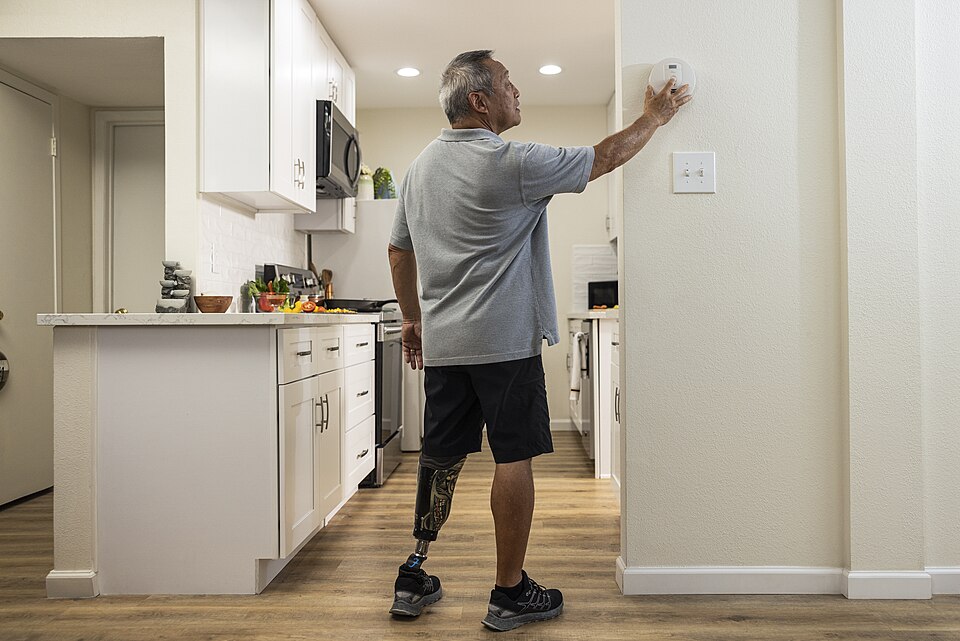
Smoke Alarms Save Lives
Smoke alarms are your first line of defense against a fire because they alert you before the fire spreads. Having working smoke alarms in your home reduces the risk of dying in a fire by about 50 percent. Every level of your home should have at least one smoke alarm, and there should be one inside every bedroom and outside each sleeping area. Test your smoke alarms once a month by pressing the test button, and replace the batteries at least once a year. Smoke alarms themselves should be replaced every 10 years because their sensors wear out over time.
Escaping a Fire Safely
If a fire alarm sounds in your home, you need to get out fast — you may have as little as two minutes before a fire becomes life-threatening. Never stop to grab belongings, toys, or pets during a fire because every second counts. Before opening any door, feel it with the back of your hand — if it is hot, do not open it and use a different exit instead. Stay low and crawl under the smoke because cleaner, cooler air is found near the floor. Once outside, go straight to your family’s meeting spot and never go back inside a burning building.
Stop, Drop, and Roll
If your clothing ever catches fire, remember three simple words: stop, drop, and roll. Stop immediately — running will only make the flames worse by fanning them with air. Drop to the ground and cover your face with your hands to protect it from the flames. Then roll back and forth to smother the fire until the flames go out completely. This technique works because rolling cuts off the oxygen that fire needs to burn. Practice this with your family so it becomes automatic if you ever need it.
Preventing Kitchen Fires
The kitchen is where most home fires start, and unattended cooking is the number one cause of house fires in the United States. Always stay in the kitchen when you are using the stove or oven, and keep anything that can burn — like towels, paper, and wooden utensils — away from the burners. If a grease fire starts in a pan, never throw water on it because water makes grease fires explode and spread. Instead, carefully slide a metal lid over the pan to cut off the oxygen, or use a fire extinguisher rated for grease fires. Turn off the burner and leave the lid in place until the pan cools completely.
Using a Fire Extinguisher
Fire extinguishers can put out small fires before they grow into big ones, and many homes and all schools have them. To use a fire extinguisher, remember the word PASS: Pull the pin, Aim the nozzle at the base of the fire, Squeeze the handle, and Sweep the nozzle side to side. Most household fire extinguishers last only about 10 to 15 seconds, so you need to act quickly and aim carefully. Only try to fight a fire if it is small and you have a clear escape route behind you. If the fire is bigger than a wastebasket or is spreading fast, leave immediately and call 911.
Fire Prevention at Home
Preventing fires is just as important as knowing what to do when one starts. Keep matches, lighters, and candles out of children’s reach, and never leave candles burning unattended. Make sure space heaters are at least 3 feet away from anything that can burn, including curtains, furniture, and bedding. Do not overload electrical outlets or run cords under rugs, because damaged wires can overheat and start a fire. Have a qualified electrician check your home’s wiring if your lights flicker, fuses blow often, or outlets feel warm to the touch.
Making a Fire Escape Plan
Every family should have a fire escape plan and practice it regularly. Draw a map of your home showing two ways out of every room — usually a door and a window. Choose a meeting place outside, like a specific tree or the neighbor’s driveway, where everyone will gather after escaping. Practice your escape plan at least twice a year, including at night when it is dark, because many deadly fires happen while people are sleeping. When firefighters arrive, tell them if anyone is still inside so they know who needs to be rescued.
 OtterKnow Kids Encyclopedia