When to Call 911
In the United States, you should call 911 (or your country’s emergency number) for any life-threatening situation. Call right away if someone is unconscious, not breathing, bleeding heavily, having a heart attack or stroke, or has a serious injury like a broken bone poking through the skin. When you call, stay calm and tell the operator your location, what happened, and how many people are hurt. Stay on the line because the operator may give you instructions on how to help while you wait. Never be afraid to call 911 — it is always better to call and not need help than to need help and not call.
Treating Cuts and Scrapes
Minor cuts and scrapes are some of the most common injuries, and they are easy to treat with basic first aid. First, rinse the wound with clean running water to wash away dirt and germs, which helps reduce the risk of infection. If the cut is bleeding, apply gentle pressure with a clean cloth or gauze for a few minutes until the bleeding stops. Then apply a thin layer of antibiotic ointment and cover the wound with a bandage to keep it clean. Change the bandage daily and watch for signs of infection like redness, swelling, or pus.
How to Handle Burns
Burns can happen from hot liquids, steam, fire, or even too much sun. For minor burns, cool the burned area under room-temperature running water for 10 to 20 minutes — never use ice, because extreme cold can actually damage the skin tissue further. Do not pop any blisters that form, since blisters protect the healing skin underneath. Cover the burn loosely with a sterile bandage or clean cloth to keep it protected. For serious burns that are larger than 3 inches across, look white or charred, or are on the face, hands, or joints, call 911 immediately.
Helping Someone Who Is Choking
Choking happens when food or an object gets stuck in someone’s throat and blocks their airway. If a person is coughing forcefully, encourage them to keep coughing because their body is trying to push the object out on its own. If they cannot cough, speak, or breathe, you need to act fast by performing abdominal thrusts, also called the Heimlich maneuver. Stand behind the person, make a fist with one hand and place it just above their belly button, then thrust inward and upward until the object comes out. For babies under one year old, the technique is different — use back blows and chest thrusts instead.
CPR and AEDs Save Lives
CPR stands for cardiopulmonary resuscitation, and it is a life-saving technique used when someone’s heart stops beating. The chain of survival begins with calling 911, then starting chest compressions to keep blood flowing to the brain and other organs. Push hard and fast on the center of the chest at a rate of 100 to 120 compressions per minute — about the same tempo as the song “Stayin’ Alive.” An AED, or automated external defibrillator, is a device found in many public places that can shock a stopped heart back into a normal rhythm. Many organizations offer CPR and AED training classes for kids and teens.
What Goes in a First Aid Kit
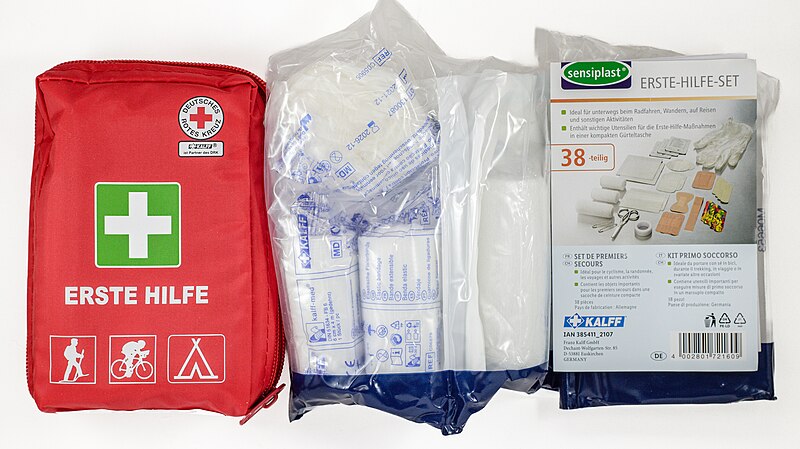
Every home, car, and classroom should have a well-stocked first aid kit ready for emergencies. A basic kit should include adhesive bandages of various sizes, sterile gauze pads, medical tape, antiseptic wipes, antibiotic ointment, scissors, and tweezers. You should also have a digital thermometer, an instant cold pack for sprains and bumps, and disposable gloves to protect against germs. Check your first aid kit regularly to replace items that have been used or have expired. Knowing what is in your kit and how to use each item is just as important as having the supplies.
Being a First Aid Helper
You don’t have to be an adult to be a first aid helper. Start by learning the basics — take a first aid class through your school, community center, or an organization like the American Red Cross. Always tell a trusted adult about any injury or emergency, even if you have already started helping. Stay calm, because a calm helper can think more clearly and make the injured person feel safer. The most important thing you can do in any emergency is to get help by calling 911 and staying with the person until professional help arrives.
 OtterKnow Kids Encyclopedia