Geography and Climate
Italy is a long peninsula that stretches into the Mediterranean Sea, with the islands of Sicily and Sardinia also belonging to the country. The Alps form a dramatic mountain range across the north, with snow-capped peaks and popular ski resorts. Running down the center of the peninsula like a spine are the Apennine Mountains. Italy has a Mediterranean climate with warm, dry summers and mild, rainy winters, especially along the coast. The Po River in the north flows through a wide, fertile valley that is one of the most productive farming regions in Europe.
Ancient Rome
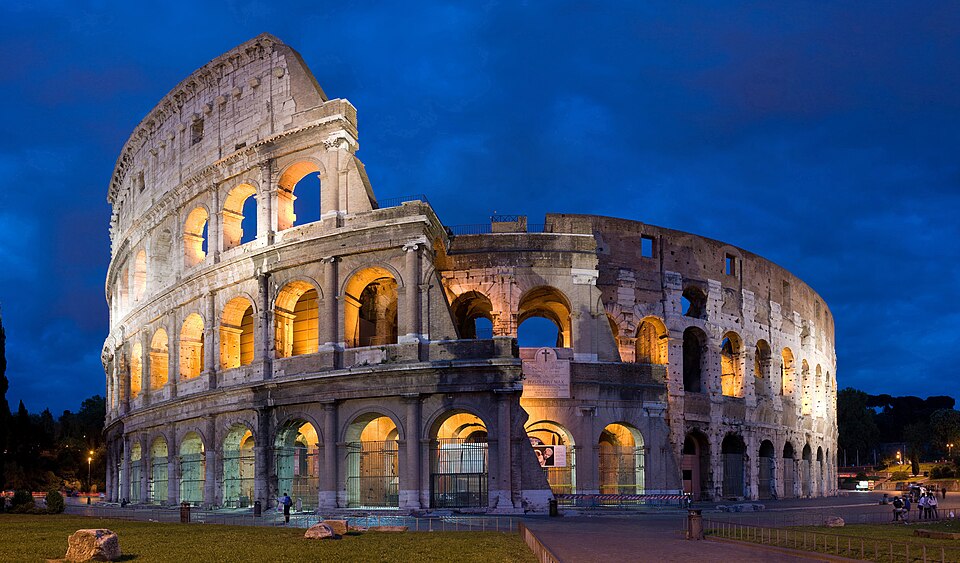
Italy was the heart of the Roman Empire, one of the greatest civilizations in history, which at its peak controlled much of Europe, North Africa, and the Middle East. The Colosseum in Rome, built nearly 2,000 years ago, could seat about 50,000 spectators who came to watch gladiator contests and other events. The Romans built an incredible network of roads, aqueducts, and buildings, many of which still stand today. They also developed important ideas about law, government, and engineering that influenced the modern world. Latin, the language of the Romans, became the basis for Italian, Spanish, French, Portuguese, and Romanian.
The Renaissance
The Renaissance, meaning “rebirth,” was a period of intense creativity that began in Italy during the 14th century and lasted into the 17th century. Florence was the center of this movement, where wealthy families like the Medici supported artists and thinkers. Leonardo da Vinci, one of history’s greatest geniuses, painted the Mona Lisa and designed flying machines centuries before airplanes existed. Michelangelo created the stunning ceiling of the Sistine Chapel in Vatican City and sculpted the famous statue of David. The astronomer Galileo Galilei, also Italian, used telescopes to prove that Earth revolves around the Sun.
Famous Landmarks
Italy has more UNESCO World Heritage Sites than any other country in the world. The Leaning Tower of Pisa has been tilting for over 800 years and attracts millions of visitors who pose for photos pretending to hold it up. Vatican City, located entirely within Rome, is the smallest independent country in the world and serves as the headquarters of the Roman Catholic Church. Venice is a unique city built on 118 small islands, where people travel by boat along canals instead of driving on roads. The ancient ruins of Pompeii, buried by the eruption of Mount Vesuvius in 79 CE, give visitors a detailed look at daily life nearly two thousand years ago.
Food and Culture
Italian food is loved around the world, and dishes like pizza, pasta, and gelato all originated here. Each region of Italy has its own special recipes: Naples is famous for pizza, Bologna for rich meat sauces, and Sicily for cannoli and seafood. Italians take mealtimes seriously, often gathering with family for long, multi-course dinners. Beyond food, Italy is known for fashion, with Milan being one of the world’s top fashion capitals. Italian companies also produce famous luxury cars, including Ferrari and Lamborghini, which are known for their speed and style.
Sports and Traditions
Soccer, called “calcio” in Italian, is the most popular sport in Italy, and the national team has won the FIFA World Cup four times. Italian fans are famously passionate, and matches between rival cities like Rome and Milan draw enormous crowds. The country also hosts the Giro d’Italia, one of cycling’s most prestigious races, which winds through mountains and countryside each May. Traditional festivals are celebrated throughout the year, including Carnevale in Venice, where people wear elaborate masks and costumes. Family and community are at the center of Italian life, and many traditions have been passed down for generations.
Modern Italy
Italy became a unified nation in 1861, after centuries of being divided into separate kingdoms and city-states. Today it is a founding member of the European Union and uses the euro as its currency. Italy has one of the largest economies in Europe, with strong industries in manufacturing, tourism, and agriculture. The country produces more wine and olive oil than almost any other nation. With its blend of ancient history, world-class art, and vibrant modern culture, Italy remains one of the most visited countries on the planet.
 OtterKnow Kids Encyclopedia